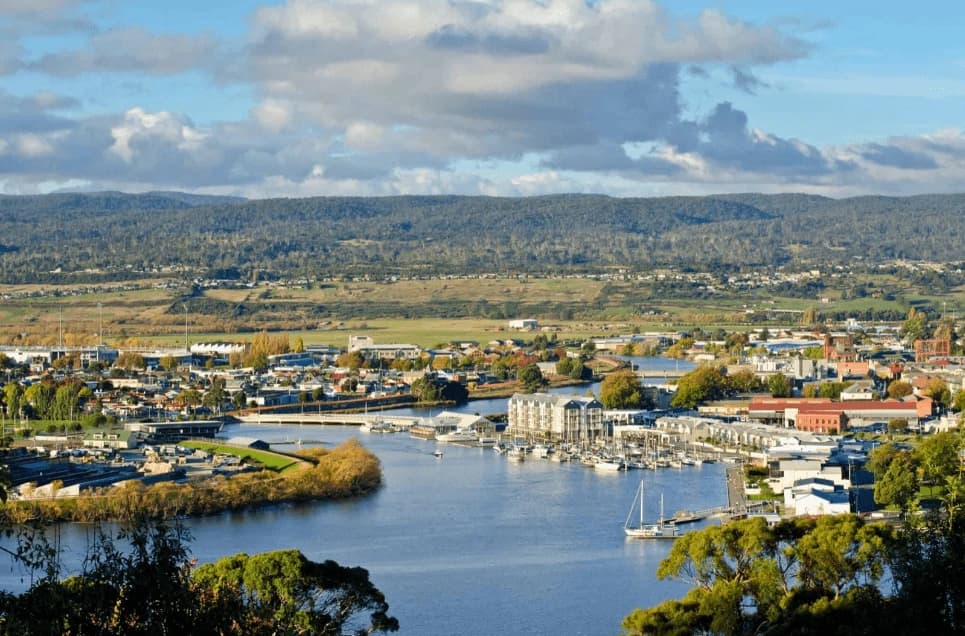
Launceston is Tasmania's second-largest city. At the 2021 Census, Greater Launceston had about 90,950 residents (ABS), while the City of Launceston local government area had an estimated 71,616 people at June 2024. For property investors, the wider Greater Launceston catchment of roughly 90,000 is usually the more useful market figure. Source: ABS Census and estimated resident population.
Launceston Property Market: Tasmania’s Northern Gem
Launceston is one of the oldest cities in northern Tasmania, nestling at the meeting point of the Tamar and North Esk rivers. Known for its vibrant food and wine culture, Launceston is a gateway to the scenic Tamar Valley wine region. The area blends historic charm with modern living, featuring beautifully preserved colonial architecture and a strong community. With a healthy economy, affordable lifestyle, and a balance of urban and rural appeal, the Launceston property market continues to attract homebuyers and investors looking for strong rental yields.
The Launceston real estate market experienced significant house price growth during the COVID property boom. However, Launceston property growth has slowed since 2023, with prices increasing by just 1.8% over the last 12 months. Is Launceston a good investment in 2026? Join us today to explore the city’s property market conditions and outlook!
Launceston Property Market at a Glance
Metric | Value |
|---|---|
Median House Price | $560,000 |
12-Month Price Growth | +1.8% |
Rental Yield | 4.7% |
Vacancy Rate | 0.5% |
Days on Market | 32 days |
Population Growth | -0.23% |
Data as of mid-2025. Sources: InvestorKit Research.
As of July 2025, Launceston’s house market pressure is moderate but improving.
Among the six metrics InvestorKit uses to measure market performance, Launceston scores 5 (very strong) in rental pressure and incoming supply, 4 (strong) in price pressure, rental yield and affordability, and 2 (weak) in growth cycle.
Launceston Population & Economic Trends
As can be seen in Chart 2, overseas migrants are the main contributors to Launceston population growth. The growth rate remained relatively consistent until 2020, when it began to decline. The Launceston Tasmania population grew by just -0.23% in the 2023-2024 financial year, much lower than Tasmania overall (0.31%) and Hobart (0.37%) due to a plunge in internal migrants.
Launceston’s slow-growing population could lead to decreased demand for housing over the coming years.
Despite the sluggish population growth, Launceston’s job market is active. Its unemployment rate has declined from over 5% since late 2013 and has remained relatively stable at around 2.5% since early 2023.
On the other hand, despite a slight drop, the number of online job ads remains significantly higher than before the pandemic.
Launceston House Prices & Growth Trends
The Launceston housing market has stagnated over the past year. The median house price in Launceston is $560k, about 1.8% higher than a year ago. Despite slower Launceston house price growth, homes are selling faster since early 2025, with median days on market around 32 days.
Over the past 12 months, Launceston’s for-sale house listings have fallen steadily while the sale volume has remained relatively stable, resulting in a drop in inventory to a moderate level of 3.4 months of stock.
The moderate and declining inventory level and days on market indicate moderate and improving market pressure, suggesting an improvement in price growth in the year ahead.
Launceston’s building approval rate has remained relatively low for a decade, indicating a low risk of oversupply in the housing market. In 2025, the region saw a slight uptick in house construction activity, but it’s still much lower than the balanced benchmark of 3%.
Launceston’s house price growth has grown robustly over the last decade. Its 5-year and 10-year annualised growth rates are above the long-term average (5-7%), higher than the averages of the top-populated regional cities. Growth is likely to be moderate in the medium term.
Launceston Rental Market & Vacancy Rates
The Launceston rental market is under high and increasing pressure, as seen in the extremely low Launceston vacancy rate of around 0.5%. This crisis-level vacancy makes Launceston investment properties attractive for cash flow, with rents increasing 3.2% over the last 12 months.
The Launceston rental yield sits at a healthy 4.7%, well above the average of major Australian cities. Yield has been improving because median rent has grown faster than median sales price – a positive sign for investors asking “is Launceston a good investment” for cash flow.
Aside from 2023 and 2024, Launceston has offered relatively affordable housing in both the sales and rental markets, though not to the same extent as before 2022. Currently, the median house price is about 6% below value, while the median rent is around 16% undervalued. With interest rate cuts expected in the coming year, affordability is likely to improve further.
Best Suburbs to Invest in Launceston
For investors asking which are the best suburbs in Launceston to buy, the answer depends on your strategy – yield-focused or growth-focused. The following Launceston suburbs consistently appear in investment analysis for their combination of affordability, rental demand, and fundamentals.
Suburb | Median House Price | Rental Yield (approx.) | Investment Thesis |
|---|---|---|---|
South Launceston | ~$450,000 | 5.2% | Close to the CBD with strong tenant demand from workers and students. Entry-level price point with above-average yield for the region. |
Newstead | ~$550,000 | 4.8% | Established suburb with good schools and amenities. Consistent rental demand and solid long-term capital growth track record. |
Kings Meadows | ~$480,000 | 5.0% | Popular with families due to proximity to schools and shopping. Low vacancy and steady rental income make it a reliable cash flow suburb. |
Mowbray | ~$400,000 | 5.5% | Most affordable entry point in the Launceston market. High rental demand from university students (University of Tasmania campus nearby) supports strong yields. |
Prospect | ~$520,000 | 4.7% | Growth corridor suburb with newer housing stock. Attractive to young families and professionals, with improving infrastructure and amenity. |
Data indicative only. Always conduct independent due diligence before purchasing.
Launceston Property Market Forecast 2026
Launceston’s house market pressure is increasing but quite slowly. Rental market pressure remains high and is continuing to rise, with vacancy rates at crisis levels and still falling. Over the coming 6 to 12 months, house prices are expected to grow moderately, while yields are likely to improve as rental growth continues to outpace price growth.
Frequently Asked Questions: Launceston Property Market
Is Launceston a good place to invest in property?
Launceston offers strong rental yields (4.7%) and very low vacancy rates (0.5%), making it attractive for investors seeking cash flow. Capital growth has slowed since 2022, so it suits yield-focused strategies over speculative growth plays. The Launceston property market is best suited for investors prioritising rental income over short-term capital gains.
What is the Launceston rental yield?
The gross Launceston rental yield is approximately 4.7% for houses, which is well above the average of major Australian cities. Yields have been improving over the past 12 months as rental growth has outpaced price growth in the Launceston rental market.
What is the Launceston vacancy rate?
The Launceston vacancy rate is approximately 0.5%, indicating a very tight rental market with strong tenant demand. This is considered crisis-level vacancy and suggests potential for continued rent increases, making Launceston investment properties attractive for cash flow.
What is the Launceston property market forecast for 2026?
The Launceston property market forecast for 2026 is moderate price growth as market pressure slowly builds. With inventory declining and rental demand remaining strong, we expect prices to grow modestly while Launceston rental yield continues to improve as rents outpace price growth.
What are the best suburbs to invest in Launceston?
The best suburbs to invest in Launceston include South Launceston, Newstead, and Kings Meadows, based on a combination of rental yield, vacancy rates, and growth fundamentals. Each offers different price points and tenant demographics – see our detailed suburb breakdown above.
What is the median house price in Launceston?
The median house price in Launceston is approximately $560,000 as of mid-2025, representing modest growth of 1.8% over the past 12 months. Prices vary significantly by suburb – entry-level Launceston suburbs start around $400,000 while premium areas exceed $700,000.
Launceston is the 14th regional city we examine in this Market Pressure Review Blog Series. Stay tuned for more cities to follow! InvestorKit is a data-driven buyers’ agency that chooses purchasing locations through a sophisticated market pressure analysis system. This methodology has enabled our clients to achieve growth higher than the average and expedite their investment journey. Talk to us today by clicking here and requesting your 15-minute FREE discovery call!
Explore Other Regional Markets
Greater Hobart Property Market – Tasmania’s capital city
Ballarat Property Market – Victoria’s heritage regional city
Bendigo Property Market – Victoria’s goldfields hub