Key takeaways
- In Q2 2022, Adelaide's house vacancy rate was 0.3%, while its office vacancy rate was 15.4% and retail 5.8%, which InvestorKit uses to show commercial property's longer vacancy periods.
- InvestorKit says commercial properties generally offer higher yields than residential, multi-year leases, rent rises via CPI or a fixed rate, and tenants who pay outgoings in most cases.
- InvestorKit describes two paths into commercial property, adding it to a residential portfolio or starting with several commercial properties, and says both hedge risk through diversification.
Most property investors only play the game within the residential sector.
That is for various reasons:
– Commercials are low in stock: Searching “Western Sydney, NSW” in the Buy section on REA, you’ll get 4500+residential results and less than 200 commercial results.
– Commercials seem more expensive: Many of them are worth multi-million dollars.
– They are unfamiliar to average investors: What should we look for? How to negotiate?
In summary, commercial properties are not as accessible as residential properties. However, that doesn’t mean it’s impossible. Some time ago, we posted a blog, Diversity within Property, mentioning that commercial properties can benefit your portfolio and investment goal. Today we will talk more about them and how to convert residential property to commercial property in Australia.
What is Commercial Property?
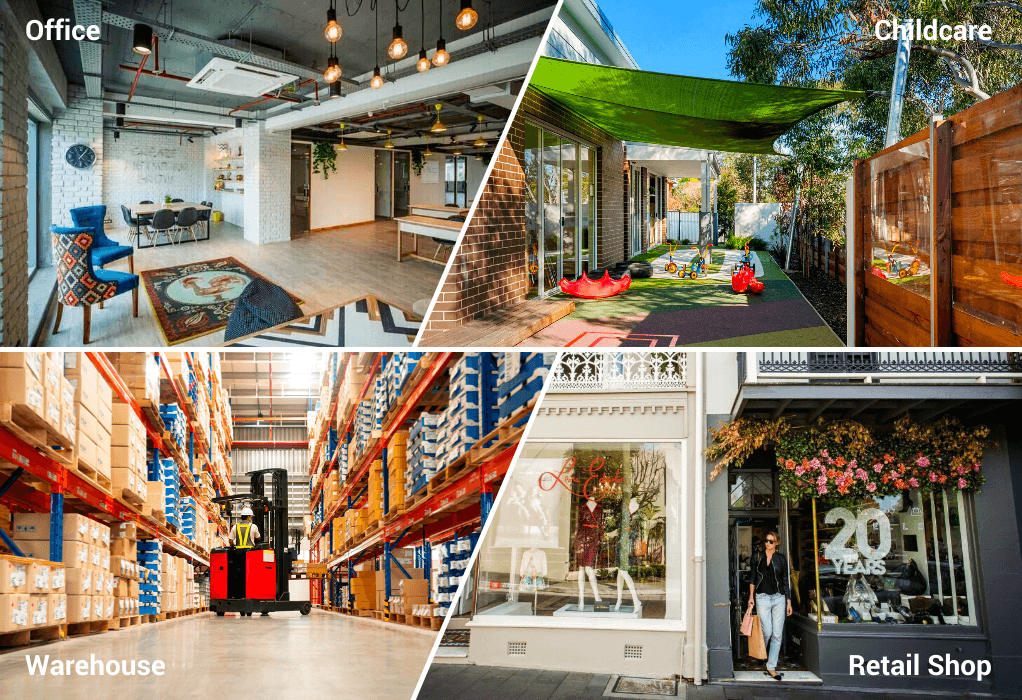
InvestorKit adopts a broad definition of commercial property for investment. Commercial property can be an office, a retail shop, a medical centre, a childcare facility, a warehouse, a property converted from residential to commercial property etc., but most importantly, an established and tenanted one.
Pros and Cons of Commercial Properties
Pros of commercial property include:
· Higher rental income
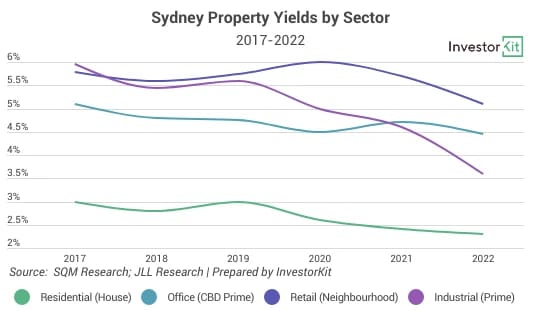
The rental yields of commercial properties are generally higher than residential properties. The below chart is a Sydney example. With higher rental yields, commercial properties can bring you greater cash flow and speed up your passive income goals.
· Longer lease length
While residential properties typically have 6-12 months lease terms, commercial properties have lease terms that last multiple years, up to 3-5 and, in some cases, even 10+ years, giving the owner more certainty.
· Consistent income growth
Annual rental income from your commercial property can increase either via CPI, or via a fixed increase rate in the lease agreement, unlike residential properties where you need to negotiate with the tenant every time you want to raise the rent.
· Tenant pays outgoings
Owner is responsible for paying council rates, water rates, maintenance, repairs, etc., for a residential property. Tenants pay all outgoings in most commercial property cases.
Thinking about residential to commercial conversion? It’s a smart move for investors looking to boost returns. Just be sure to do your homework– look into planning regulations, local market demand, conversion costs and even the cons of commercial property to make sure it’s the right fit for you.
Cons of commercial property include:
· Higher financial requirement
While you need only a 10% deposit to get a loan for a residential property, you need a minimum 20% deposit, up to 40%, for a commercial loan with a higher interest rate and administrative fees.
· Longer vacancy period
While residential properties usually have a few days or weeks of vacancy period, commercial properties can have 3 to 12 months of vacancy period. It could be even longer in certain circumstances – Some Sydney CBD shops have been vacant for 2 years due to COVID and are still waiting for their next tenant. The longer vacancy periods can be reflected by vacancy rates as well. In Q2 2022, Adelaide’s house vacancy rate was 0.3%, while its office vacancy rate was15.4% and retail at 5.8%.
· Higher purchase prices for “better deals”
Yes, commercial properties can be accessible price-wise. However, most of those with high-quality tenants and longer lease terms tend to be more expensive.
Two Types of transitioning

Now that we have understood the pros and cons of commercial properties, when and how can we convert residential property to commercial property?
We see two scenarios in our clients:
Scenario 1 – An investor with multiple residential properties expanding their portfolio to commercial properties.
With the consistent cash flow generated by the residential properties, you’ll have a great hedge against the commercial property’s vacancy risk; The equity in the residential properties can also boost your ability to build the large deposit required by the commercial.
In return, the commercial property will give your residential-dominated portfolio a second wind with lending and allow you to receive a higher income.
Once you have multiple commercial properties able to hedge each other, one strategy is consolidating your high-growth residential properties to pay off the commercial properties so you can enjoy their higher yet sustainable income streams.
Scenario 2 – High income and high net worth investor, able to start their investment journey with multiple commercial properties.
If you have plenty of cash deposit and loan serviceability, you can buy multiple commercial properties across different sectors at the start. In that case, they create hedges against each other’s vacancy risk, so you can skip the equity cumulating phase and achieve high income streams with fewer properties from the beginning.

Conclusion
When it comes to residential vs commercial property, it’s important to understand that investment is all about maximising income and minimising risk. In simple words, we want to convert residential property to commercial properties to maximise our rental income, but we need to minimise their vacancy risks. The two types of investors we have discussed above each find a way to hedge the risk via diversification: one utilises a mix of residential and commercial, and the other uses different types of commercials. By planning your portfolio based on your goals and saving ability at the beginning of your investment journey, you’ll find your unique way to transition from residential to commercial property.
Residential commercial properties are not that inaccessible. All you need is a helper who knows the how-to.
Equipped with national market data and buying experience across residential and commercial sectors, Investor Kit buyers’ agents have helped numerous clients achieve success on their commercial property investment journey. Are you looking to convert residential property to commercial property? We are here for you. Book your 15-minute FREE no-obligation discovery call today!