
Key takeaways
- Price pressure and rental pressure both score the maximum 5 out of 5, and inventory sits at around 1.8 months of stock.
- House prices grew 15.9% a year over the past five years, well above the 9.3% average across large regional cities.
- Vacancy has stayed well below 1%, median weekly rent rose 5.7% over the past year and rental yield sits at around 4.1%.
Barossa: Strong Market Pressure Supported by a Healthy Local Economy
Located around an hour north-east of Adelaide, the Barossa is one of South Australia’s best-known regional economies. Internationally recognised for its wine and tourism industries, the region also has an employment base spanning agriculture, horticulture, food production, health, construction and other services.
Its property market has recorded exceptionally strong growth over the past five years, with close to 16% annualised growth. After such a strong run, an important question emerges: can the Barossa continue to deliver healthy growth from here?
Let’s examine the latest data through ten key charts.
As of 2026, Barossa’s overall market pressure remains relatively high.
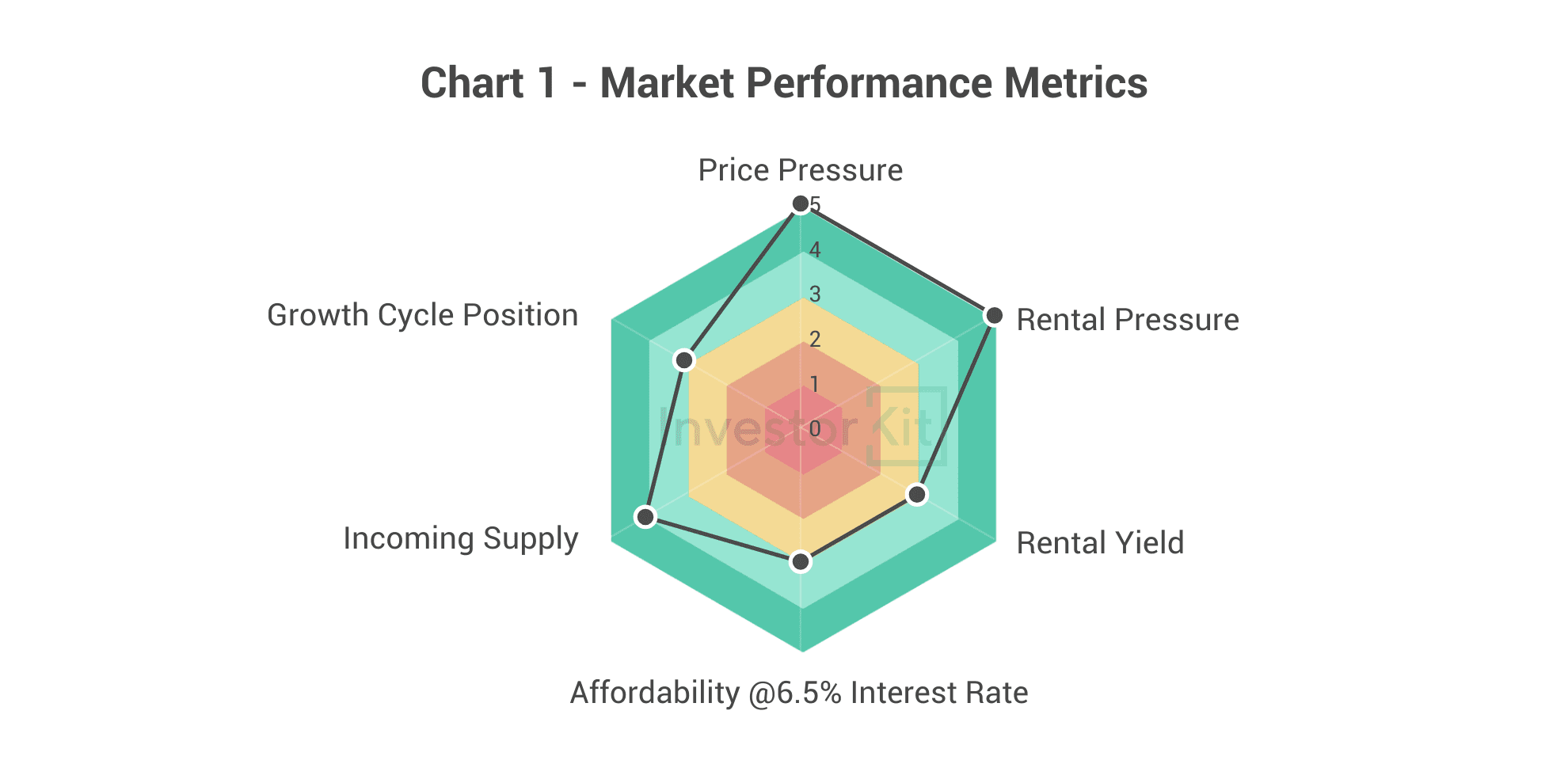
Price pressure and rental pressure both score the maximum 5 out of 5, reflecting tight conditions across both the sales and rental markets;
Incoming supply scores 4 out of 5, suggesting limited near-term oversupply risk;
While rental yield, affordability and growth cycle position sit around more balanced levels.
Together, these indicators point to a market where housing demand remains healthy and supply remains constrained, despite the considerable price growth already recorded in recent years.
Barossa’s Demographic and Economic Trends
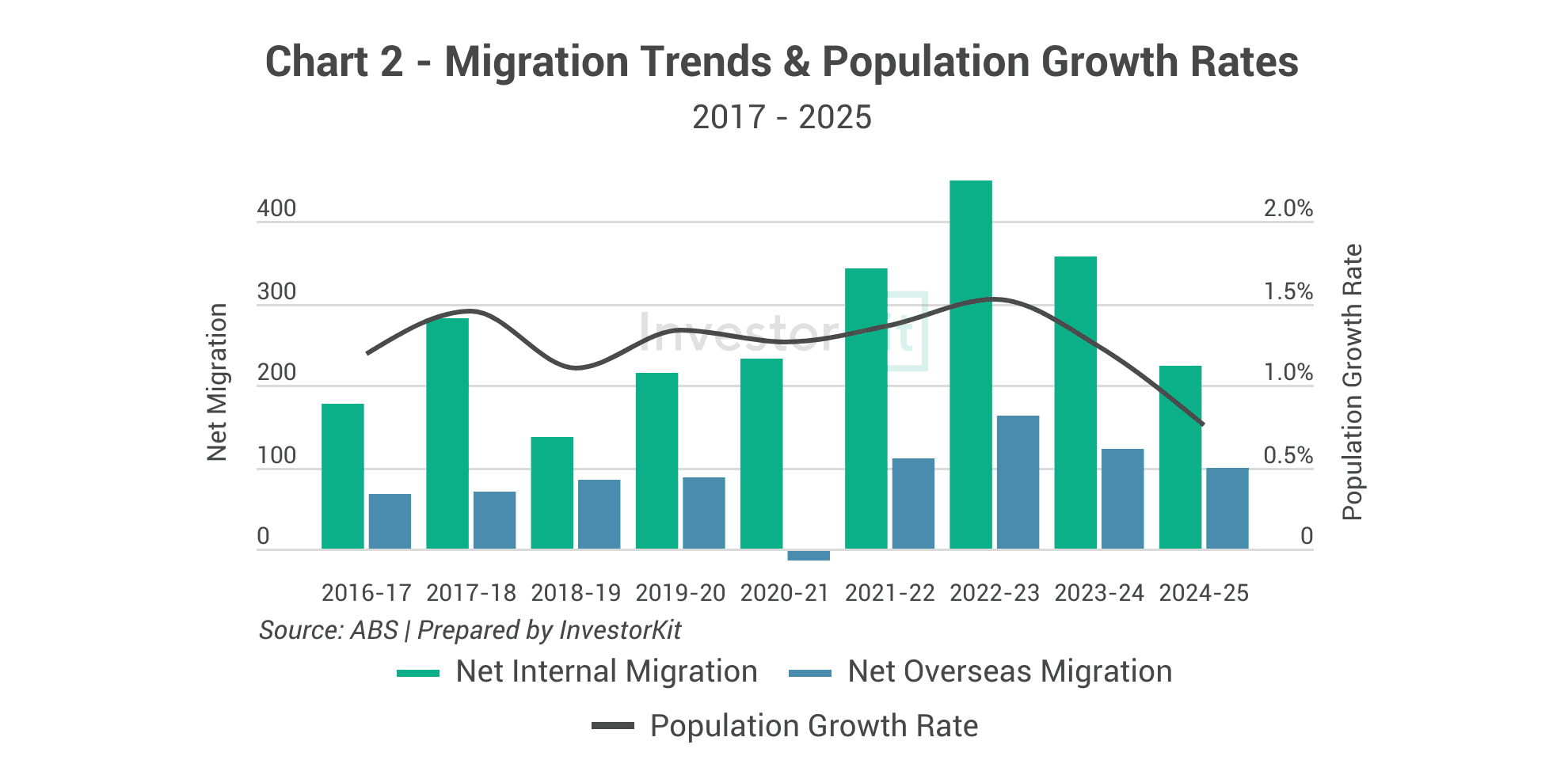
Population growth in Barossa has softened over the past two years, largely due to a decline in net internal migration from the elevated levels recorded in 2022-23.
However, population growth alone does not determine the strength of housing demand. The sustainability of a regional property market also depends heavily on whether its local economy can continue generating employment and supporting household demand. Barossa’s employment data provides a positive signal on this front.
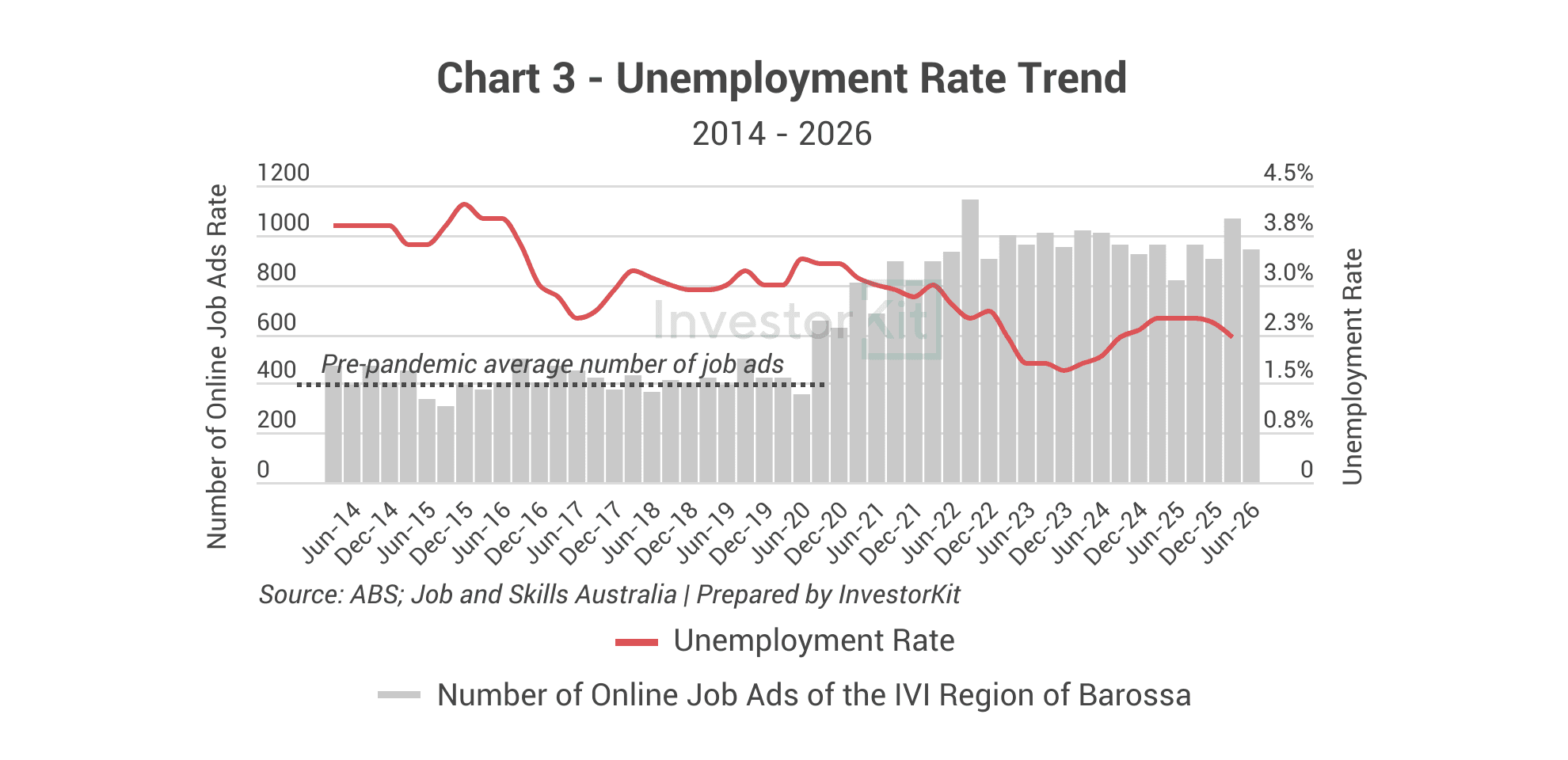
The region’s unemployment rate has trended downward considerably over the past decade and currently sits at an exceptionally low 2.3%. At the same time, the number of online job advertisements across the broader employment region has remained elevated since 2022, well above pre-pandemic levels.
This combination of low unemployment and sustained job opportunities suggests that Barossa’s local labour market remains active despite the recent moderation in population growth.
For the housing market, that matters. A healthy employment base provides an important foundation for sustainable owner-occupier and rental demand, reducing the market’s dependence on migration alone to generate future growth.
Barossa’s Property Market: Sales Market Trends
Barossa’s sales market has become noticeably more active in 2026.
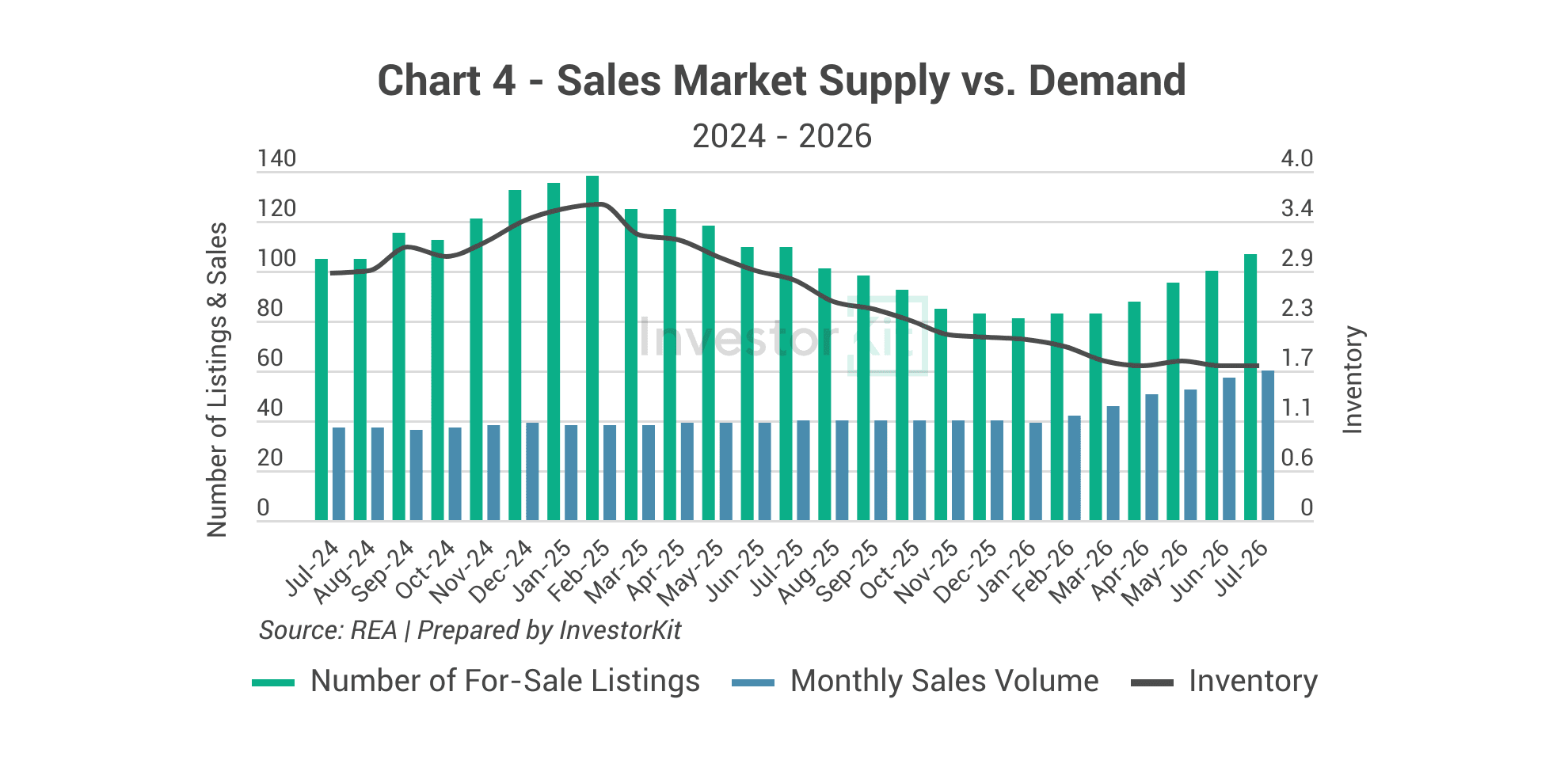
Since the beginning of the year, the number of properties listed for sale has increased. Viewed in isolation, rising listings could suggest an easing in market pressure. However, sales volumes have increased at the same time, meaning buyer demand has been absorbing much of this additional stock.
As a result, overall inventory has remained exceptionally low, sitting at around 1.8 months of stock.
Price movements are reflecting these conditions.
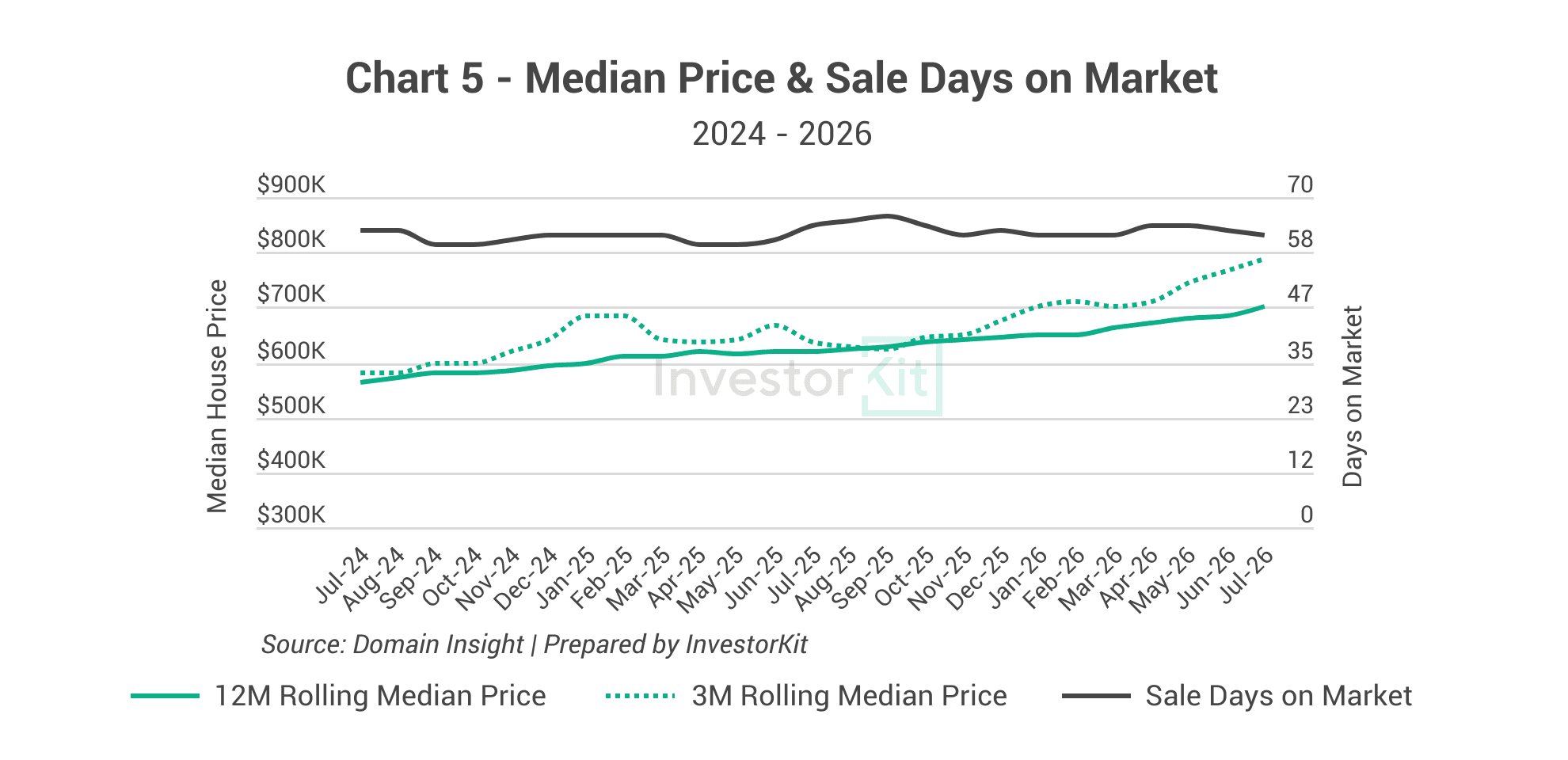
Barossa’s 12-month rolling median house price has continued to rise steadily, while the three-month rolling median has recently moved noticeably above the longer-term trend. This upward divergence is an early indication that short-term price growth is accelerating.
Days on market, meanwhile, have remained relatively stable. This suggests that while market activity and price momentum are strengthening, buyer urgency has not increased significantly. This could partly reflect the broader high-interest-rate and lower-sentiment environment, particularly as Barossa is no longer a highly affordable market.
Overall, the combination of rising sales activity, low inventory and improving price momentum indicates that Barossa continues to experience strong sales market pressure.
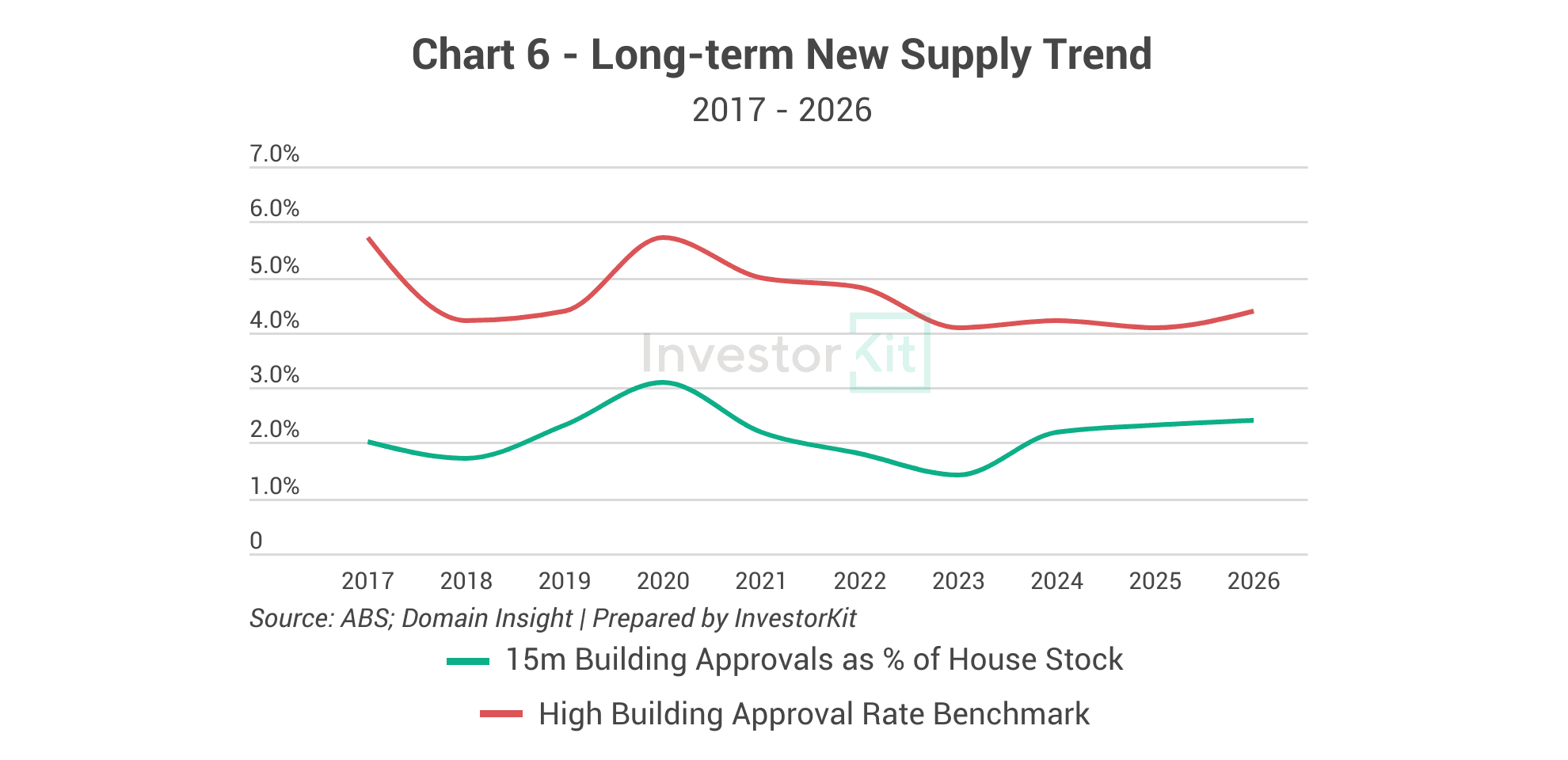
Incoming supply is another important factor when assessing whether current market pressure can be sustained.
Over the past decade, Barossa’s new house building approval rate has generally remained around 2% of existing house stock, apart from a temporary increase around 2020, representing a relatively balanced level of new housing construction. With the local job market remaining active and housing demand healthy, there is currently little evidence of a significant oversupply risk emerging from the new housing pipeline.
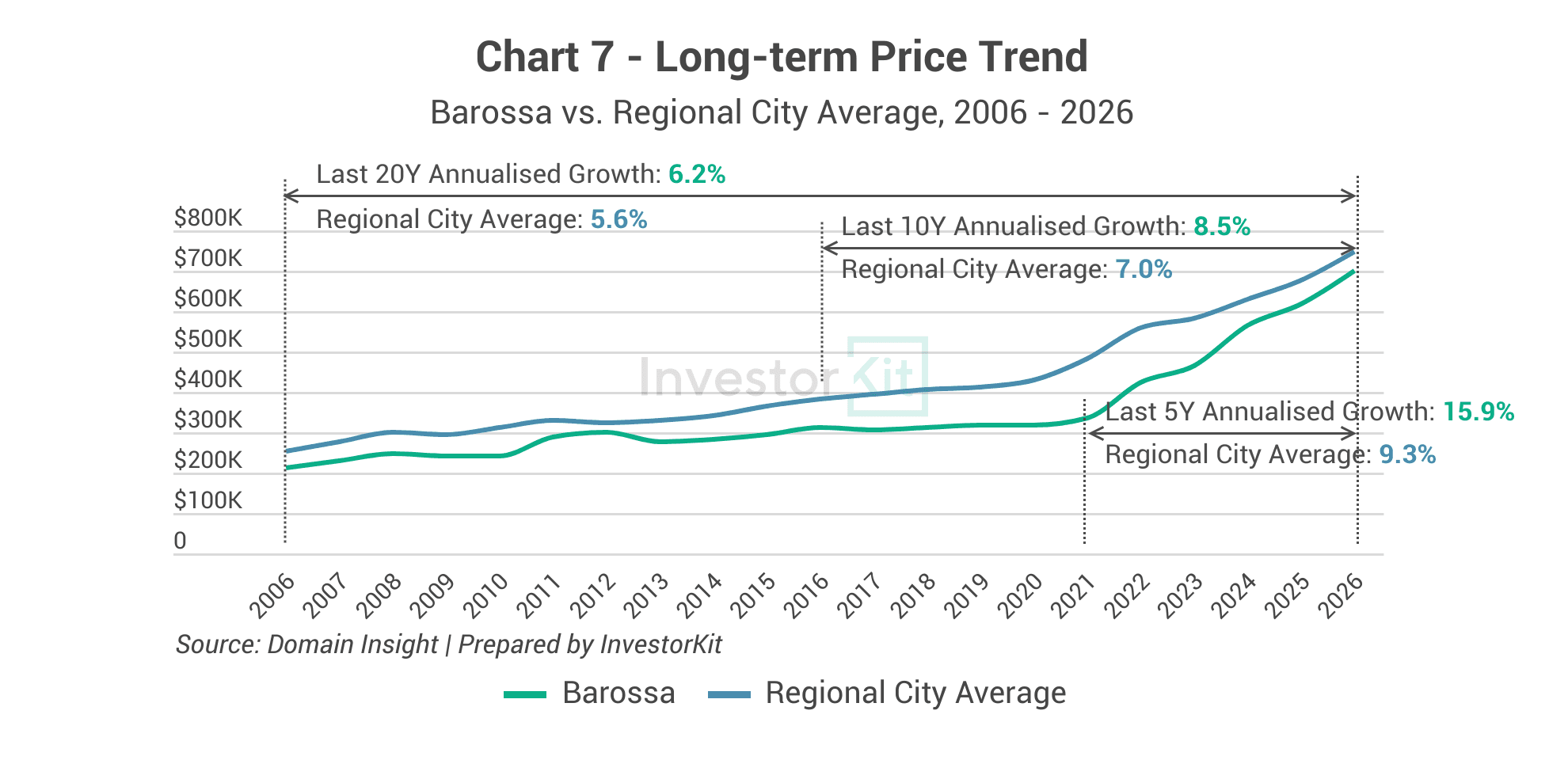
Barossa’s recent growth has been exceptional.
Over the past five years, house prices have recorded annualised growth of 15.9%, significantly above the 9.3% average across large regional cities.
This strong recent performance has also lifted Barossa’s longer-term results. Over ten years, annualised price growth sits at 8.5%, compared with 7.0% across regional cities, while its 20-year annualised growth of 6.2% also exceeds the regional-city average of 5.6%.
After such a strong five-year period, it would be reasonable to expect the pace of growth to moderate at some stage. However, strong past performance does not automatically mean a market must enter a downturn.
Barossa continues to experience tight housing supply, healthy sales activity and a strong employment market. These conditions remain supportive of further price growth.
At the same time, another period of rapid boom-style growth has become less likely in the current environment. Higher borrowing costs, weaker national property-market sentiment and reduced purchasing affordability are likely to place some limits on how quickly prices can continue rising.
The more likely scenario is therefore one of continued, but more sustainable, growth rather than another major acceleration.
Barossa’s Property Market: Rental Market Trends
Barossa’s rental market remains extremely tight.
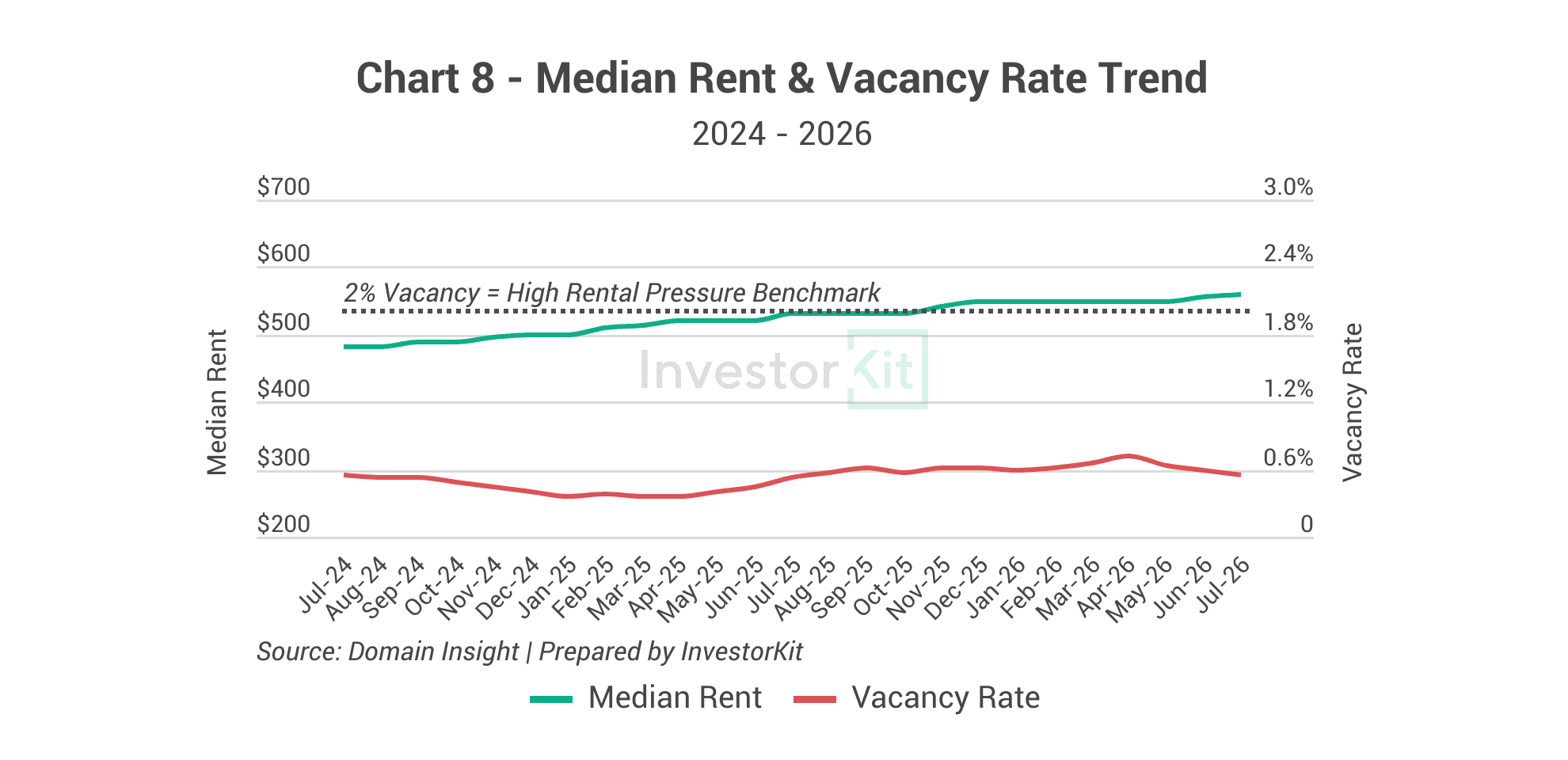
Vacancy rates have remained well below 1% for several years, significantly beneath the 2% level generally associated with a high-pressure rental market.
Unsurprisingly, this shortage of available rental properties has continued to place upward pressure on rents. Median weekly rent has increased by 5.7% over the past year.
While this is healthy rental growth, it is relatively moderate given the exceptionally low vacancy environment.
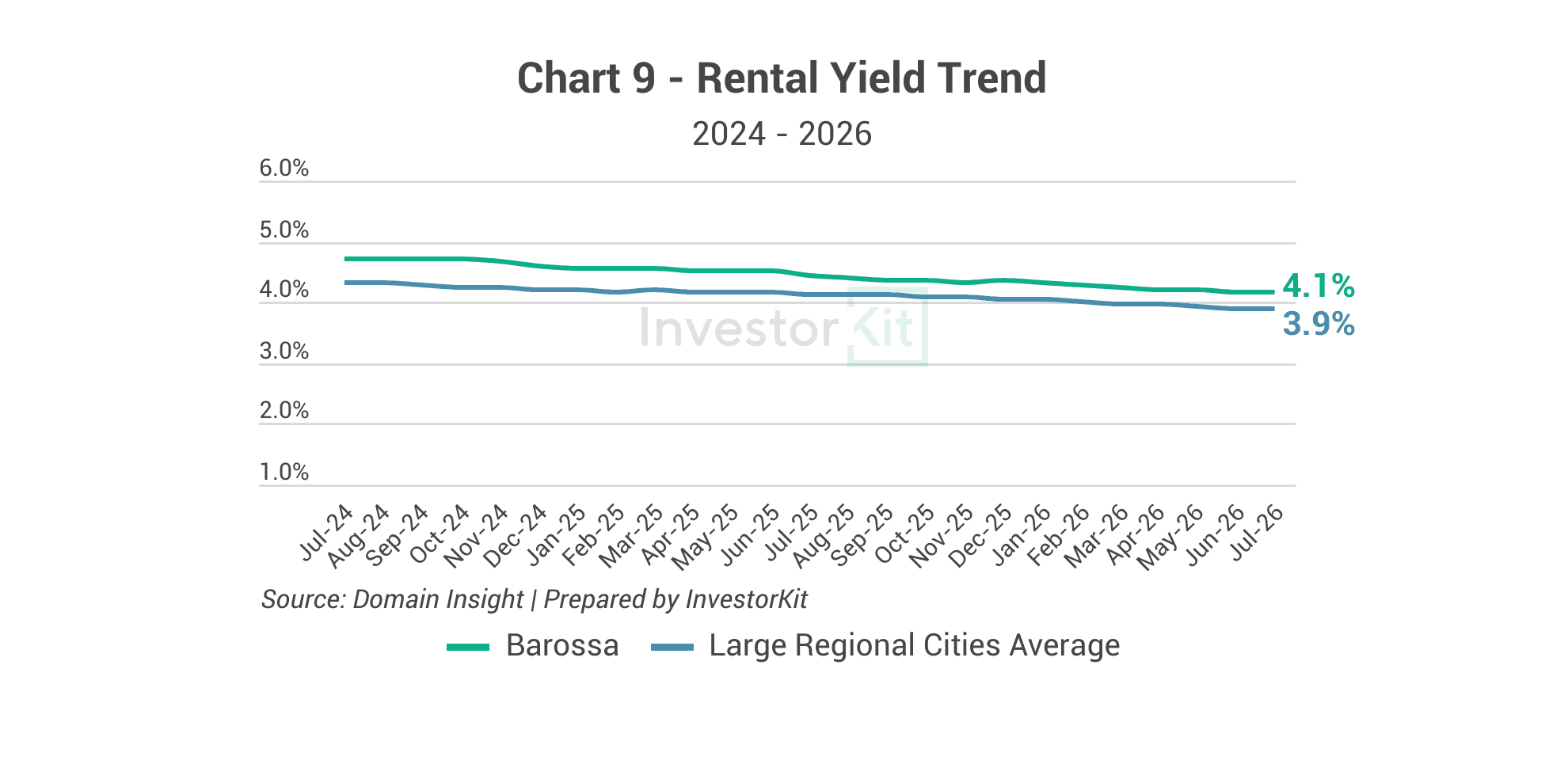
And because rental growth hasn’t kept pace with price growth, Barossa’s rental yields have gradually declined in recent years. It currently sits at around 4.1%, slightly above the 3.9% average across large regional cities.
So although yields have compressed, Barossa continues to provide slightly stronger rental returns than the broader large-regional-city benchmark, while extremely low vacancy continues to support rental growth.
Barossa’s Property Market: Affordability
Affordability is one area where Barossa’s strong recent price growth has clearly changed the market.
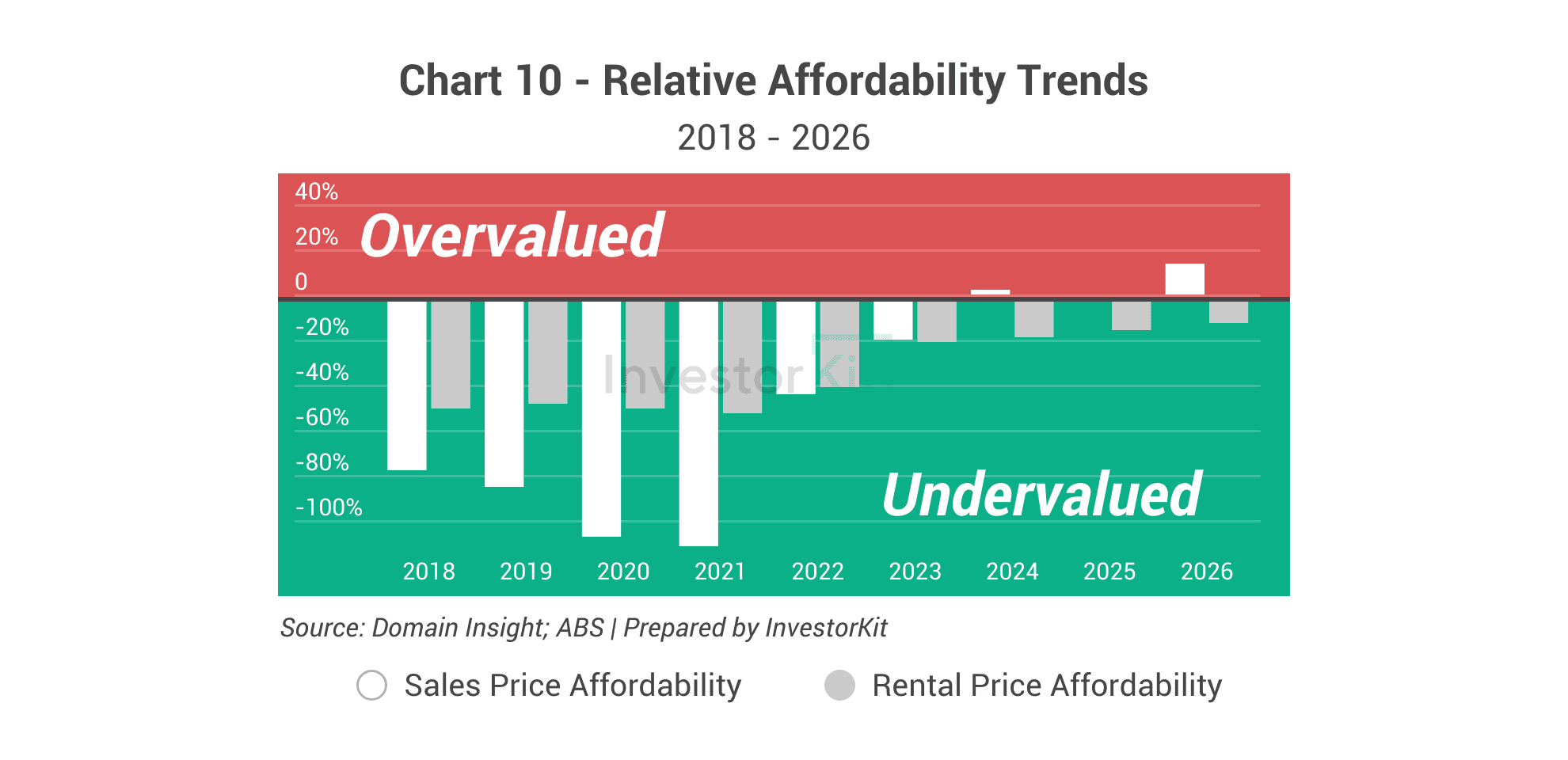
Purchase affordability has deteriorated substantially since 2022. Relative to local household incomes and current borrowing costs, Barossa house prices are now considered overvalued against the local affordability benchmark.
Meanwhile, the rental market is more affordable. While rental affordability has also deteriorated, it has done so much more slowly. In 2026, rents remain approximately 11% undervalued relative to local incomes.
This growing difference between purchasing and renting could have an important short-term effect on housing demand.
When buying becomes increasingly difficult relative to renting, some households that may otherwise have transitioned into home ownership are likely to remain in the rental market for longer. Until purchasing affordability improves, either through income growth, softer prices or lower borrowing costs, this could continue supporting already-high rental demand.
For investors, that provides another favourable underlying condition for further healthy rental growth.
Barossa’s Property Market Outlook
Over the next 6 to 12 months, Barossa’s high market pressure is expected to support continued healthy property price growth.
Housing supply remains tight relative to demand, inventory is sitting at approximately 1.8 months of stock, sales activity has strengthened and short-term median price growth is accelerating. Rental conditions remain similarly constrained, with vacancy rates well below 1%.
These conditions provide a strong foundation for near-term growth.
However, after the exceptional gains recorded over the past five years, expectations should remain measured. Higher borrowing costs and deteriorating purchasing affordability are likely to constrain buyers and make another rapid acceleration in price growth less likely.
Over the medium to long term, Barossa’s economic fundamentals would become more important. Its exceptionally low unemployment rate, elevated employment opportunities and balanced new housing supply pipeline suggest that underlying housing demand remains well supported.
Overall, Barossa appears to be moving into a more mature stage of its growth cycle: no longer an inexpensive market at the beginning of a boom, but a market where tight supply, strong employment conditions and sustained housing demand continue to support healthy growth prospects.
Barossa is the 29th regional city we examine in this Market Pressure Review Blog Series. Stay tuned for more cities to follow! InvestorKit is a data-driven buyers’ agency that selects purchase locations using a sophisticated market-pressure analysis system. This methodology has enabled our clients to achieve above-average growth and accelerate their investment journey.
Interested in learning more about InvestorKit’s research and services? Talk to us today by clicking here to request your 15-minute FREE discovery call!