
" transform="translate(9 6)" width="6px"/></svg>)
Tax Benefits Alone Don’t Automatically Make New Builds Better Investments
However, tax benefits are only one factor in your investment performance, not the whole picture. Structural factors that shape long-run property growth, such as supply scarcity, land value, location quality, and underlying demand, are not shaped by tax policy. Favourable tax treatment can improve the outcome of a strong investment, but it cannot compensate for a weak one.
The 2026 Federal Budget incentivises buyers to choose new builds over established properties, and the proposed tax reforms may lead many investors to assume new builds are the better investment.
The reasoning is understandable. Under the proposed reform, new builds will retain access to negative gearing, while established properties purchased after the changes will not.
However, tax benefits are only one factor in your investment performance, not the whole picture. Structural factors that shape long-run property growth, such as supply scarcity, land value, location quality, and underlying demand, are not shaped by tax policy. Favourable tax treatment can improve the outcome of a strong investment, but it cannot compensate for a weak one.
The tax reforms may also concentrate new investor demand in the same locations where supply is being released in stages, conditions that may limit price growth. The next section examines this dynamic.
The supply problem tax incentives do not fix
When supply enters the market faster than demand can absorb, market pressure reduces, and price growth can stall. Below are two examples, one for houses and one for units, that illustrate how this can play out.
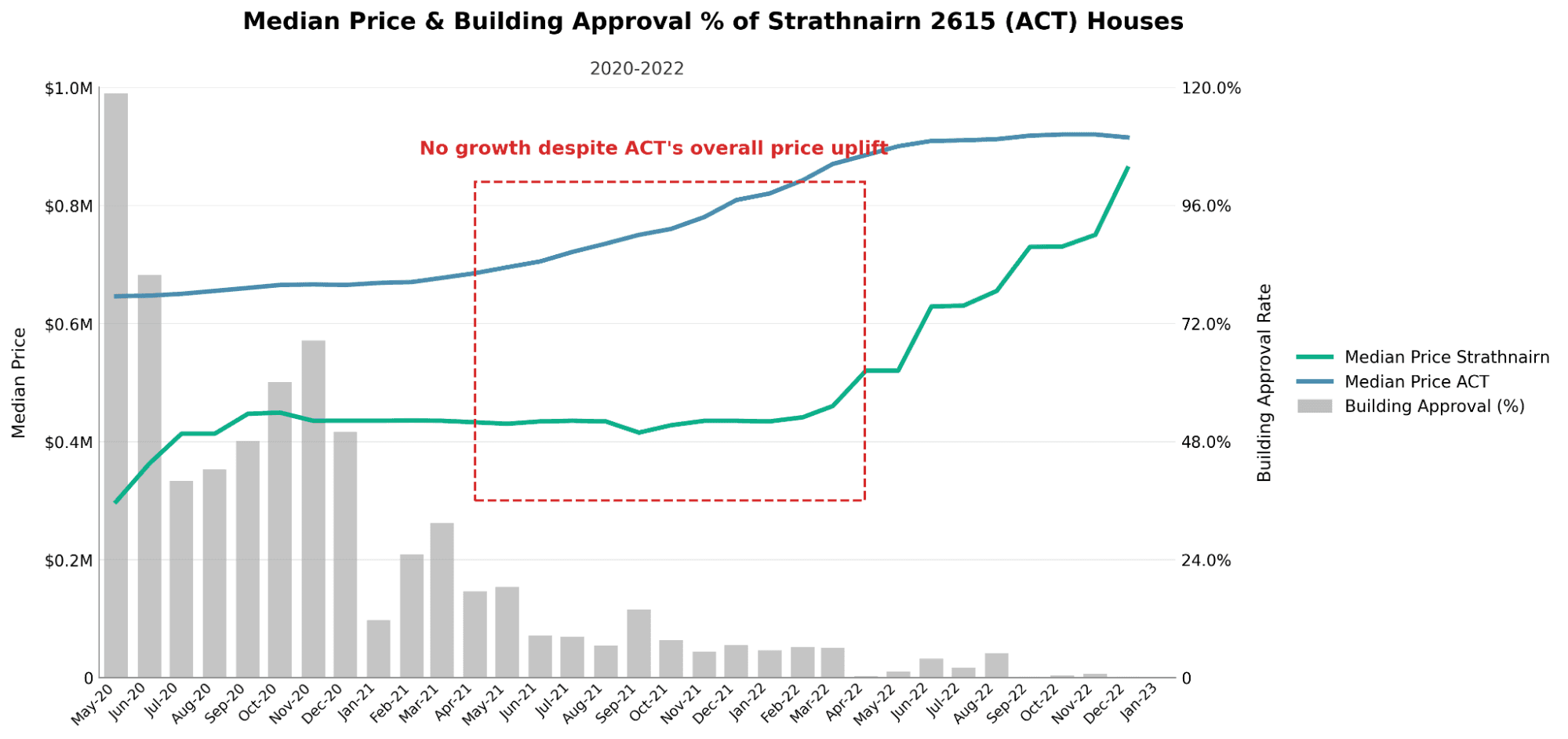
Strathnairn is a new release house and land suburb in north Canberra. Building approvals were elevated throughout the construction phase, peaking at 118.75% in May 2020 before falling in mid-2021. As completed stock entered the market, Strathnairn's median price remained flat from Sep 2020 to early 2022.
While the broader ACT market rose over the same period, Strathnairn's price growth remained stagnant. One explanation could be that the incoming supply exceeded what demand could absorb. As a new-release suburb, Strathnairn has further stages to come, and whether scarcity builds will depend on the pace of those future releases relative to demand.
The same pattern shows up in unit markets. Parramatta has been one of Sydney’s most active high-density development zones for more than a decade. The map shows the spread of new unit construction across Parramatta and its surrounding suburbs, with further projects still in the pipeline.
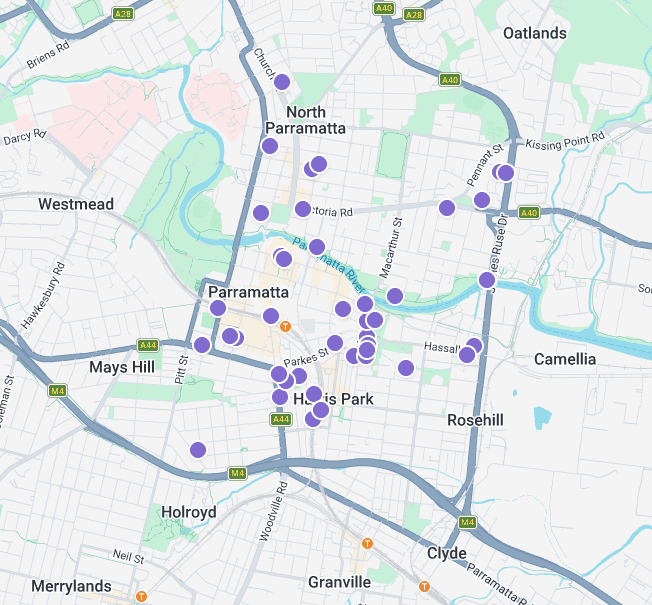
Source: https://www.apartments.com.au/
In Parramatta itself, the unit market declined by about 10% over the 10 years to 2026, while houses grew by about 50%. Same suburb, same demand drivers, two different supply conditions. Houses, where new supply has been more limited, captured the growth. Units, where new supply has been delivered continuously across the region, did not.
Many new-release suburbs and high-density development zones can continue to expand for years, which can limit how quickly scarcity builds and weigh on price growth over a longer horizon.
Takeaway: Supply-and-demand dynamics shape the growth outcome. New builds that attract investors through tax incentives may still follow the same supply pattern shown above.
The Land Value Problem Tax Incentives Do Not Fix
New builds typically have a lower land-to-asset ratio than established stock. Land is the part of the asset that typically appreciates over time, while buildings depreciate as they age. When a larger share of the purchase price is allocated to the building rather than the land, a smaller proportion of the asset is positioned to capture any land growth the market delivers.
The Geelong example shows what this looks like in practice. Across 5 paired sales, each new build and established house sold for prices within a few thousand dollars of each other.
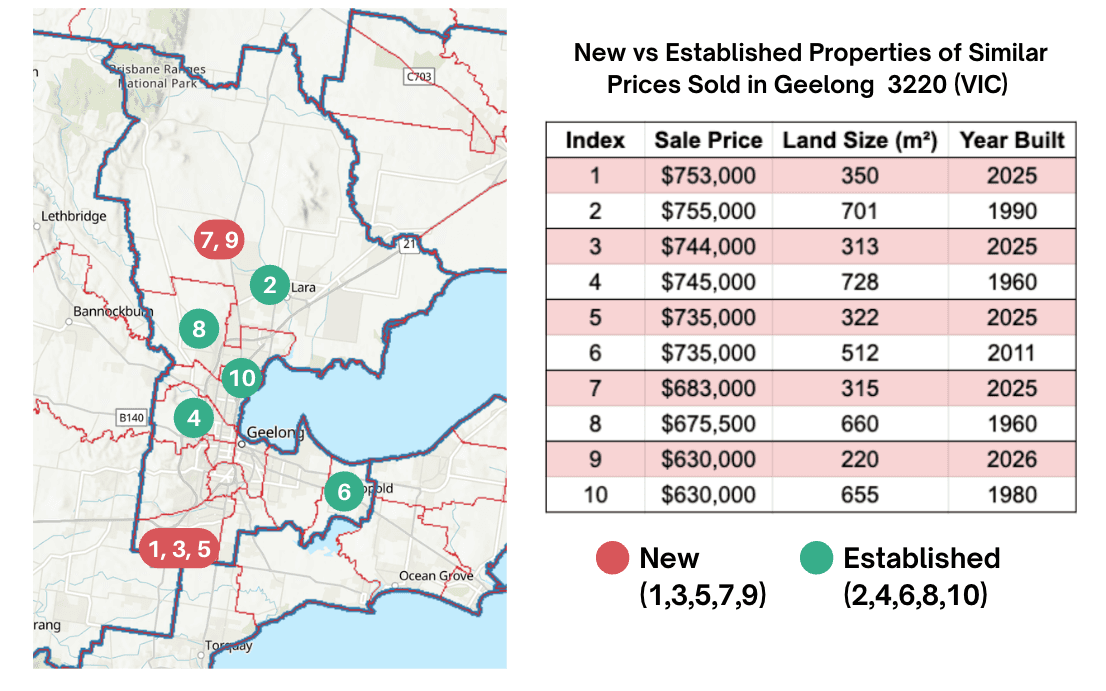
However, land sizes were not similar. New builds delivered roughly 220-350 sqm of land, while established houses at the same price points delivered 512-728 sqm, nearly double. Sales prices were similar, but land sizes were not.
To illustrate how this affects long-run growth, consider a simple model. Take two houses, both starting at $700,000, under the following assumptions:
An established house has 70% of its value in land, while the new build house has 30% of its value in land
The building structure of both assets depreciates at 2.5% per year
The land component of both assets appreciates at 8% per year
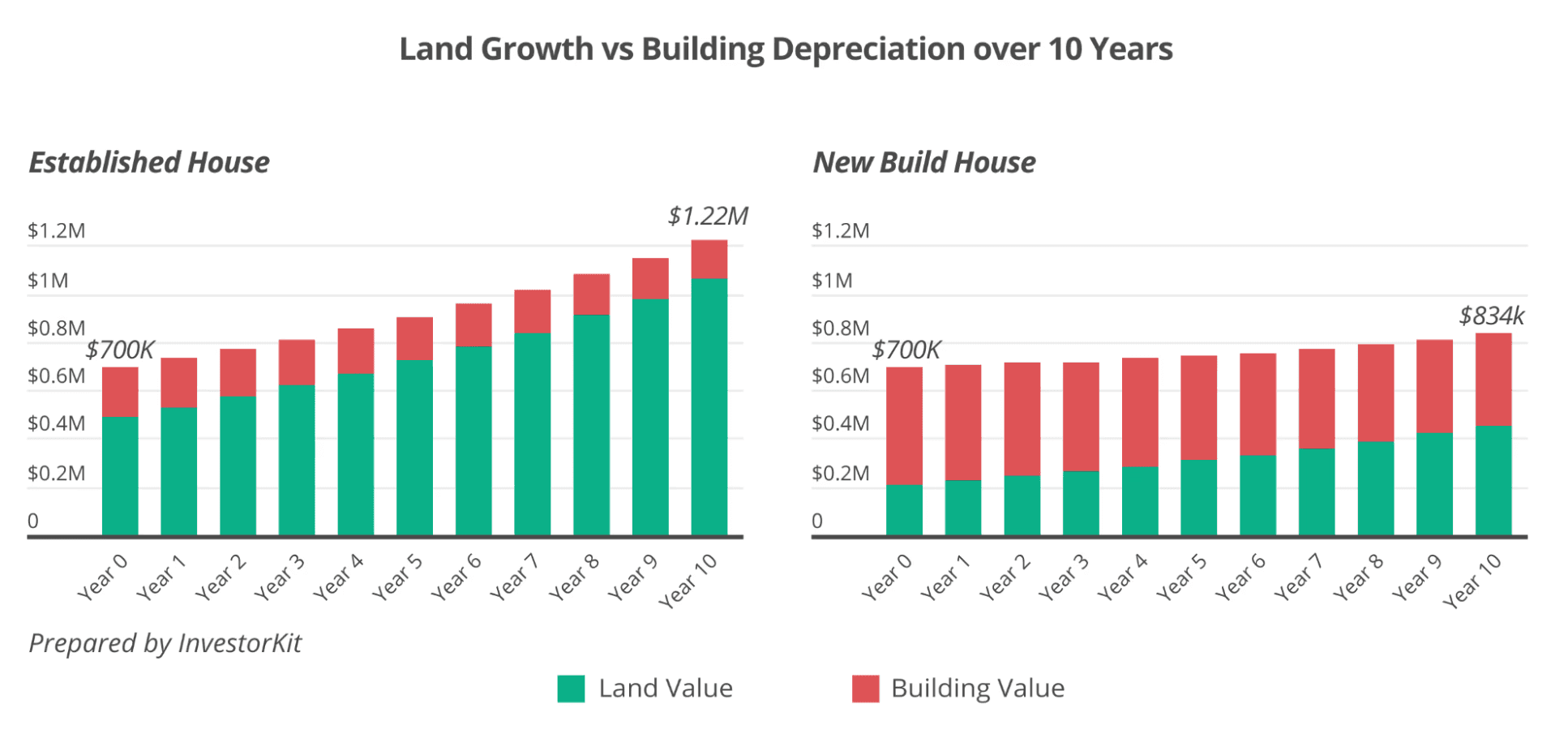
Over a decade, the established house grows to around $1.22 million (74% total growth). The new build grows to around $834k (19% total growth). Both properties benefited from the same 8% per annum land appreciation assumption. The difference in outcome is not the land growth rate but the extent to which each property's value was exposed to it. The established had 70% exposure to the growing component, while the new build had 30%. Building depreciation also worked against the new build because more of its value was tied to the depreciating component.
New builds also carry embedded costs that established stock does not, or carries at significantly lower levels. Developer margins, marketing costs, sales commissions, GST and turnkey premiums are all included in the purchase price. These costs do not add to the asset's underlying value but are reflected in what buyers pay at entry.
Takeaway: Tax incentives may improve the after-tax outcome, but they do not change the land share or the embedded costs that are included in the purchase price.
The 3 Risks Tax Incentives Do Not Fix
New build investment carries 3 risks that tax treatment does not alter. Each risk sits with the buyer, not the developer or the tax system.
Risk 1: Interest Rate and Borrowing Capacity Risk
Build times have lengthened materially over the past 15 years. Houses now take 11.5 months from approval to completion, townhouses 14.8 months, and apartments 32.9 months, all materially slower than pre-pandemic and a decade earlier.
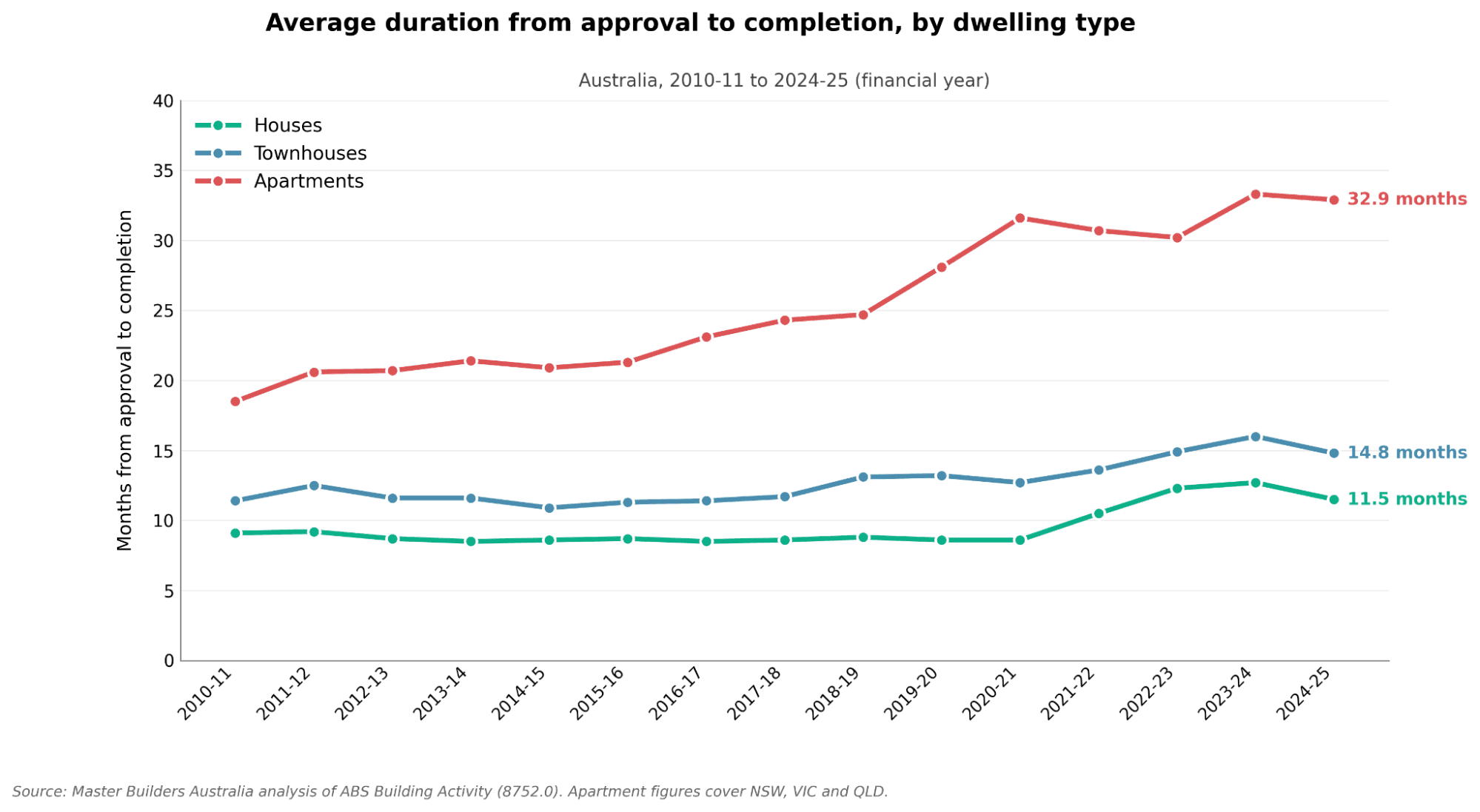
When a buyer signs a new-build contract, their borrowing capacity is assessed against the prevailing interest rates at that time. If rates rise during the build period, a lender may calculate a lower borrowing capacity at settlement than at the time of signing.
Market movements add a second layer of exposure: if property values fall during the build window, the bank valuation at settlement may be below the purchase price, leaving the buyer short of the funds needed to settle.
The buyer would then need to cover any funding gap out of pocket or risk being unable to settle. The longer the build window, the higher the risk.
Risk 2: Builder insolvency:
In FY 2023-24, ASIC recorded 2,975 construction company insolvencies, accounting for approximately 27% of all corporate insolvencies in Australia, the highest share of any industry. The construction sector has consistently led national insolvency figures for several years. A builder who fails can leave the buyer exposed to delays and defects from unfinished work, requiring the owner to fund completion at an additional cost.
Risk 3: Defect Risk
Building quality in new apartment construction has emerged as a structural concern across Australia. In NSW, 53% of newer apartment buildings were found to have serious defects in common property in the latest Building Commission NSW survey, up from 39% in 2021. The NHSAC report also identifies dwelling quality as an area of ongoing national focus, citing a national roadmap for improving the housing stock quality.
Research Depth Issue
In established markets, decisions can be grounded in concrete evidence such as comparable sales, days on market, vendor discounting, auction clearance, and rental performance. In new markets, much of this data is not yet available. Without it, buyers often rely on information presented by developers, which may project a more optimistic outlook than the market itself supports. The contrast between Ascot Vale, an established Melbourne suburb, and Spring Mountain, a newer market in Queensland, illustrates this gap clearly.
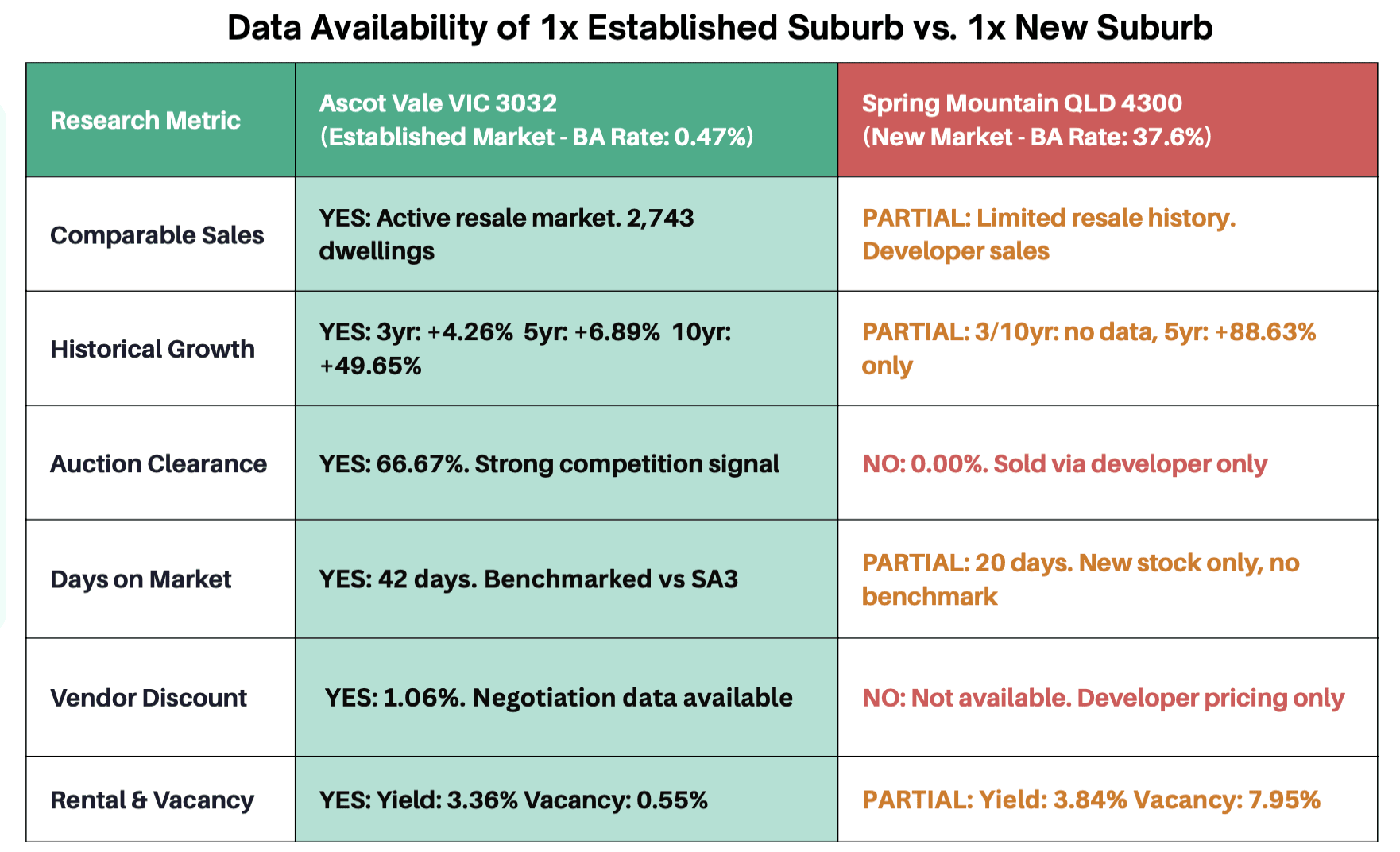
In Spring Mountain, an investor cannot benchmark the price they are paying against comparable resales, assess long-term growth performance, or gauge negotiation room or rental performance with the same confidence as in Ascot Vale. The decision is being made with less market evidence than an established market would provide.
Takeaway
The 2026 Federal Budget preserves negative gearing and the 50% CGT discount for new builds, while removing both from established properties from 1 July 2027. The proposed reforms may make new builds appear more attractive in terms of cash flow and tax treatment compared with established properties. However, they do not change the structural conditions that determine whether an investment is sound.
Long-run investment performance is shaped by supply scarcity, land-to-asset ratio, location quality, and underlying demand. Tax benefits should complement strong fundamentals, not replace them. Fundamentals are what compound over time. Tax treatment is what supports them.
If the budget has you weighing up new builds, the more useful question is whether the underlying investment fundamentals support the decision in the first place. Book a free 15-minute discovery call with InvestorKit. We will walk through how the structural factors apply to your goals, borrowing capacity, and the markets to consider.
Keep Reading



" transform="translate(5 5)" width="14px"/></svg>)