
" transform="translate(9 6)" width="6px"/></svg>)
Mount Gambier Property Market in 10 Charts
Mount Gambier: The Hub of South Australia’s Limestone Coast
Located around 435 km south-east of Adelaide and 420 km west of Melbourne, Mount Gambier occupies a strategic position between Australia’s two largest southern capitals. As the commercial and service hub of the Limestone Coast region, the city supports a broad regional catchment across south-eastern South Australia and parts of western Victoria.
The local economy is well diversified, underpinned by forestry, agriculture, healthcare, retail, construction, and education industries, while the city’s strategic location also strengthens its role as a regional freight and service centre. This broad-based economic base has helped support stable employment and long-term housing demand,
Mount Gambier’s property market has been one of Australia’s strongest performers in recent years. House prices have risen steadily since 2021 and, unlike many markets that lost momentum after the pandemic boom, Mount Gambier has continued to perform well, supported by its relative affordability and consistently healthy housing demand.
So, where does the market stand today? Can Mount Gambier continue to outperform in 2026? Let’s examine the latest data through ten key charts.
As of July 2026, Mount Gambier’s market pressure remains high.
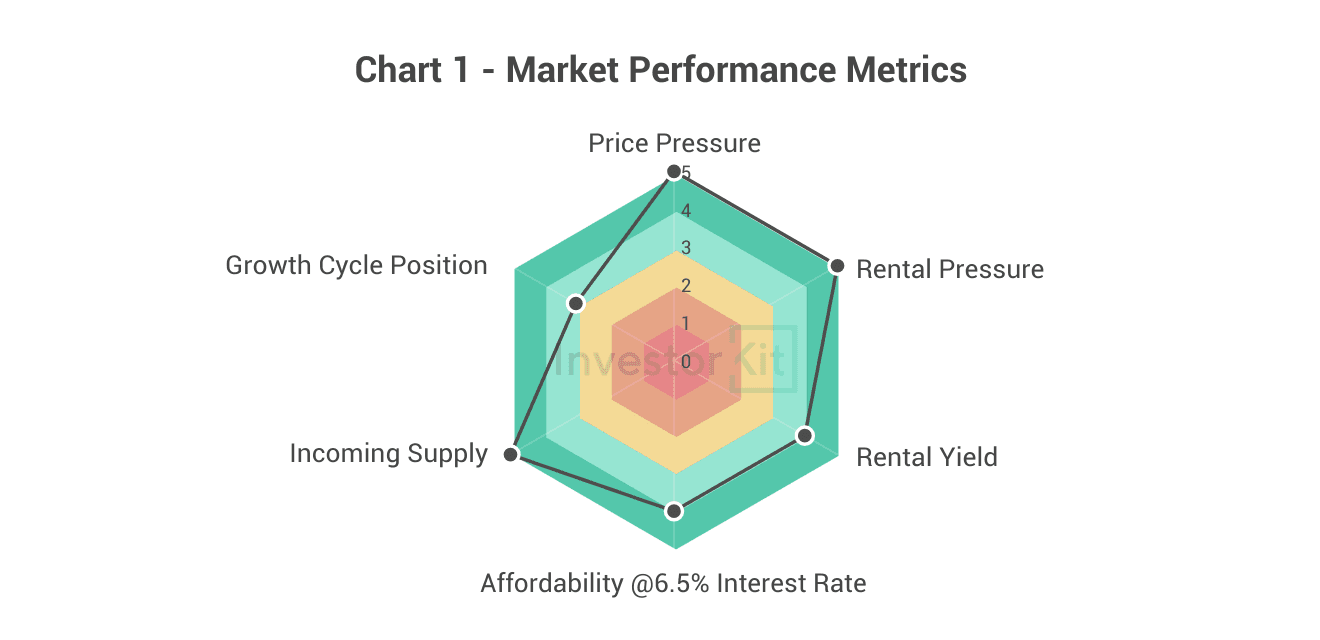
Price pressure, rental pressure and incoming supply each receive the maximum 5 out of 5, reflecting strong buyer demand, tight rental conditions and limited supply-side risk.
Rental yield and affordability both score 4 out of 5, indicating that the market continues to offer attractive cash flow while remaining relatively accessible to buyers.
Meanwhile, the growth cycle scores 3 out of 5, suggesting the market is currently in a balanced stage after several years of strong price growth.
Mount Gambier’s Demographic and Economic Trends
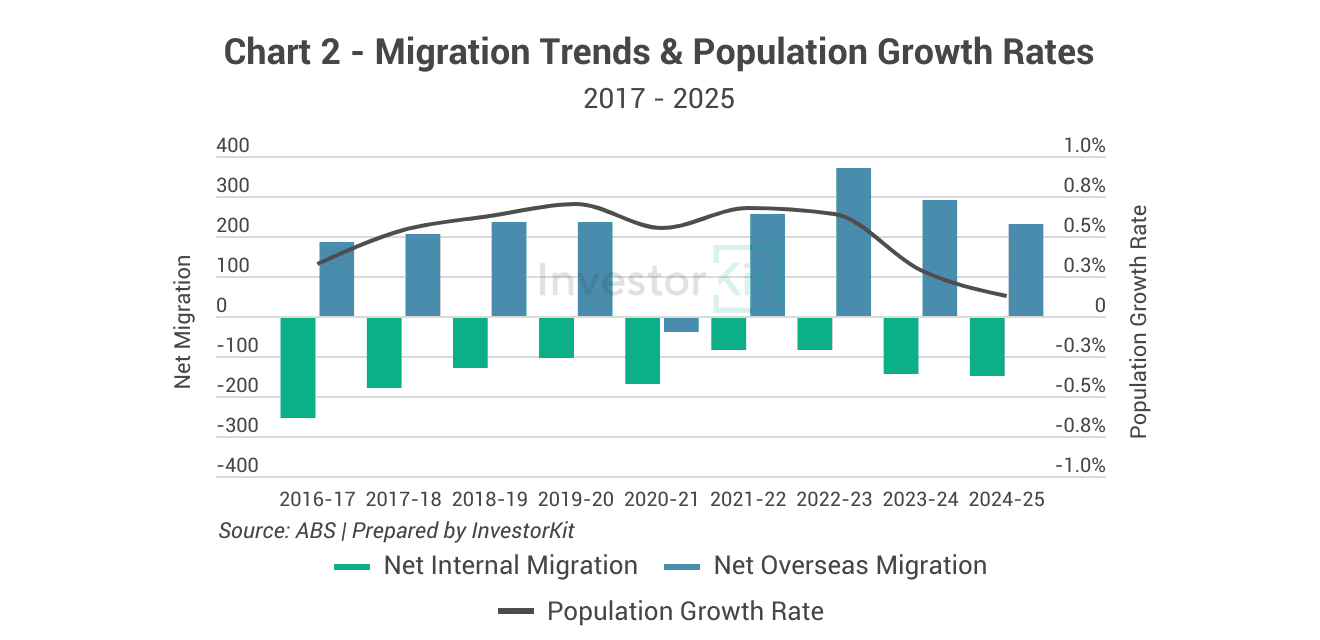
Mount Gambier’s population growth has moderated since its peak in 2022, reflecting the normalisation of both overseas and internal migration (Chart 2).
However, slower population growth does not show the full picture of local housing demand. Employment conditions remain healthy, with the number of online job advertisements across the broader region staying at more than twice its pre-pandemic average. The unemployment rate was approximately 4.2% as of March 2026, well below the higher levels recorded through much of the past decade (Chart 3).
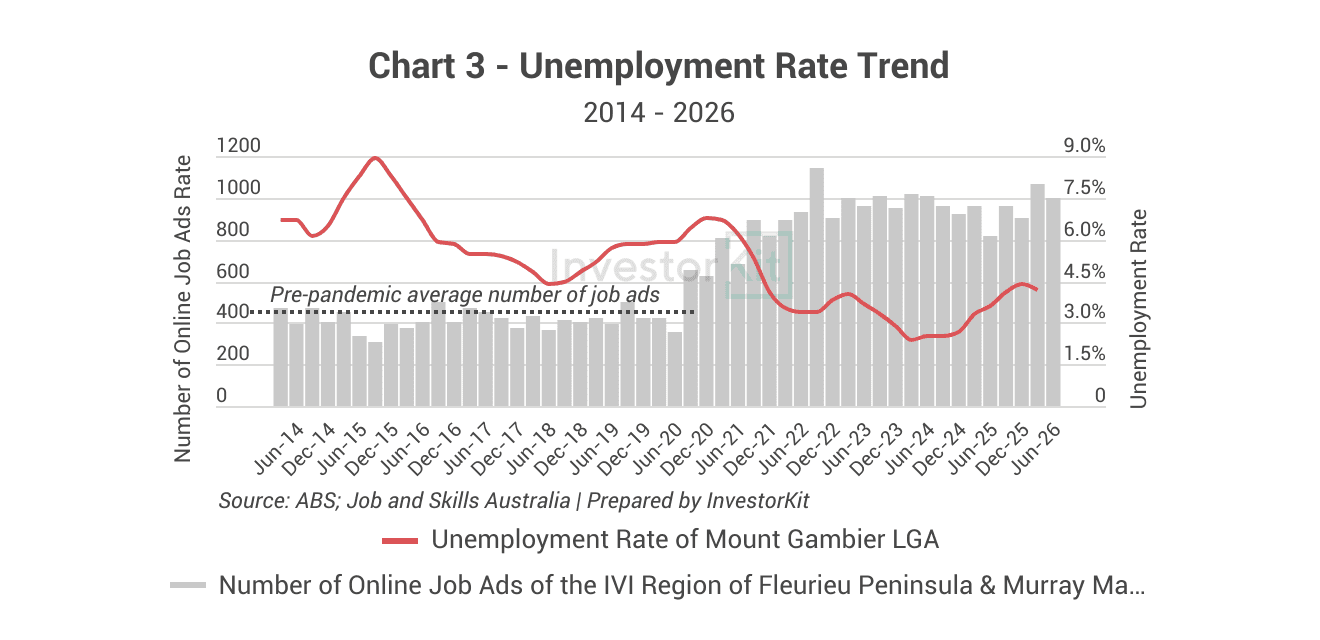
These conditions point to an active local job market, which continues to support housing demand and market confidence despite the recent moderation in headline population growth.
Mount Gambier’s Property Market: Sales Market Trends
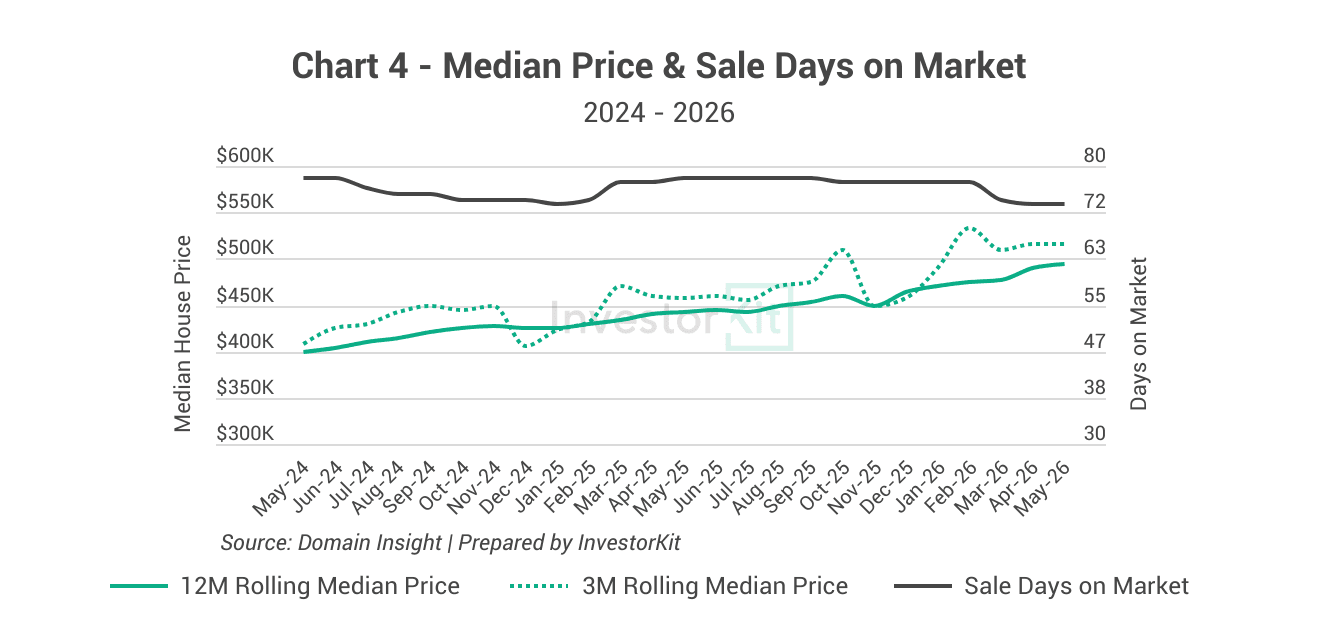
House prices have been growing steadily, up 11.9% in the past year. More recently, market pressure has been gradually strengthening, as reflected by declining days on market and tightening inventory levels.
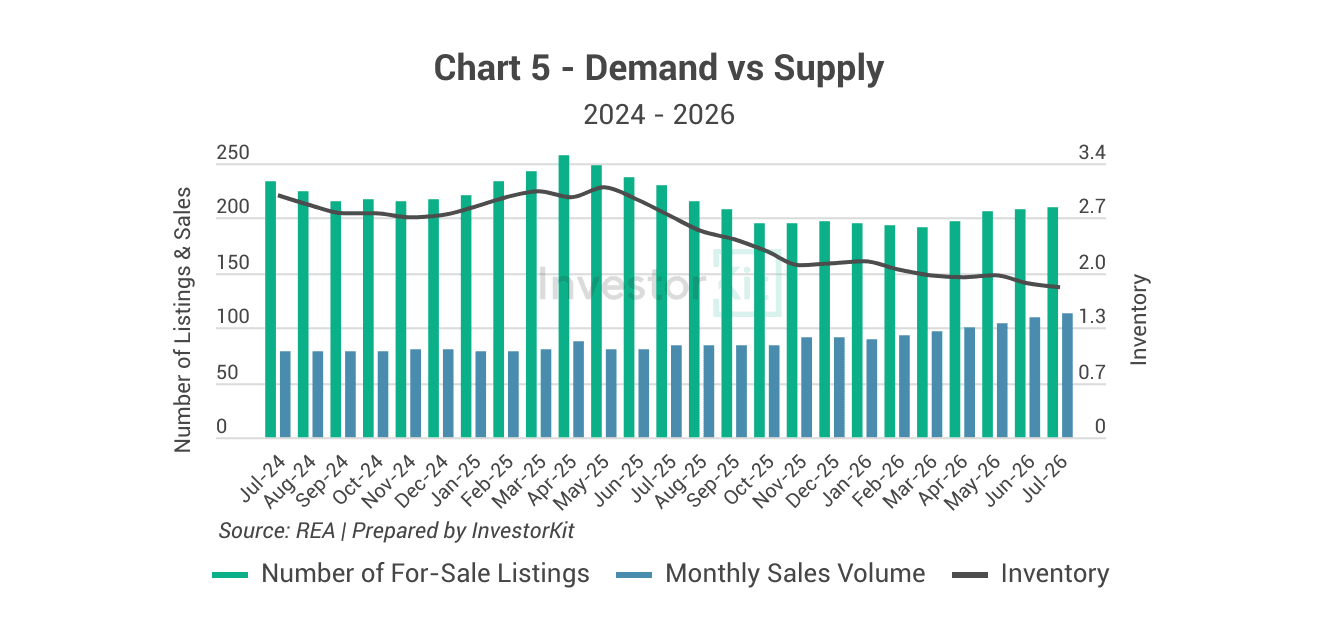
Chart 5 shows that while the number of listings has increased modestly throughout 2026, sales volumes have risen more quickly. As the gap between listings and sales has narrowed, inventory has fallen from around 3 months of stock in early 2025 to below 2 months today. This tightening market balance is providing a solid foundation for continued price growth.
Turning to incoming supply (Chart 6), new house construction has remained modest in recent years, with building approval rates consistently below 2%. This is broadly in line with the region’s moderate population growth and suggests that oversupply risk remains low.
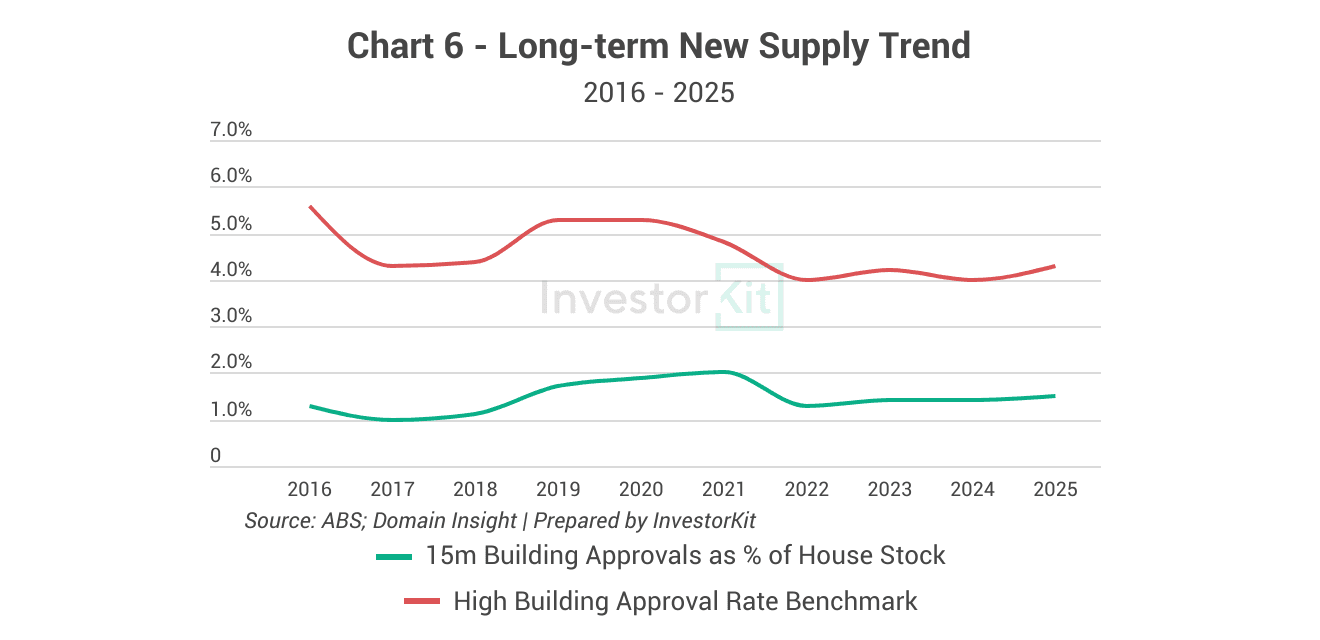
Chart 7 places Mount Gambier’s long-term performance into context. Over the past two decades, house price growth has in general tracked the national average. More recently, however, the market has outperformed many major regional cities, making it one of the strongest-performing regional markets over both the past 5 and 10 years.
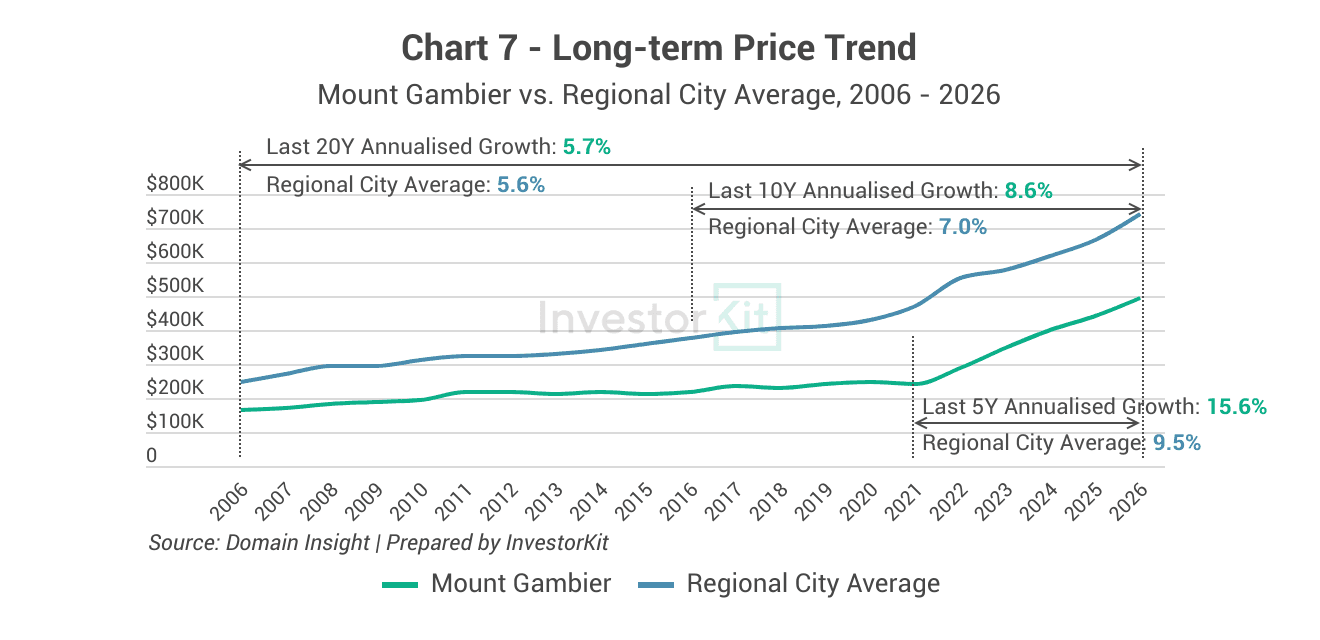
While affordability has become less favourable following recent price surges (which we’ll discuss later in Chart 10), the current level of market pressure suggests the market remains well positioned for above-average growth over the next few years.
Mount Gambier’s Property Market: Rental Market Trends
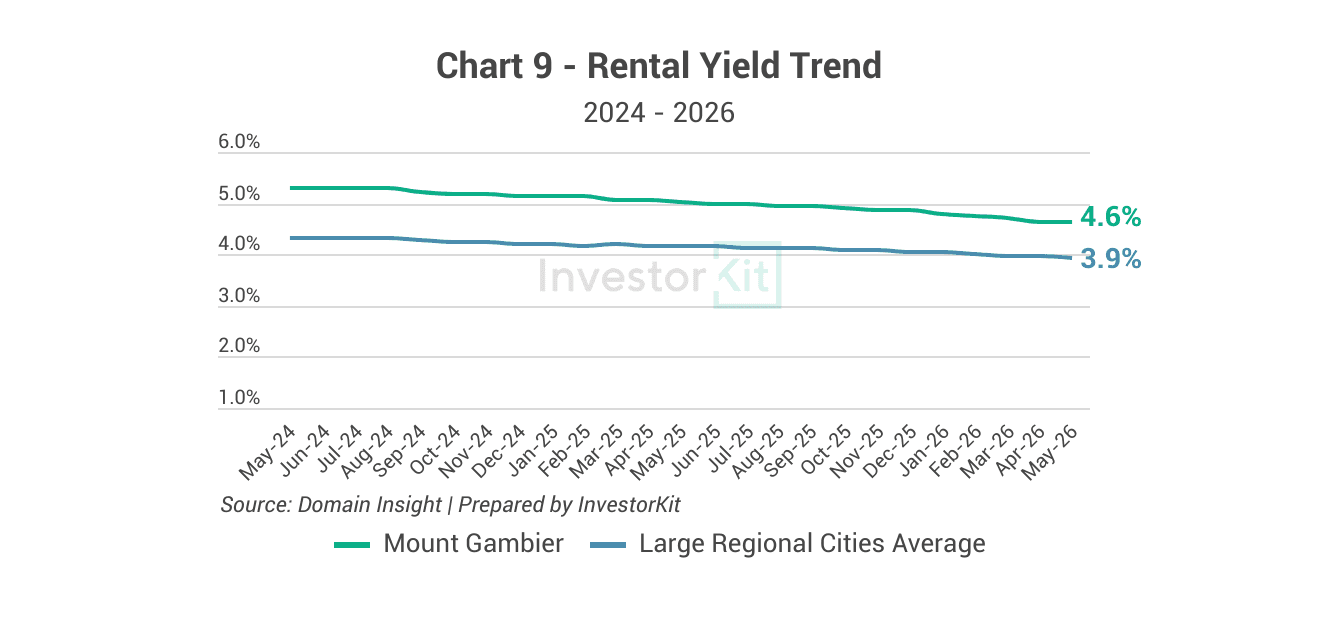
Mount Gambier’s rental market remains exceptionally tight, with vacancy sitting at just 0.6%. Vacancy rates have generally trended lower over the past two years, reflecting persistent rental demand against constrained rental supply. As a result, rents have continued to rise, increasing by 5.9% over the past year.
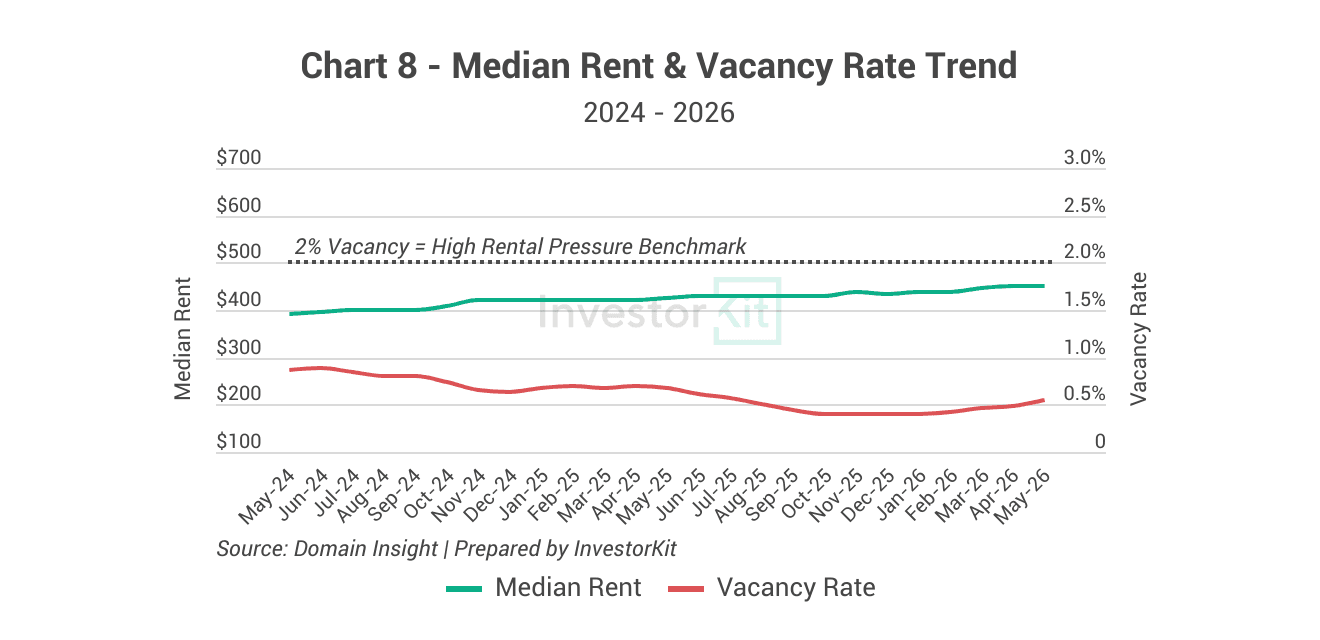
As house prices have grown faster than rents, rental yields have gradually compressed from above 5% two years ago to the current 4.6%. Nevertheless, yields remain relatively healthy compared with many larger markets, providing solid cash flow support for investors in the current high interest rate environment.
Mount Gambier’s Property Market: Affordability
Mount Gambier’s house prices remain affordable relative to local incomes, with values estimated at around 14% below the affordability benchmark. Rental affordability is stronger, with rents sitting approximately 31% below the local affordability benchmark.
Although the market remains affordable overall, affordability has deteriorated significantly since 2021. Looking ahead, affordability is likely to remain under pressure if house prices continue to outpace income growth. Over time, expected interest rate cuts in the coming year and continued wage growth should help ease affordability pressures to some extent.

Mount Gambier’s Property Market Outlook
Over the next 6-12 months, Mount Gambier’s property market is expected to continue performing well. Low and declining inventory, shortening days on market, and the market’s remaining affordability all point to healthy market pressure, providing a solid foundation for continued price growth. Rents are also expected to continue rising, supported by exceptionally tight rental supply.
While the market is unlikely to experience another surge like that seen in 2022-2023, current conditions suggest it remains well positioned to outperform its long-term average over the near term.
Mount Gambier is the 27th regional city we examine in this Market Pressure Review Blog Series. Stay tuned for more cities to follow! InvestorKit is a data-driven buyers’ agency that selects purchase locations using a sophisticated market-pressure analysis system. This methodology has enabled our clients to achieve above-average growth and accelerate their investment journey. Interested in learning more about InvestorKit’s research and services? Talk to us today by clicking here to request your 15-minute FREE discovery call!
Keep Reading



" transform="translate(5 5)" width="14px"/></svg>)