Key takeaways
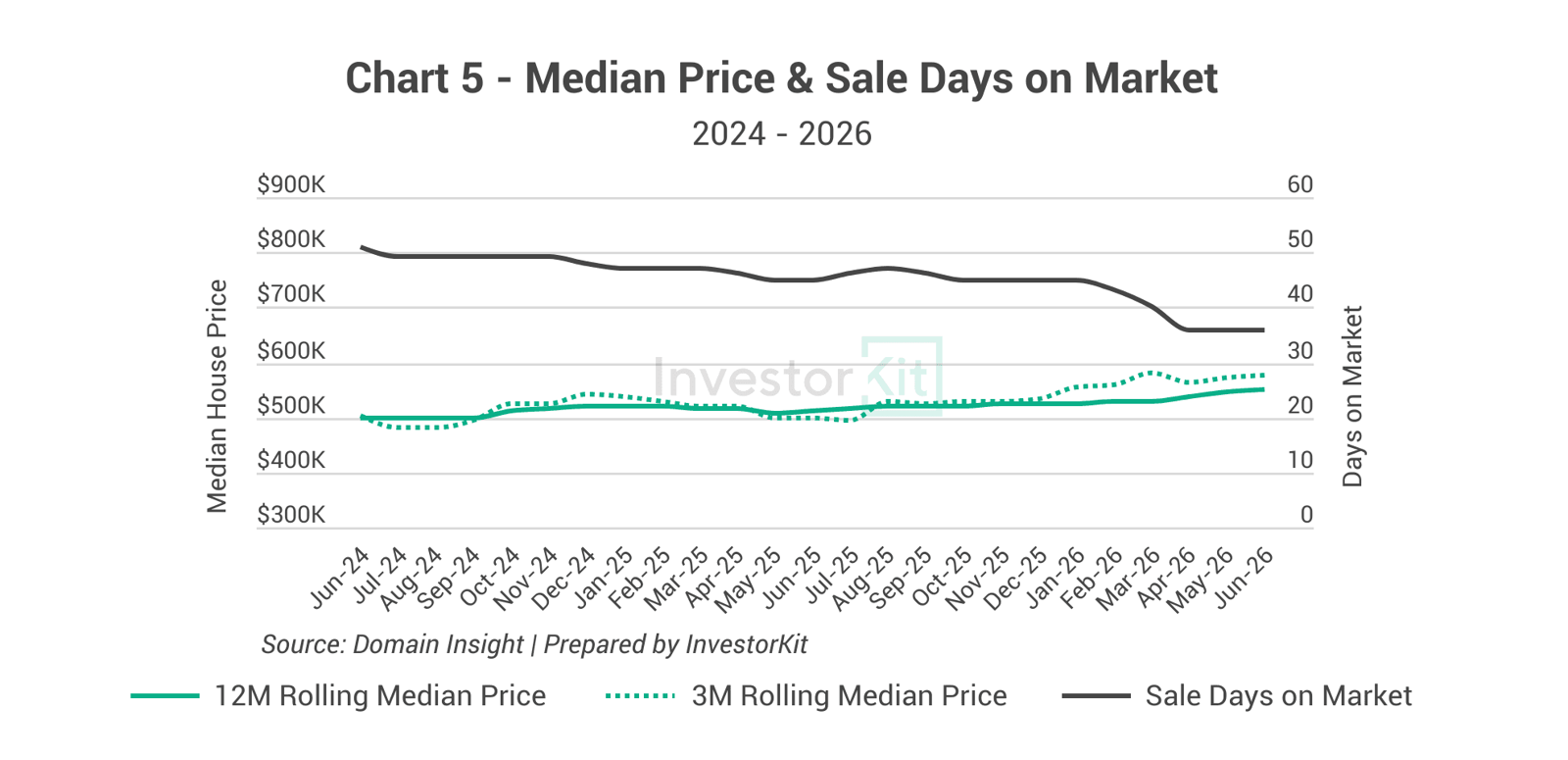
- Inventory has fallen to around 3 months of stock, and the 3-month rolling median is rising faster than the 12-month median, an early sign of accelerating growth.
- Unemployment sits at a healthy 4.4%, and online job advertisements remain approximately double their 2019 level.
- Vacancy is well below 1%, rents rose 6.4% over the past year and the median yield of around 5.0% beats the 3.9% large regional city average.
Wangaratta: A Regional Hub Connecting North East Victoria
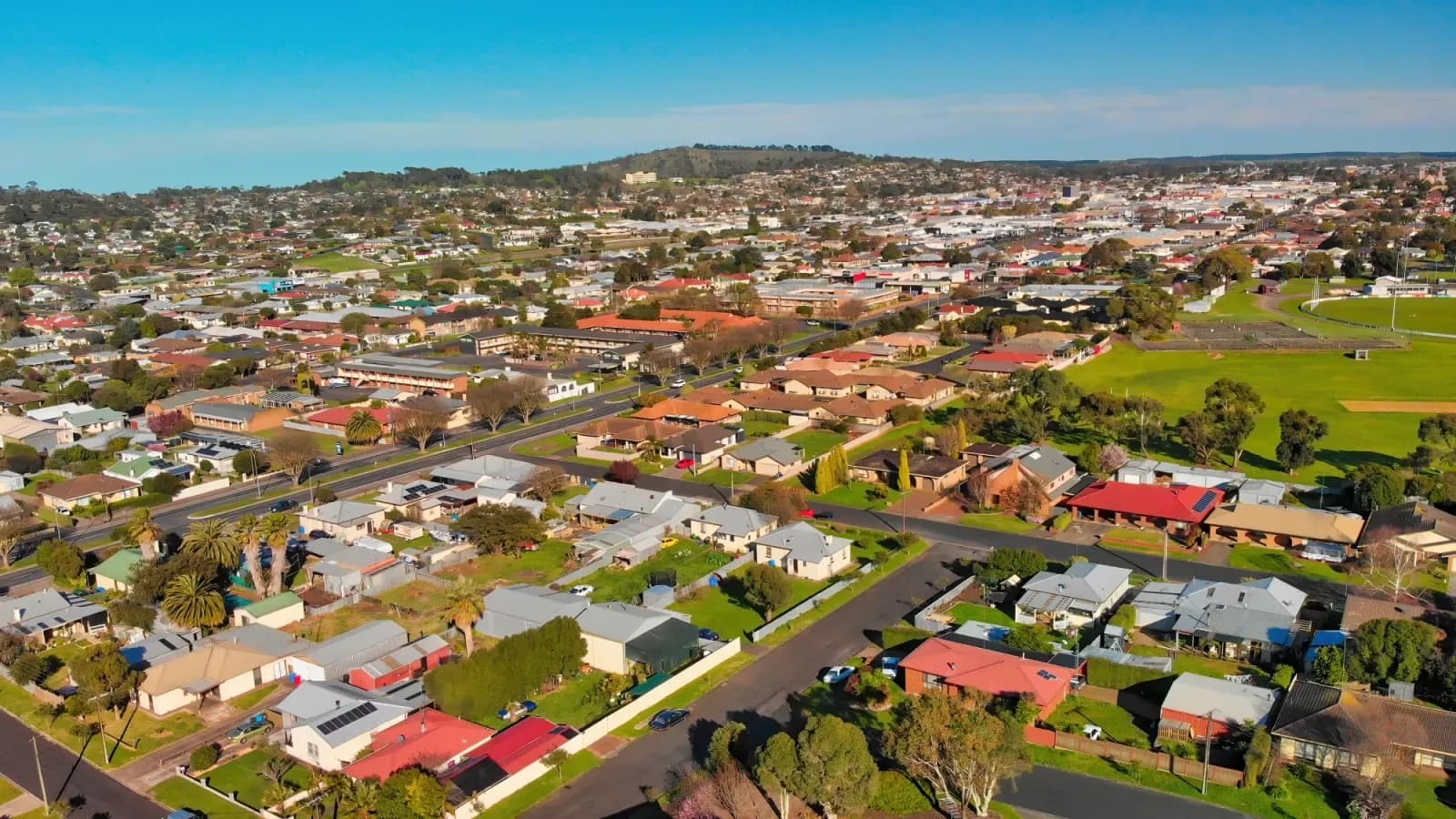
Positioned between Shepparton and Wodonga, Wangaratta plays an important role as a regional service hub for North East Victoria. While relatively small, its economy is well diversified across healthcare, education, retail, manufacturing, agriculture, and other service industries, providing a broad employment base and supporting housing demand from local residents and the surrounding region.
Wangaratta’s property market performed strongly through the COVID boom before entering a period of slower growth. Since 2025, however, conditions have gradually strengthened again, with improving buyer demand, tightening housing supply and a recovering local economy. So, what could come next for Wangaratta’s property market? Let’s examine the latest data through ten key charts.
As of 2026, Wangaratta’s overall market pressure is relatively high.
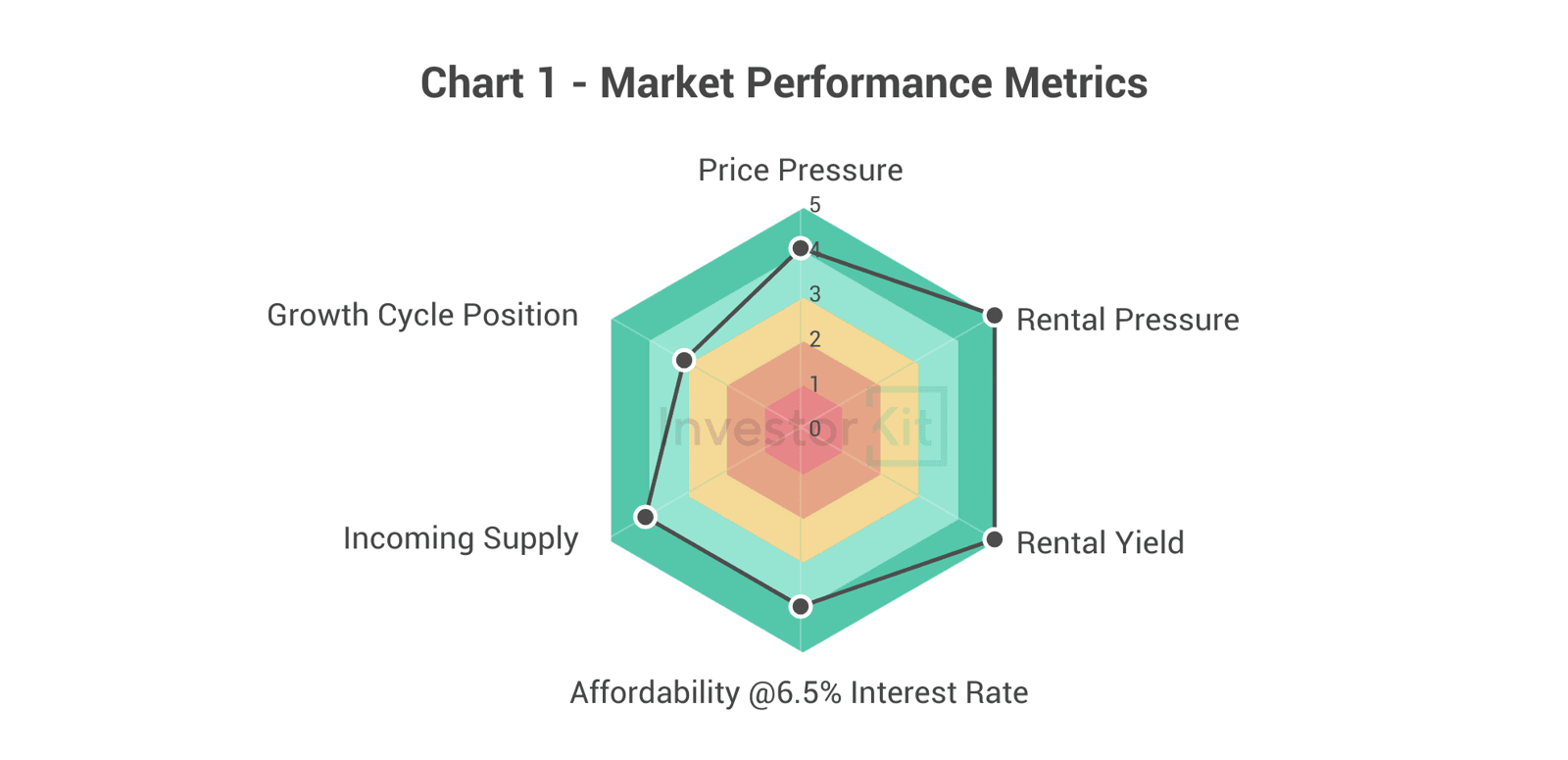
Rental pressure and rental yield both score the maximum 5 out of 5, reflecting tight rental conditions and healthy investor cash flow. Price pressure, affordability and incoming supply each score 4 out of 5, suggesting relatively strong buyer conditions, accessible house prices and limited oversupply risk.
Meanwhile, the growth cycle scores 3 out of 5, suggesting the market is currently in a balanced stage following its strong performance during the COVID boom. Together, these indicators point to a market where underlying pressure is building again.
Wangaratta’s Demographic and Economic Trends
Population growth has not been particularly strong in Wangaratta in recent years. However, both internal and overseas migration have remained positive, meaning the town continues to attract new residents rather than experiencing a net outflow of people (Chart 2).
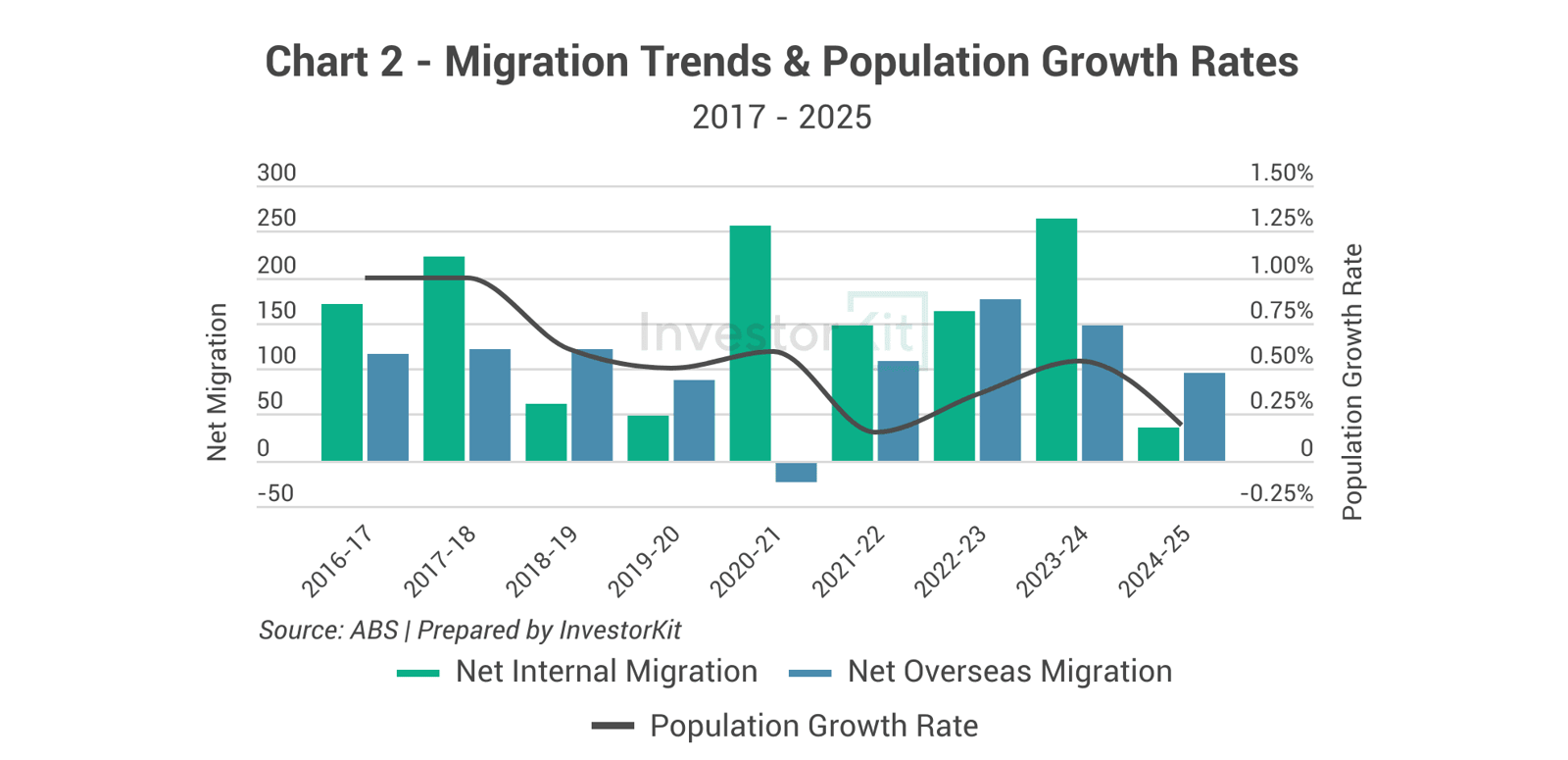
While migration volumes remain moderate, the positive trend is encouraging for long-term housing demand. Wangaratta’s relative affordability and local employment opportunities are likely to be among the factors supporting its ability to steadily attract residents.
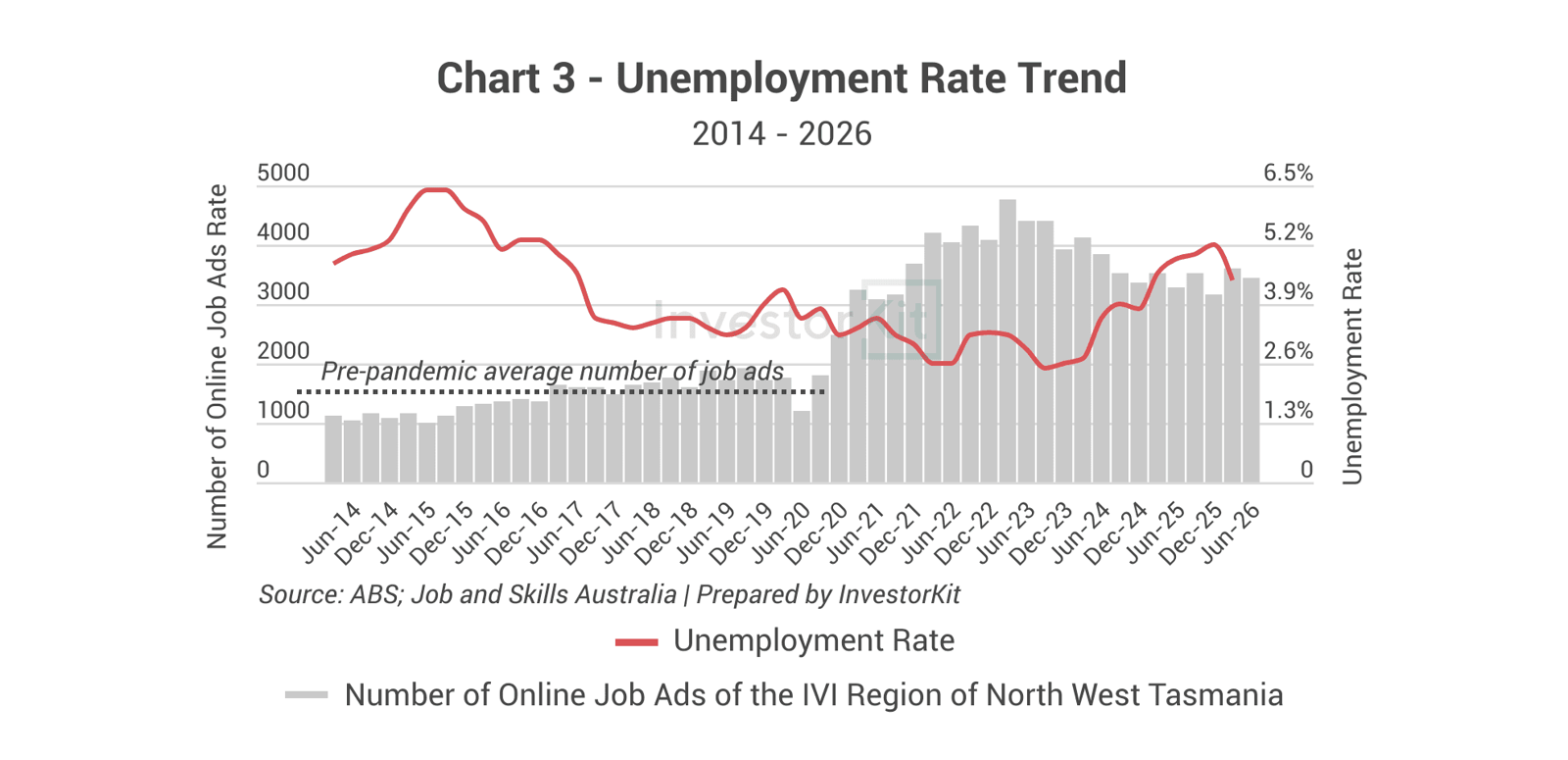
Employment conditions provide another positive signal. Wangaratta’s unemployment rate has declined in 2026 and currently sits at a healthy 4.4%. At the same time, the number of online job advertisements across the broader region remains approximately double the level recorded in 2019, pointing to significantly stronger employment opportunities than before the pandemic (Chart 3).
This improving job market is also reflected in activity on the ground. Rather than relying on one major infrastructure project, Wangaratta is seeing a series of job-creating developments across sectors retail, industrial, education, healthcare, ect.
This combination of lower unemployment, elevated job opportunities and ongoing local investment points to a gradually strengthening economy. Over the longer term, a broader employment base should help generate more sustainable housing demand and provide an important foundation for the property market.
Wangaratta’s Property Market: Sales Market Trends
Wangaratta’s sales market pressure has been improving since 2025, with the balance between housing supply and buyer demand gradually tightening.
The number of properties listed for sale has trended downward overall, while sales volumes have been steadily rising since mid-2025. As a result, inventory has declined and now sits at around 3 months of stock, which represents a relatively balanced market (Chart 4).
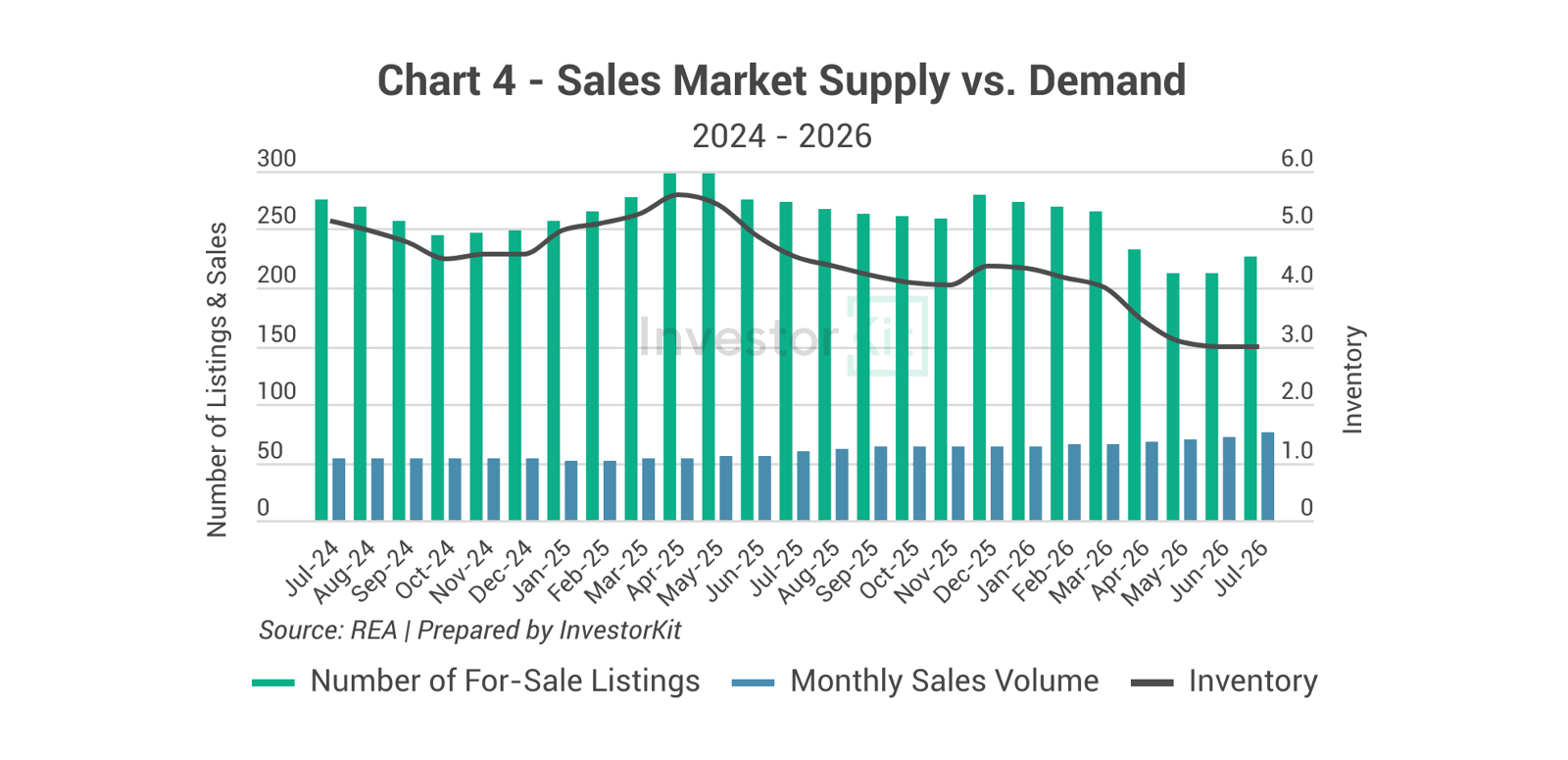
Buyer urgency has also been improving. Days on market have trended downward, indicating that properties are taking less time to sell as demand strengthens.
At the same time, house prices have been steadily increasing. Recently, the 3-month rolling median price has begun rising faster than the 12-month rolling median, creating an upward divergence between the two measures. This is an early sign of accelerating price growth (Chart 5).
With supply tightening, sales activity strengthening and properties selling more quickly, Wangaratta’s sales market is showing clearer signs of recovery after the slower period that followed the COVID boom.
Turning to incoming supply, Wangaratta has maintained a relatively balanced level of new housing construction over the past decade. The current building approval rate of around 2.5% remains comfortably within the balanced range, indicating a low risk of significant housing oversupply (Chart 6).
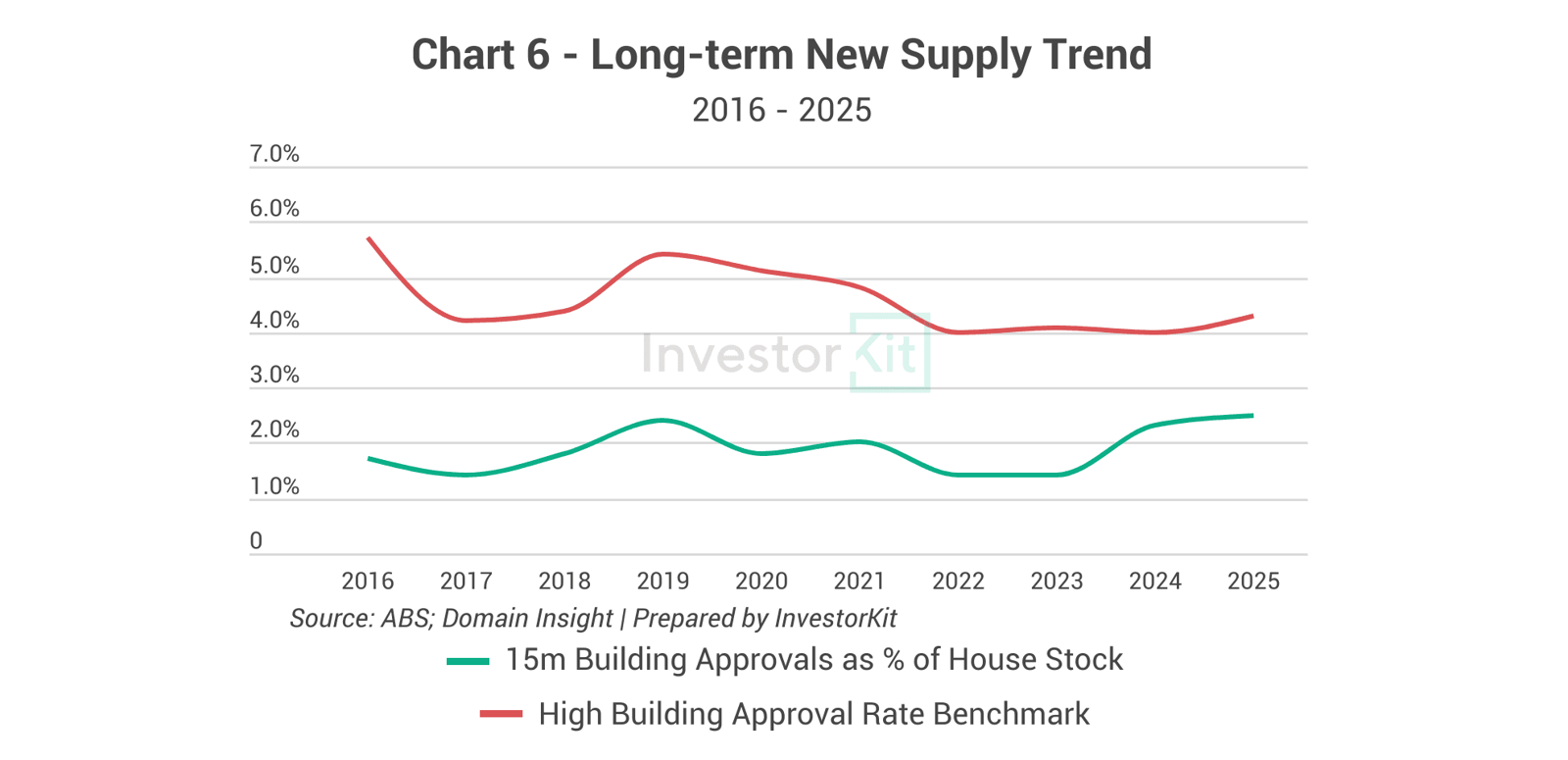
Chart 7 places Wangaratta’s recent performance into a longer-term perspective. Over the past 20 years and 10 years, Wangaratta’s annualised house price growth has been broadly in line with the regional city average.
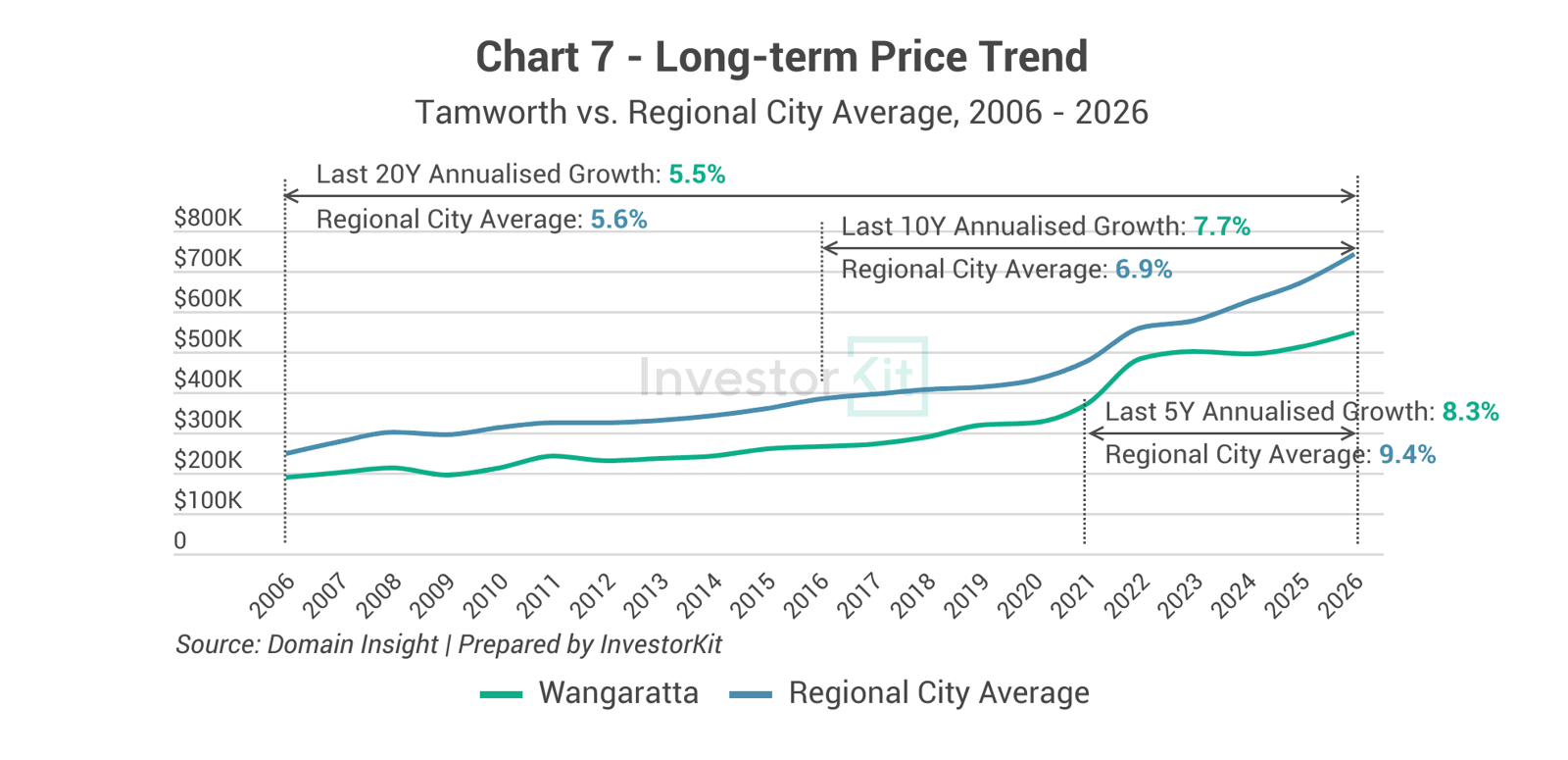
Over the past five years, Wangaratta has lagged the regional city average. However, this softer performance is consistent with the experience of many Victorian regional markets following the significant growth recorded during the pandemic period.
Looking ahead, conditions are starting to change. With housing supply tightening, buyer demand improving and house prices remaining relatively affordable, Wangaratta appears increasingly well positioned for price growth to accelerate as the market moves further into its next growth cycle.
Wangaratta’s Property Market: Rental Market Trends
Wangaratta’s rental market remains exceptionally tight, with the vacancy rate sitting well below 1%. This indicates that available rental supply remains very limited relative to tenant demand.
As a result, rents have continued to rise steadily, increasing by 6.4% over the past year (Chart 8).
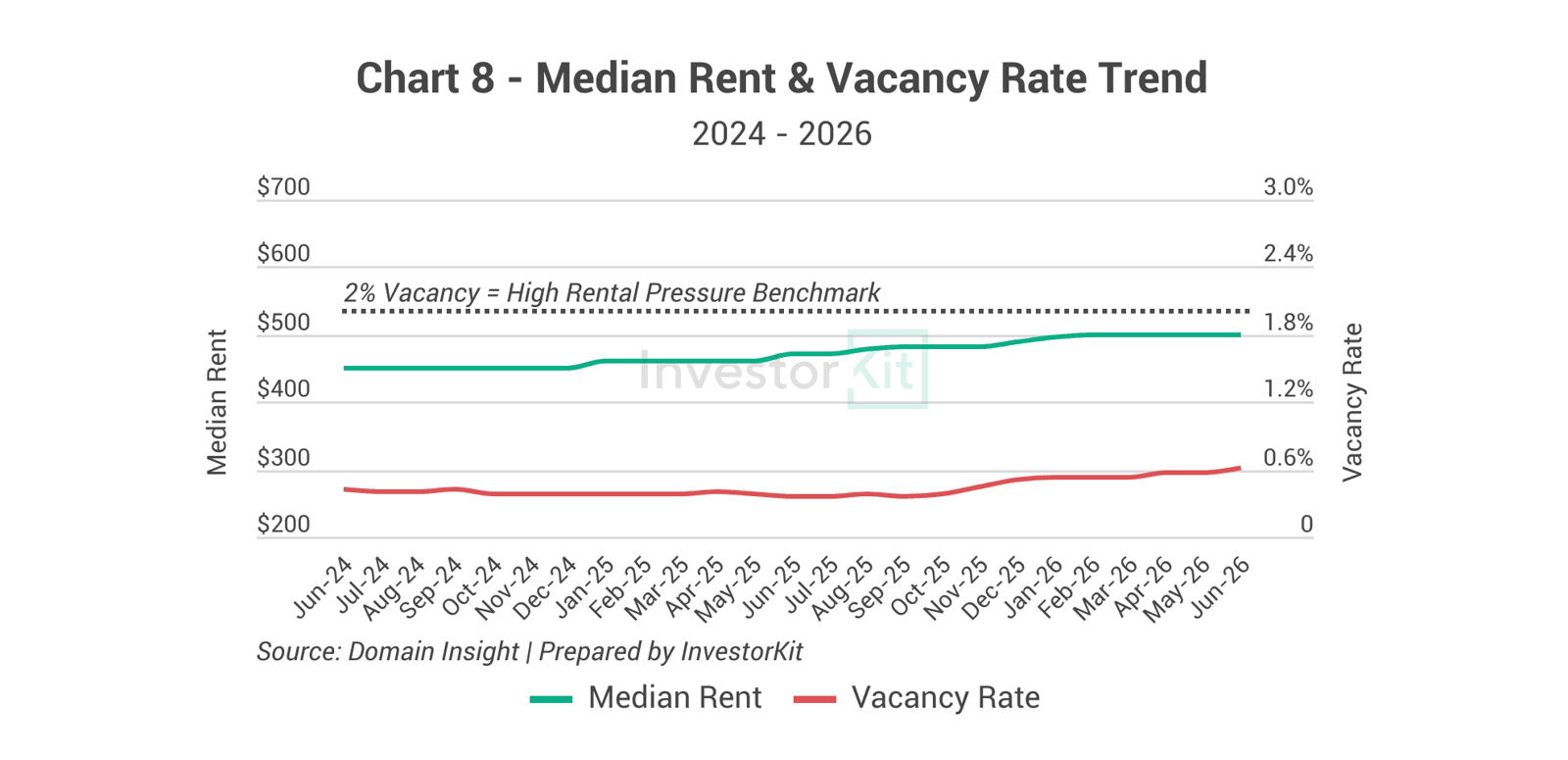
Importantly, rental affordability remains relatively healthy despite this growth. This suggests there is still some capacity for rents to increase without creating the same level of affordability pressure seen in many larger regional and metropolitan markets.
Wangaratta’s relatively affordable house prices have also supported healthy rental yields. The current median rental yield sits at around 5.0%, comfortably above the 3.9% average across large regional cities (Chart 9).
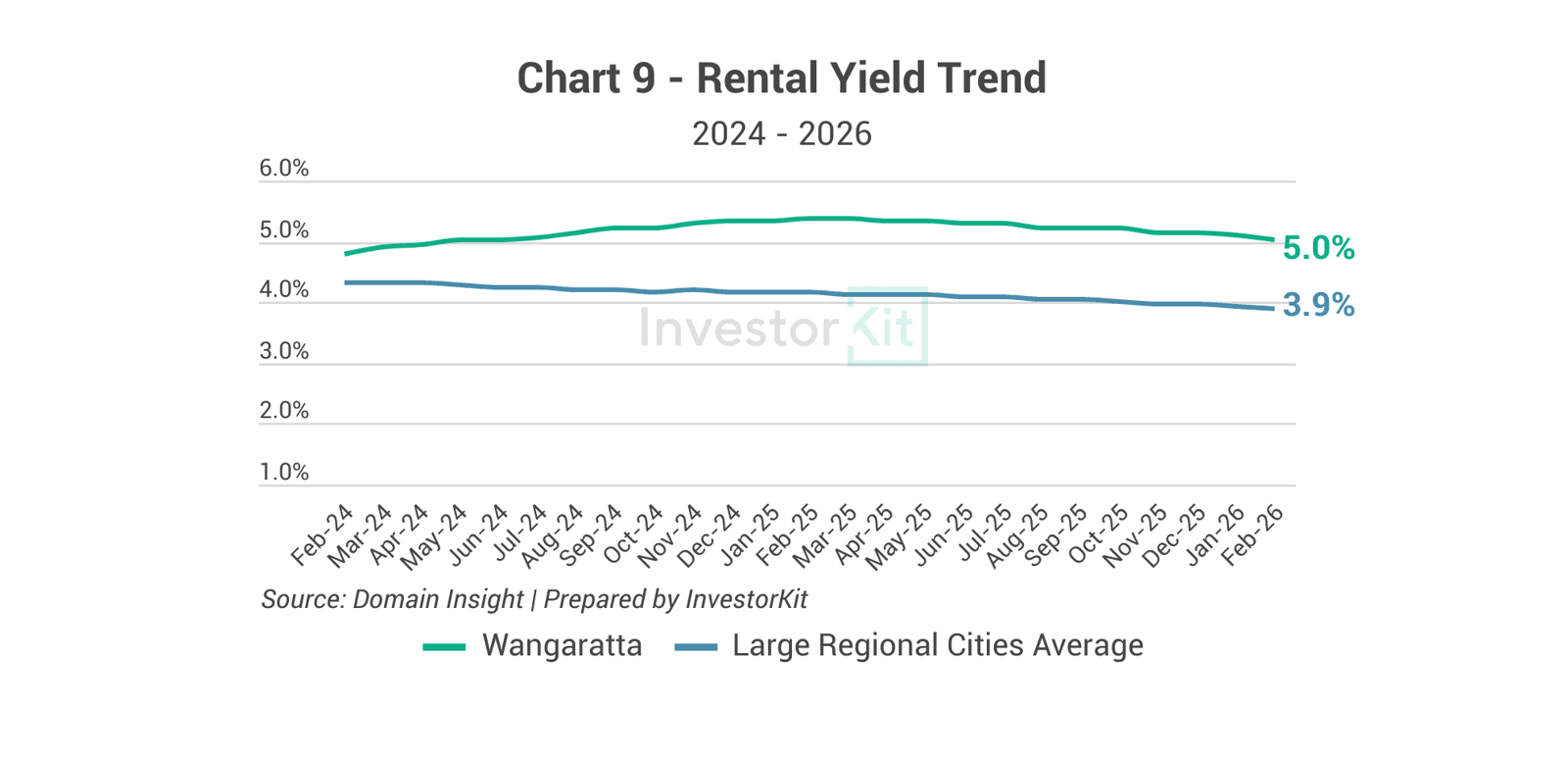
However, yields have been gradually trending downward over the past year. This reflects house price growth outpacing rental growth. Nevertheless, at around 5%, Wangaratta continues to offer comparatively healthy rental returns for investors.
Wangaratta’s Property Market: Affordability
Affordability remains one of Wangaratta’s most significant advantages.
Housing affordability deteriorated considerably during the COVID boom and was subsequently placed under further pressure by elevated interest rates. Despite this, house prices remain broadly affordable relative to local incomes, with current values estimated to be around 1% undervalued against the local affordability benchmark (Chart 10).
Rental affordability is slightly stronger again, meaning the rental market remains relatively accessible to local households despite recent rent growth.
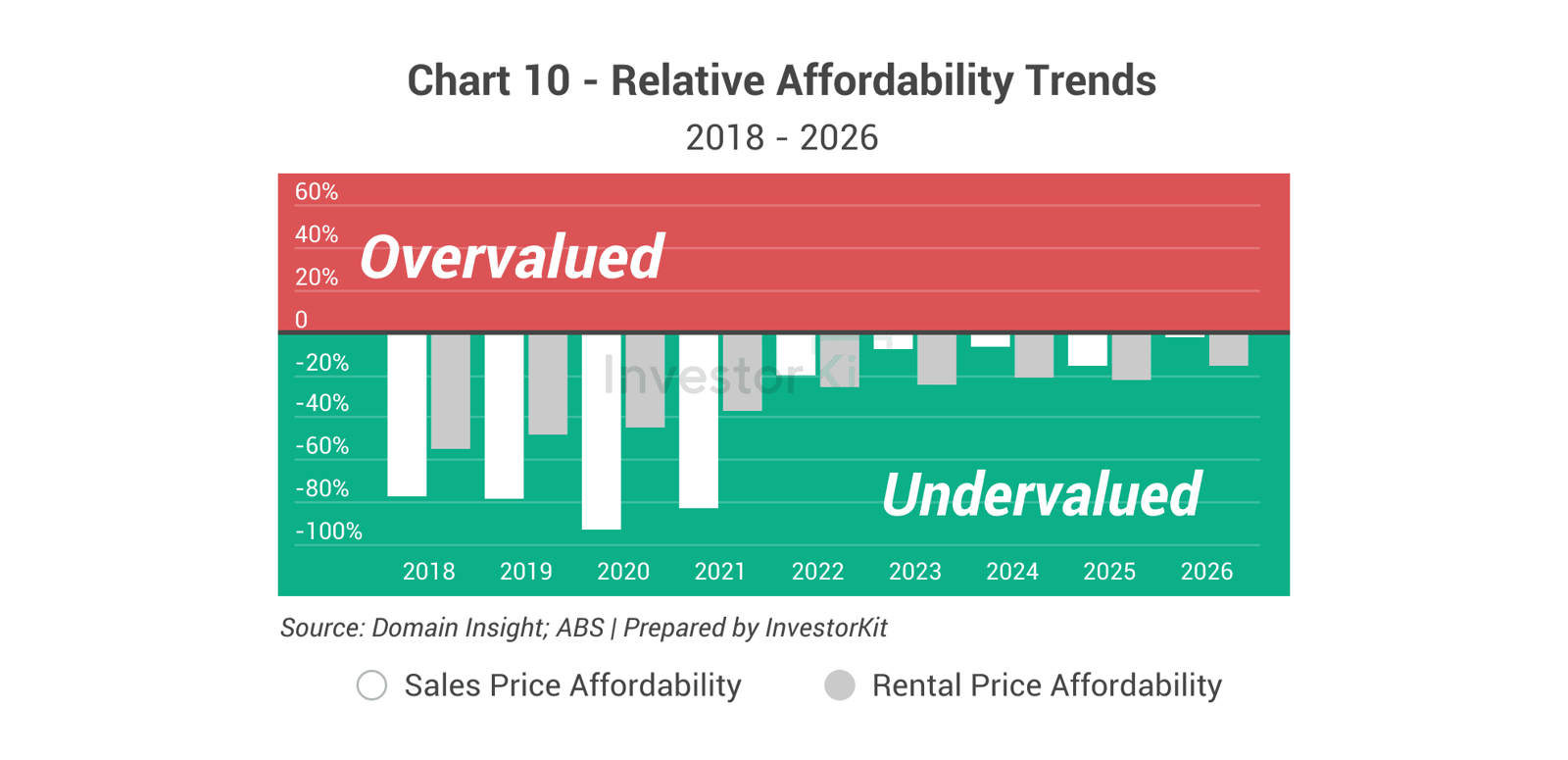
Wangaratta’s affordability advantage also extends beyond its local income base. Current house prices remain among the more affordable levels found across established regional hubs, helping broaden the city’s appeal to both owner-occupiers and property investors.
This combination of affordability, healthy rental yields, and improving market pressure gives Wangaratta an important competitive advantage as its property market enters its next phase.
Wangaratta’s Property Market Outlook
Over the next 6 to 12 months, Wangaratta’s improving market pressure is expected to support continued healthy house price growth. Declining housing supply, rising sales activity, shorter selling periods and accelerating short-term price trends all point to a market that is gradually gaining momentum.
Rental conditions also remain supportive. With vacancy sitting well below 1% and rents remaining relatively affordable, rental growth is expected to remain healthy over the medium term, although continued house price growth may result in some further compression of rental yields.
Over the medium to long term, affordability alone is unlikely to drive continuous growth. Instead, the local economy and its ability to generate sustainable housing demand would be the stronger driver. Improving employment conditions, ongoing job-creating investment and positive migration provide encouraging foundations for this longer-term outlook.
Wangaratta is a clear example of why national headlines don’t tell the whole story. While Australia’s property market may be experiencing a broader downturn, many local markets continue to see strong demand, constrained supply and healthy growth prospects. For investors, the key is to look beyond the national noise and focus on each local market's own fundamentals.
Wangaratta is the 28th regional city we examine in this Market Pressure Review Blog Series. Stay tuned for more cities to follow! InvestorKit is a data-driven buyers’ agency that selects purchase locations using a sophisticated market-pressure analysis system. This methodology has enabled our clients to achieve above-average growth and accelerate their investment journey.
Interested in learning more about InvestorKit’s research and services? Talk to us today by clicking here to request your 15-minute FREE discovery call!