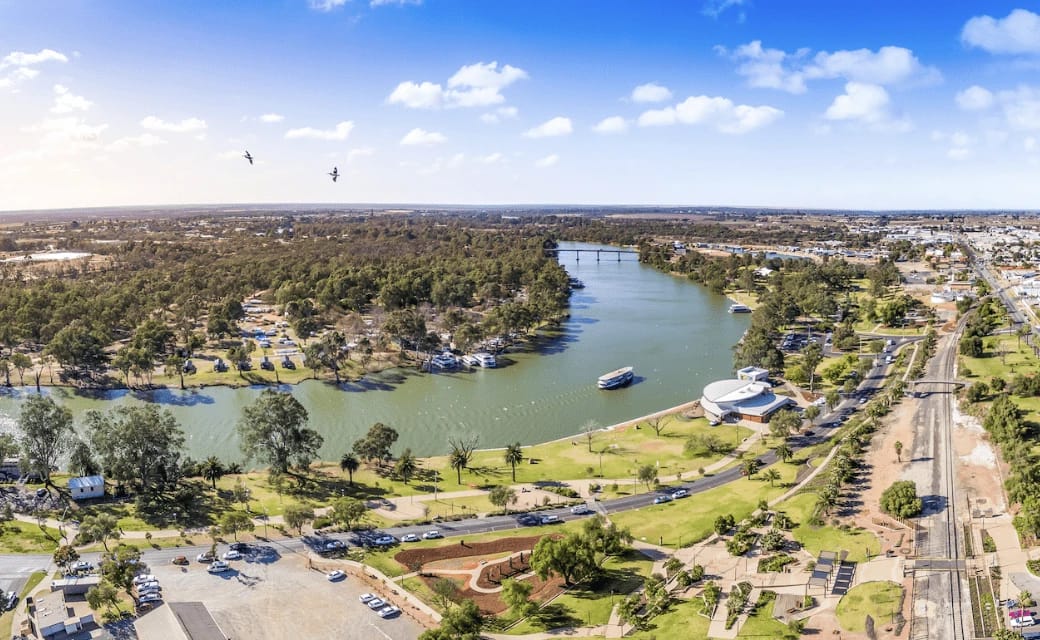
Mildura's 2026 population is best estimated from ABS data. At the 2021 Census the Rural City of Mildura local government area was home to about 56,970 people, and the smaller Mildura urban centre about 40,000. The local government area has been growing by roughly 1 percent a year, so the 2026 figure sits a little above 57,000. Source: ABS Census and estimated resident population.
Mildura Property Market Overview: Victoria’s Food Bowl
Mildura, a thriving regional city in northwestern Victoria, is nestled along the iconic Murray River and is home to 56,972 residents (Census 2021). Renowned for its agricultural strength, it is a major producer of citrus fruits, especially oranges, table grapes, and premium wines. Beyond its rich farming heritage, the Mildura property market is popular for its vibrant cultural scene, affordable housing, and solid rental yields. But is Mildura a good place to invest in 2026? What is the Mildura investment potential given current market conditions?
After the COVID boom, Mildura property growth slowed down but regained strength in late 2024. Mildura house prices achieved 6.7% growth over the last 12 months. Will this momentum continue to strengthen? Join us today to explore the Mildura property market conditions and our Mildura property market predictions for 2026!
Mildura Property Market at a Glance
Metric | Value |
|---|---|
Median House Price | $459,000 |
12-Month Price Growth | +6.7% |
Rental Yield | 5.5% |
Vacancy Rate | 0.6% |
Days on Market | 25 days |
Population | ~57,000 |
As of March 2025, Mildura’s house market pressure is relatively high.
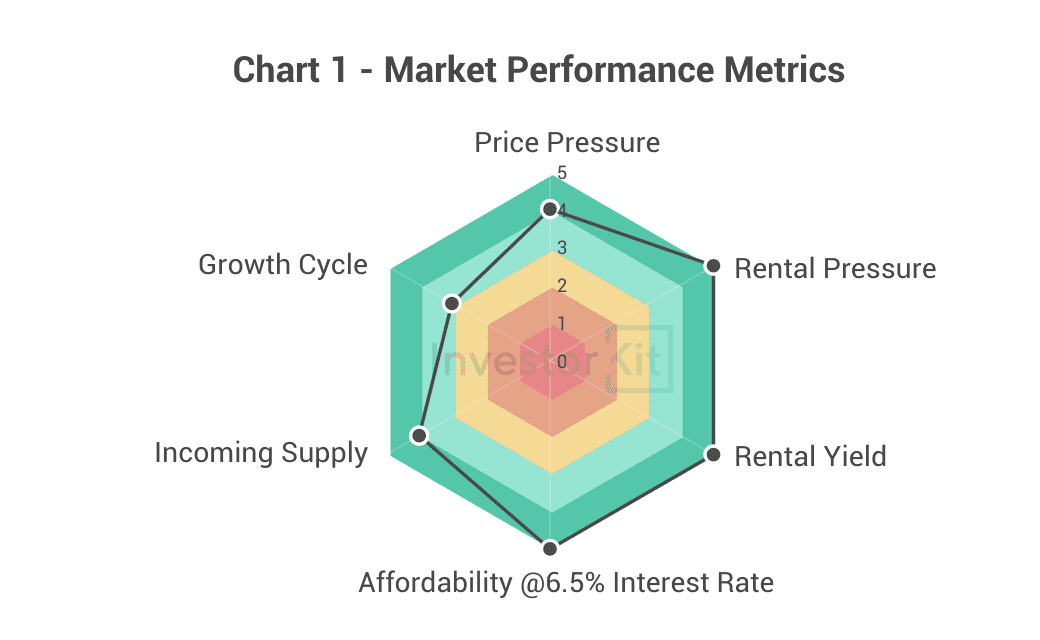
Among the six metrics InvestorKit uses to measure market performance, Mildura scores the highest (=5) in rental pressure, yield and affordability, 4 in price pressure and incoming supply and 3 in growth cycle.
Mildura Demographics & Economic Trends
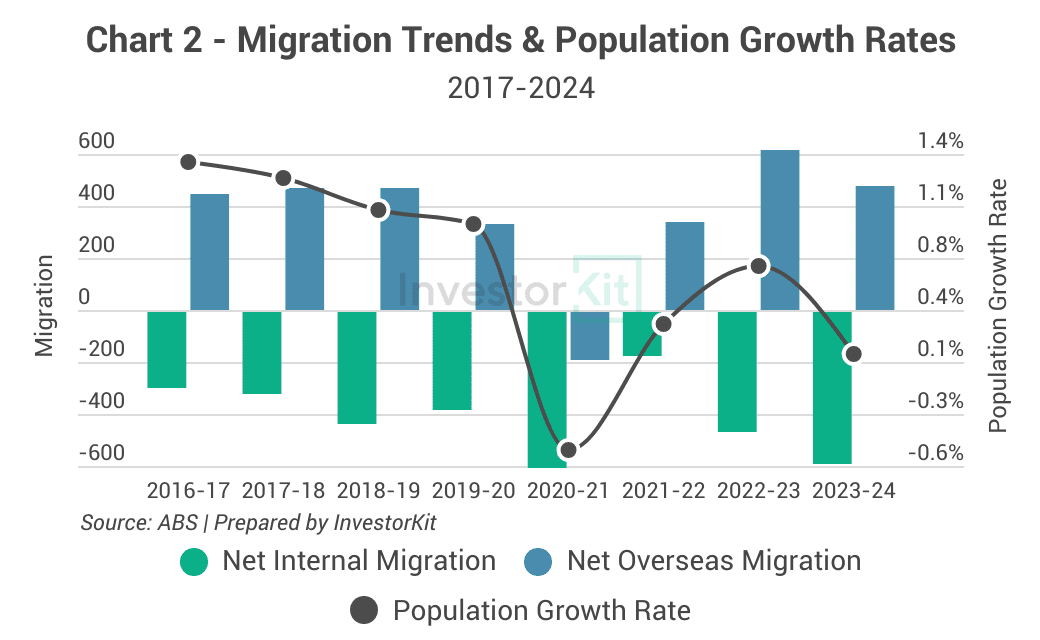
From 2017 to 2021, the Mildura population growth rate dropped, hitting -0.5% in 2021. The dramatic fall was caused by a plummet in overseas and internal migrants due to travel restrictions in Victoria.
Since then, Mildura population growth has recovered, fueled by economic recovery and the return of overseas migrants. However, the growth rate is still relatively low at around 0.13% in the 2023-24 financial year. Despite this, the Mildura property market benefits from strong agricultural employment and seasonal worker demand.
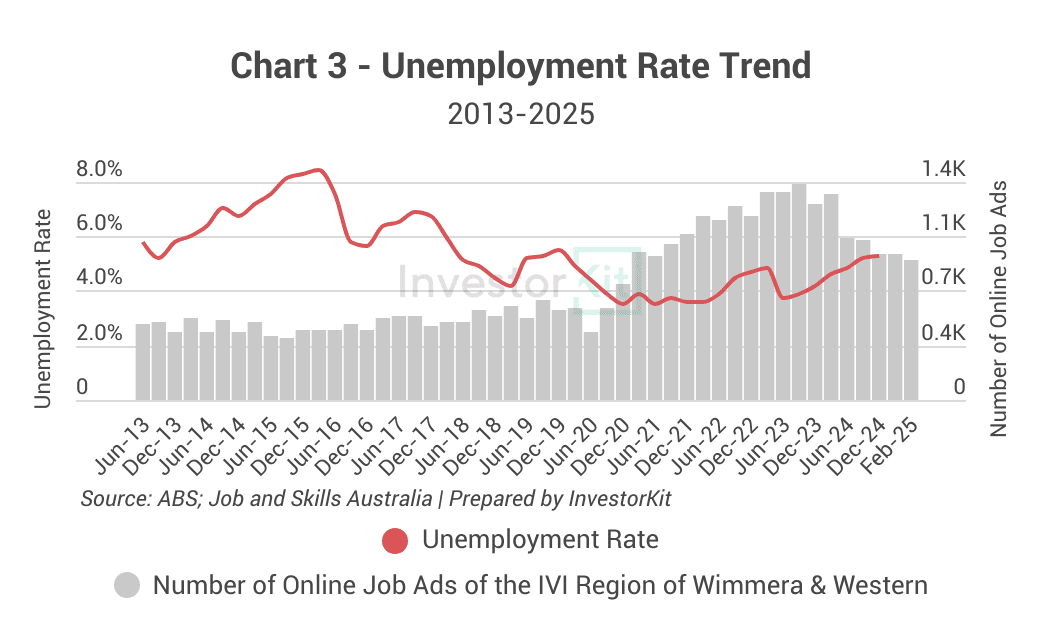
Mildura’s unemployment rate has risen after a short decline between March and June 2023. Despite the increase, it is still much lower than a decade ago and is now at a healthy level of 5.3%.
On the other hand, the number of job vacancies has dropped since late 2023. Nevertheless, it is still much higher than the pre-pandemic average.
Both indicators show Mildura’s job market and the local economy are healthy – a positive foundation for the Mildura investment potential.
Mildura House Prices & Growth Trends
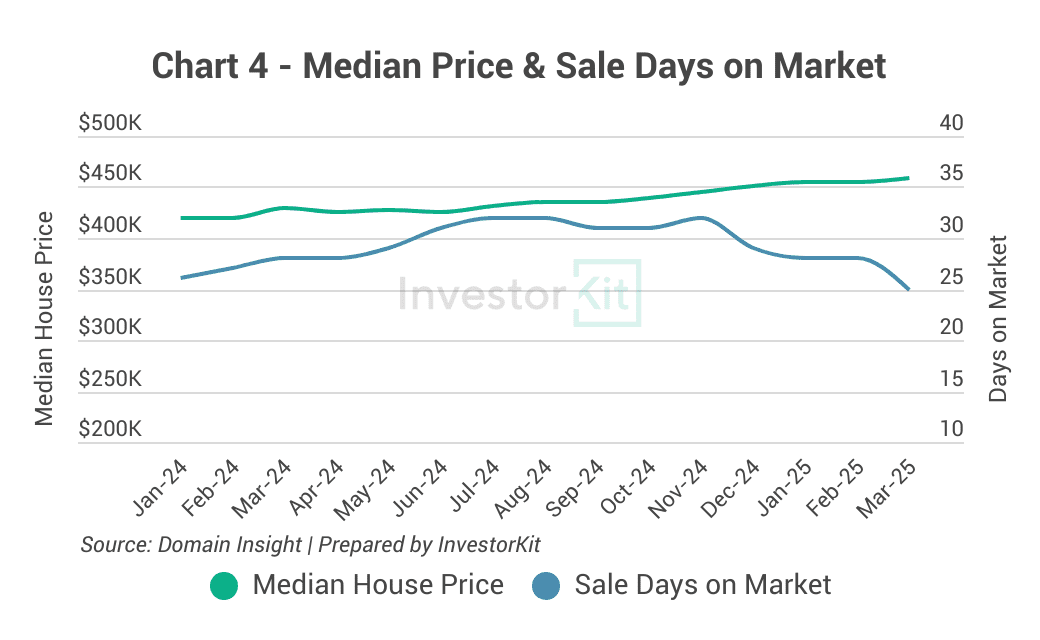
The Mildura property market has grown steadily over the last 15 months. The current Mildura median house price is $459k, about 6.7% higher than a year ago – solid Mildura property growth compared to many regional Victorian cities.
From late 2024, days on market have started declining. Currently, Mildura house prices are supported by properties spending just 25 days on market before being sold. This trend suggests growing demand, indicating the potential for healthy Mildura house price growth ahead.
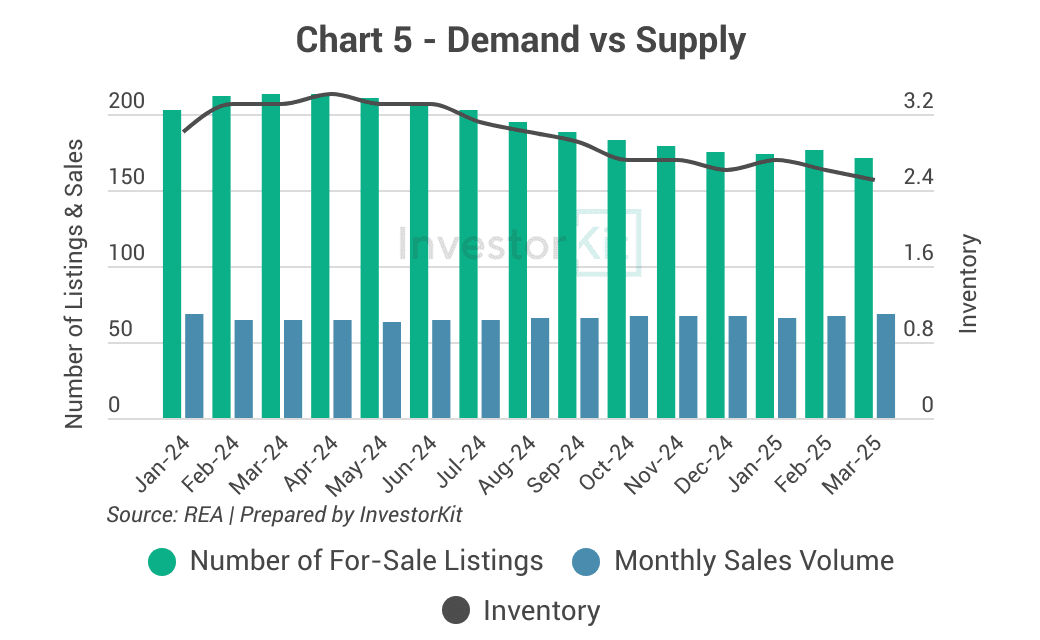
Since April 2024, Mildura’s for-sale house listings have experienced a solid downward trend while sale volume has remained stable. These trends contributed to a steady drop in inventory to a healthy level of 2.5 months of stock.
The declining inventory implies that Mildura property market pressure is improving, indicating further healthy Mildura property growth ahead – a positive sign for the Mildura investment potential.
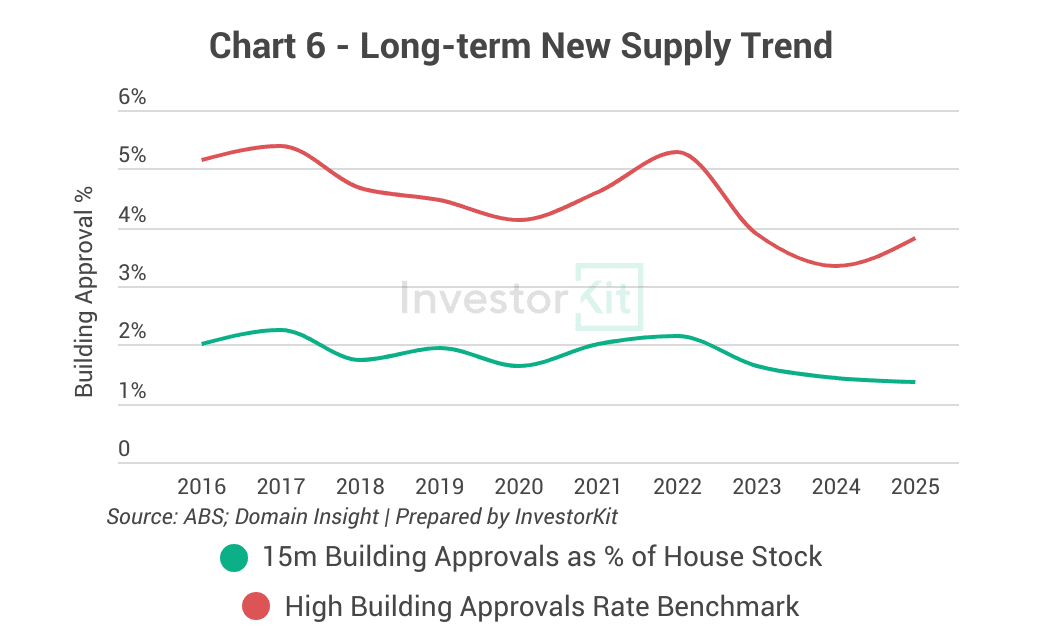
Mildura’s building approval rates have been below the balanced benchmark of 3% over the last decade and have declined steadily since 2022. Currently, the building approval rate is at a low level of 1.36%, indicating a low risk of oversupply in the housing market and is a good sign for continued value growth.
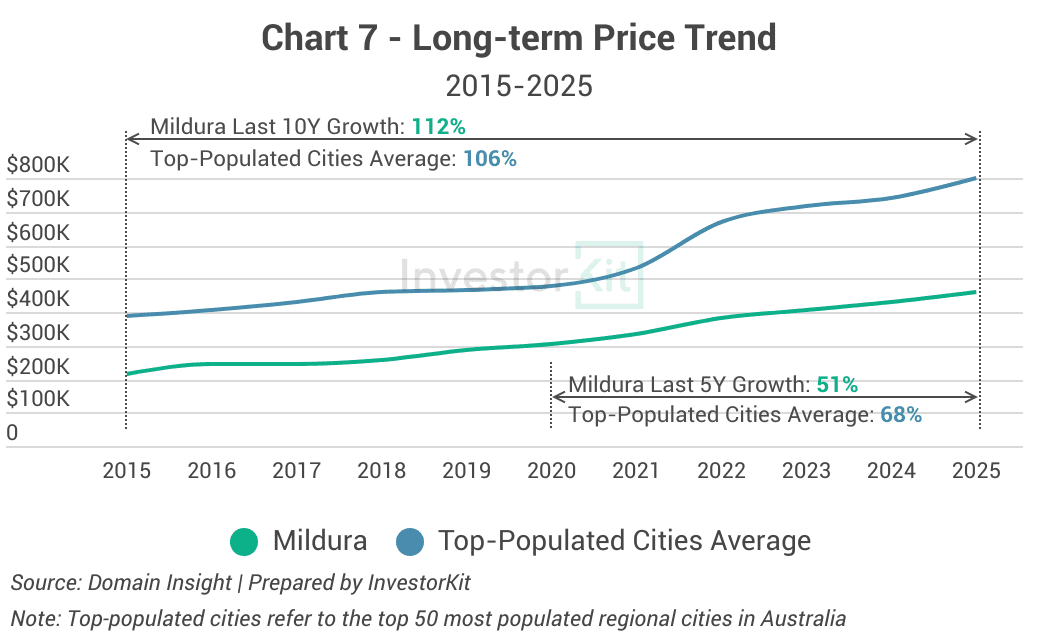
Mildura’s house price growth accelerated in 2021, increasing by 112% over the last decade, which is higher than the average of 50 top-populated regional cities and its long-term average. This significant 10-year growth implies Mildura could see reduced upside potential compared to other Victorian cities, such as Bendigo or Ballarat.
Mildura Rental Market & Vacancy Rates
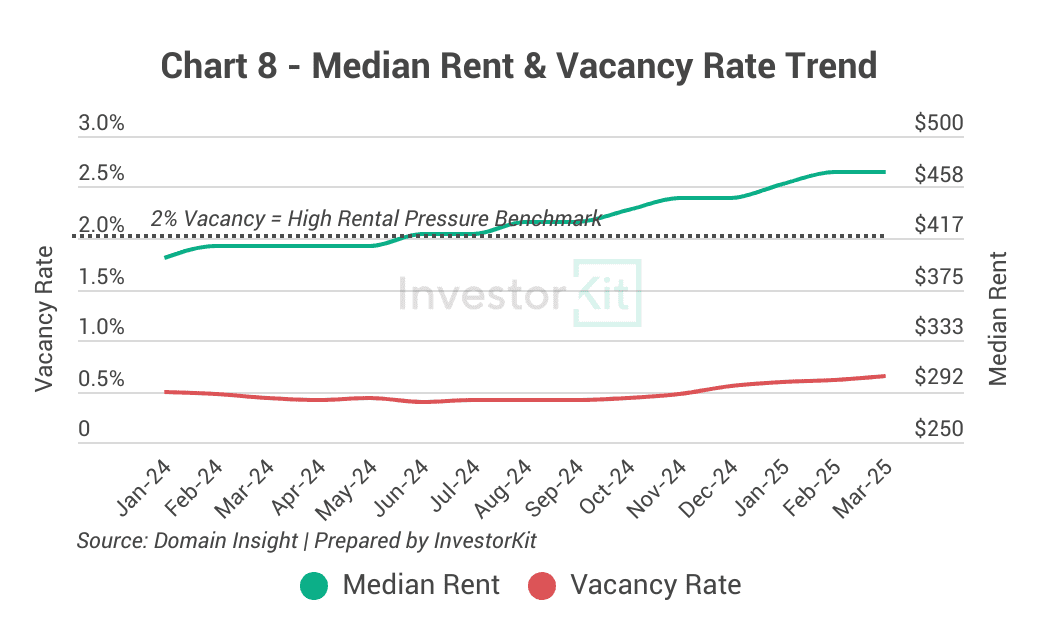
The Mildura rental market is under high pressure, with a low Mildura vacancy rate of around 0.6%. The Mildura rental vacancy rate indicates crisis-level tightness. Rental prices have grown by about 15% over the last 12 months. We expect healthy growth to continue, supporting the Mildura investment potential for cash flow-focused investors.
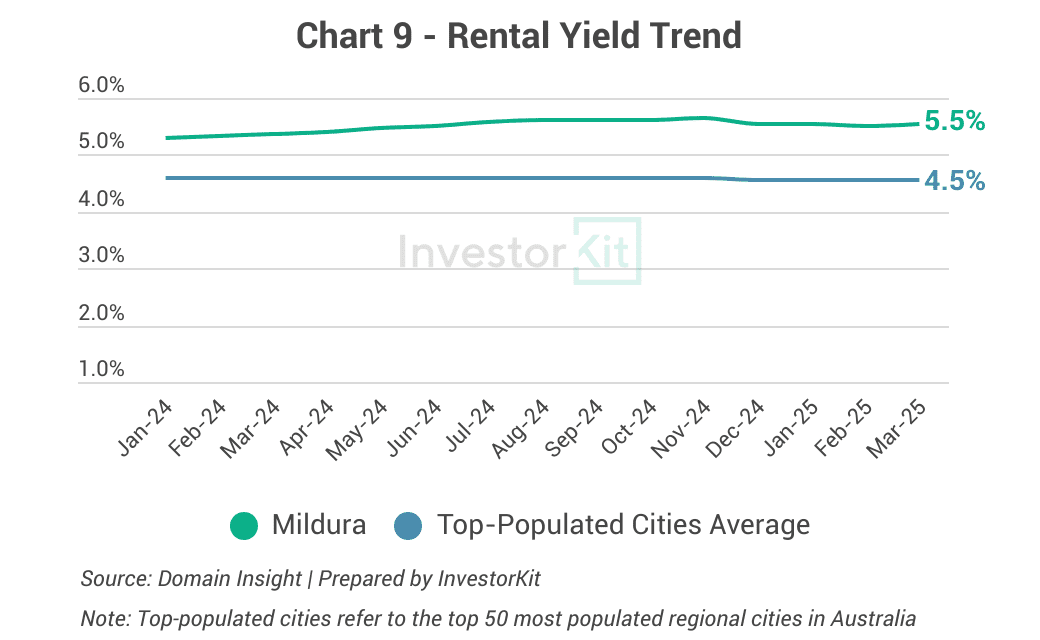
The Mildura rental yield sits at a high 5.5%, which is higher than the average for top-populated cities. Since rental prices have grown faster than sale prices, yields have improved since late 2023 – a positive sign for investors asking is Mildura a good place to invest for cash flow.
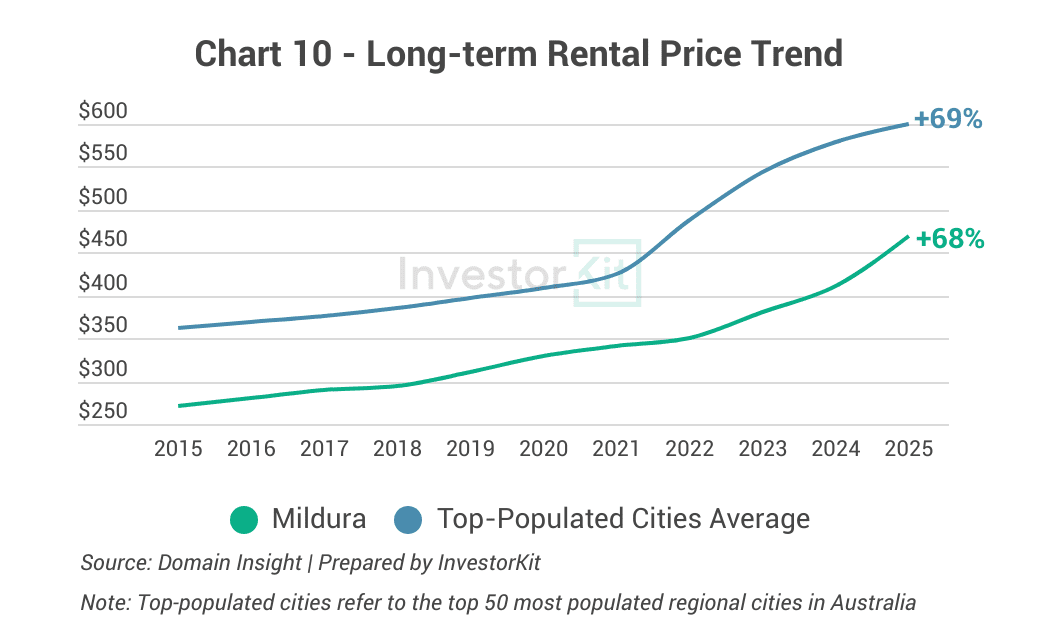
Over the past decade, Mildura’s rental prices have increased by 68%, in line with the average growth rate of the most populated regional cities. We expect the gap to close further, considering the region’s increasing housing demand driven by the healthy economy and high Mildura rental market pressure.
Mildura Property Market Forecast 2026
The Mildura property market is currently under relatively high pressure, with healthy inventory and low days on market. Meanwhile, the Mildura rental market remains tight with a low Mildura vacancy rate.
Our Mildura property market predictions for the next 6 to 12 months: we expect Mildura house prices to grow healthily, supported by increasing market pressure and high affordability. The Mildura investment potential remains solid for yield-focused investors, though the strong 10-year growth might limit medium-term capital growth.
Expert Insight
“Mildura’s unique position as Victoria’s agricultural powerhouse provides a stable economic foundation that many regional markets lack. The combination of crisis-level vacancy rates, strong rental yields, and improving market pressure makes the Mildura property market a compelling opportunity for yield-focused investors in 2026. The affordability advantage over metropolitan markets adds further appeal.” – Arjun Paliwal, Founder & Head of Research, InvestorKit
Frequently Asked Questions
Q: Is Mildura a good place to invest in property?
A: Potentially based on your strategy – Mildura offers strong rental yields at 5.5% and crisis-level Mildura vacancy rate around 0.6%, making it attractive for cash flow investors. The Mildura property market benefits from a stable agricultural economy and affordable entry points. The Mildura investment potential is solid for regional Victoria exposure.
Q: What is the Mildura vacancy rate?
A: The Mildura vacancy rate is approximately 0.6%, indicating strong rental demand. The Mildura rental vacancy rate has remained at crisis levels, supporting strong rental returns for investors in the Mildura rental market.
Q: What is the Mildura property market forecast for 2026?
A: Our Mildura property market predictions for 2026 suggest moderate growth supported by strong rental fundamentals. Mildura property growth is expected to continue at a steady pace, though the strong 10-year performance may moderate capital gains. The Mildura property market remains attractive for yield-focused investors.
Q: What is the Mildura rental yield?
A: The Mildura rental yield is approximately 5.5%, which is above the average for top-populated regional cities. Yields have been improving since late 2023 as rental prices have grown faster than sales prices.
Q: What are the key drivers of the Mildura property market?
A: Key drivers include a stable agricultural economy providing consistent employment, seasonal worker demand supporting rental markets, affordable entry prices compared to metropolitan areas, and limited new housing supply keeping oversupply risk low. These factors underpin the long-term Mildura investment potential.
Q: What is the Mildura median house price?
A: The current Mildura median house price is approximately $459,000, representing 6.7% growth over the past 12 months. This affordability relative to capital cities and coastal markets is one of Mildura’s key investment attractions.
Mildura is the 12th regional city we examine in this Market Pressure Review Blog Series. Stay tuned for more cities to follow! InvestorKit is a data-driven buyers’ agency that chooses purchasing locations through a sophisticated market pressure analysis system. This methodology has enabled our clients to achieve growth higher than the average and expedite their investment journey. Interested in learning more about InvestorKit’s research and services? Talk to us today by clicking here and requesting your 15-min FREE discovery call!
Explore Other Regional Markets
Bendigo Property Market – Victoria’s goldfields hub
Shepparton Property Market – Goulburn Valley regional centre
Albury-Wodonga Property Market – Twin cities on the Murray