Key takeaways
- As 2025 drew to a close, InvestorKit expected interest rates to finish 2026 closer to 3 percent than 4 percent, as weakening employment suggested downward pressure despite sticky inflation.
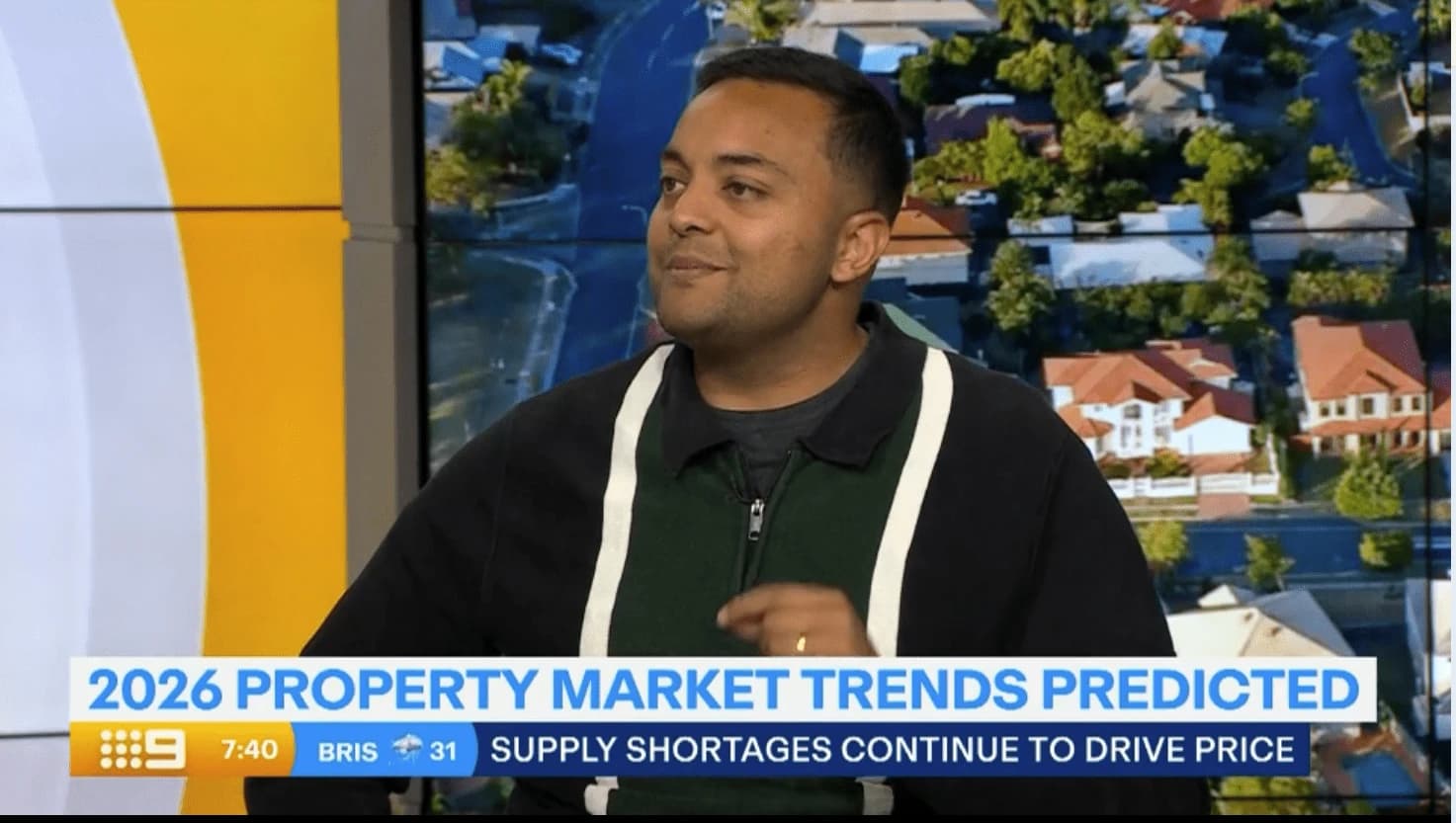
- InvestorKit Founder Arjun Paliwal shared his outlook on national television, noting that housing undersupply remains unresolved, with listings well below pre-COVID levels.
- InvestorKit expects rental growth to remain elevated into 2026, as strong overseas migration, capital-to-regional movement and constrained investor participation restrict rental supply.
Updated 8 October 2026 for the new rules from 1 February 2026 and 1 July 2027: banks now face a limit on high debt-to-income lending and negative gearing and CGT change from July 2027, so the December 2025 rate view below is shown as a dated forecast.
As 2025 draws to a close, property investors are facing mixed signals. Sticky inflation. Uncertain rate cuts. Tight housing supply. Yet beneath the noise, the fundamentals heading into 2026 are becoming clearer.
Arjun’s Predictions
InvestorKit Founder Arjun Paliwal shared his outlook on national television, outlining how interest rates, supply shortages, migration, and buyer behaviour are shaping the Australian property market heading into 2026.
While inflation remains stubborn, employment is softer than headline figures suggest. That balance is influencing where rates land and how buyers and sellers respond.
At the same time, Australia’s housing undersupply remains unresolved, with listings sitting well below pre-COVID levels.
Key Findings
Interest Rates: Our December 2025 View, Reviewed
In December 2025, InvestorKit expected interest rates to trend lower through 2026. That has not played out: rates did not fall as expected, and our August 2026 market update covers the RBA decisions since. For the current cash rate, check the Reserve Bank of Australia directly, as it changes every few weeks. Rather than relying on one forecast, plan for several rate scenarios: rates staying where they are, rising further, or easing later.
Lending and tax settings have also changed since this outlook. Since 1 February 2026, each bank can make no more than 20% of its new home loans at a debt-to-income ratio of six times or more (APRA). From 1 July 2027, losses on established homes bought after 7:30pm AEST on 12 May 2026 can only be offset against residential property income and gains, and the 50% CGT discount is replaced for gains from that date (ATO).
Housing Supply Remains Critically Low
Listings are approximately 24 percent below pre-COVID levels. Established housing supply is the key driver of market heat, and current conditions point to continued price resilience.
Broader Market Recovery Is Underway
Recent growth was led by Brisbane, Adelaide, Perth, and surrounding regional markets. Now, Victoria and New South Wales are re-entering growth phases, creating a more balanced national upswing.
Regional Demand Is Structural, Not Temporary
Internal migration from capital cities to regional areas remains around 17 percent above historical levels. While not at COVID peaks, the trend is clearly persistent. Regional supply has not kept pace, supporting continued price and rental pressure.
Middle Ring Markets Are Set to Rebalance
Over the past five years, lower-priced outer-ring markets have outperformed. That gap is now narrowing. If borrowing costs ease, middle and upper-ring suburbs may regain relative strength.
Rental Conditions Will Stay Tight
Vacancy rates in many locations remain under 1 percent. Strong overseas migration, capital-to-regional movement, and constrained investor participation continue to restrict rental supply. Rental growth is expected to remain elevated into 2026.
Action Steps
Review portfolio exposure to undersupplied markets
Stress-test cash flow assumptions under higher rates for longer, as well as under rate cuts
Identify middle-ring suburbs with improving affordability metrics
Prioritise locations with population growth and constrained new supply
Avoid assuming recent outperformers will continue leading the cycle
The 2026 property market will reward investors who rely on data, not headlines.
If you want a clear buying strategy aligned with where the market is actually heading, book a discovery call with InvestorKit today and get clarity on your next move.