
" transform="translate(9 6)" width="6px"/></svg>)
Australia’s Property Market is in a Downturn. What Does it Mean for Investors?
Australia’s housing market has entered a broad downturn, with national dwelling values falling by 0.7% in July 2026 (Cotality).
For property investors, headlines like these naturally raise a question: is now still a good time to buy a property, or should I stop?
It’s a fair question. But the answer requires looking beyond the national average, because a negative national average doesn’t mean every local property market is declining or facing the same outlook.
Almost Half of Australia’s Local Markets Are Still Growing
To understand how widespread the downturn really is, we analysed house price movements across Australia at the SA3 level.
We deliberately looked at the raw one-month change in median house prices between 1 June and 1 July 2026 - the latest available data, covering the month immediately following the tax reform announcement, when consumer sentiment was at exceptionally weak levels.
One-month medians can be volatile and very sensitive to changes in market activities. They’re not used to interpret market trends in most cases, but in this case, that is exactly what we wanted.
With consumer confidence weakening and financial conditions tightening, we wanted a highly sensitive measure that could capture the immediate impact of these changing conditions at the local level.
And the result?
53% of Australian SA3 markets recorded a decline in median house prices, while 47% still recorded growth.
So yes, the national downturn is real. But at the local level, the picture is far more divided.
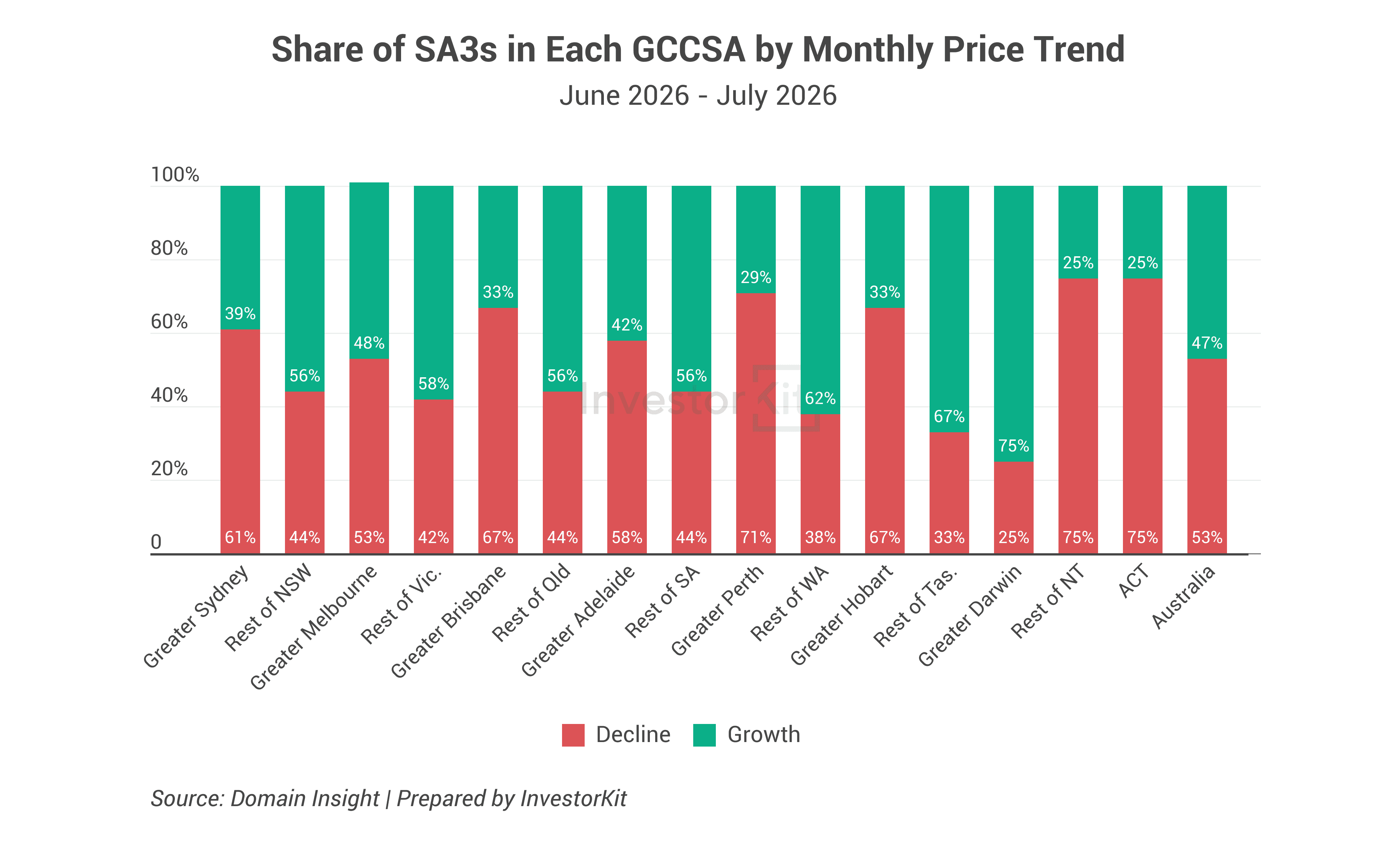
Capital cities were experiencing more widespread declines. In Greater Sydney, 61% of SA3 markets declined. In Greater Brisbane, it was 67%. Greater Perth recorded 71%, and the ACT 75%.
Regional markets showed more resilience.
Across NSW, VID, QLD, SA, WA and TAS, more than half of regional SA3 markets were still growing.
A national downturn doesn’t mean every local market is experiencing a downturn.
Investment Decisions Shouldn’t Be Based on Headlines
The divergence between regions is exactly why property investment decisions shouldn’t be based on national headlines alone.
A broad market downturn tells us something important about the overall environment. But it doesn’t tell us whether an individual market has the conditions to remain resilient or continue growing.
That requires looking at the local fundamentals.
At InvestorKit, we look at the fundamentals driving each local market to decide where to buy, and when to stop buying there.
How strong and diversified is the local economy?
How much housing demand exists?
What are current and future supply levels?
How tight is the rental market?
How do these factors interact to create market pressure?
Etc.
Our aim is to identify markets where demand is strong relative to supply, and where the underlying conditions provide a foundation for resilience and future growth.
That becomes even more important when sentiment weakens.
Fundamentals shape a market’s underlying growth potential. Sentiment influences the path it takes: Sometimes accelerating the market, and sometimes temporarily slowing it down.
Strong employment, persistent housing demand, limited supply and tight rental conditions don’t suddenly disappear because buyers become nervous for a few months.
That helps explain why, even during a month of exceptionally weak consumer sentiment, many local markets in our analysis remained strong.
It’s also why we remain confident in many markets even though they recorded short-term declines: as long as the underlying market pressure remains high, we expect growth to resume once the initial sentiment shock is absorbed.
In fact, there are already signs that the sentiment environment is stabilising.
The Westpac–Melbourne Institute Consumer Sentiment Index rose 4.1% in July. At 83.9, confidence is still within the bottom 10% of readings in history, but it is an improvement.
The RBA held the cash rate at 4.35% on 12 Aug. While further hikes are still possible, avoiding another rate rise is removing one immediate source of additional pressure.
Of course, sentiment isn’t going to bounce back overnight. But if financial conditions become more stable, confidence has a better chance of gradually stabilising and recovering.
A Ballarat Example
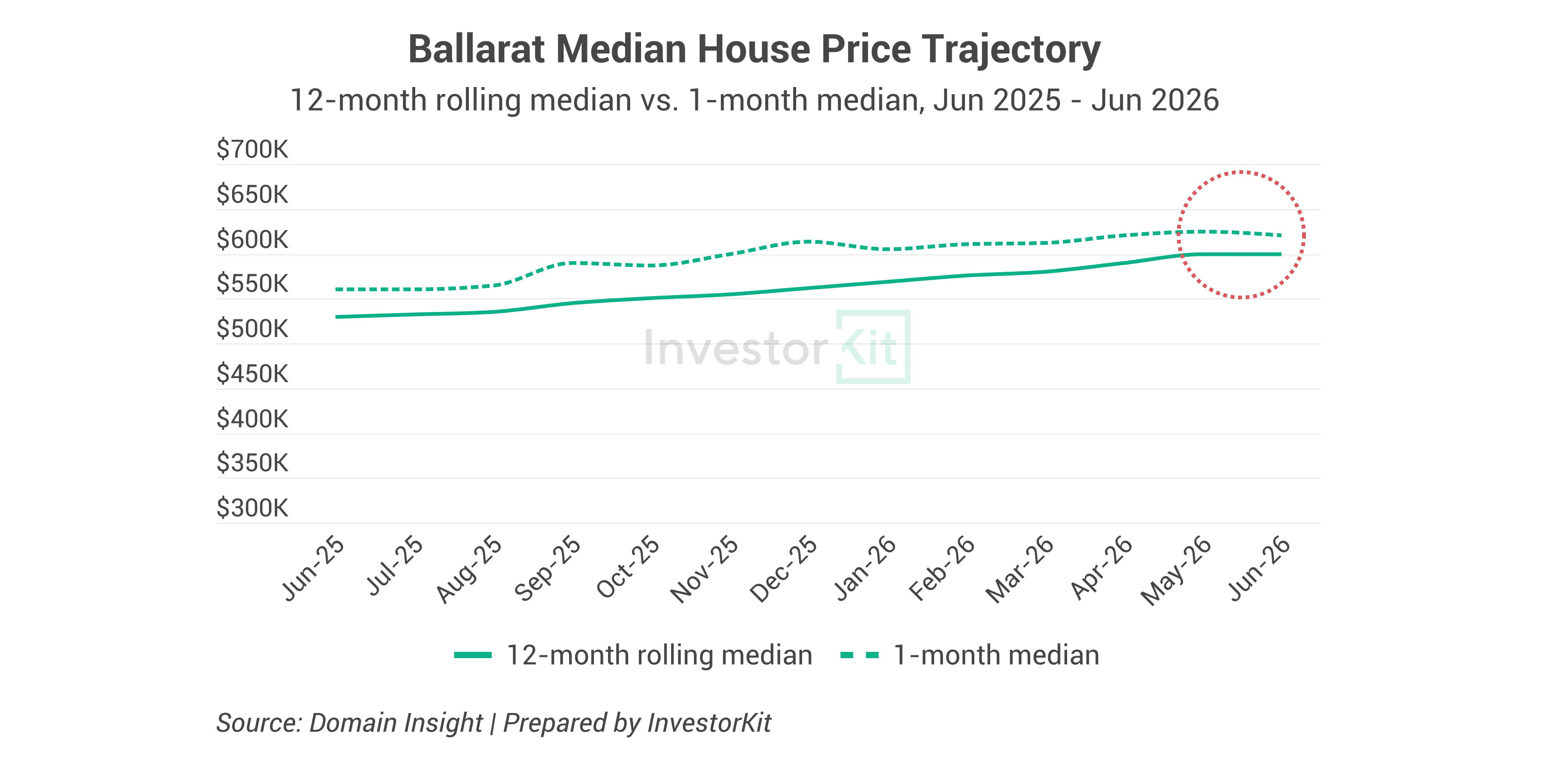
Ballarat is a good fundamentals-strong example. While median house prices declined slightly (-0.8%, see chart below) on a monthly basis, the underlying market fundamentals remain healthy.
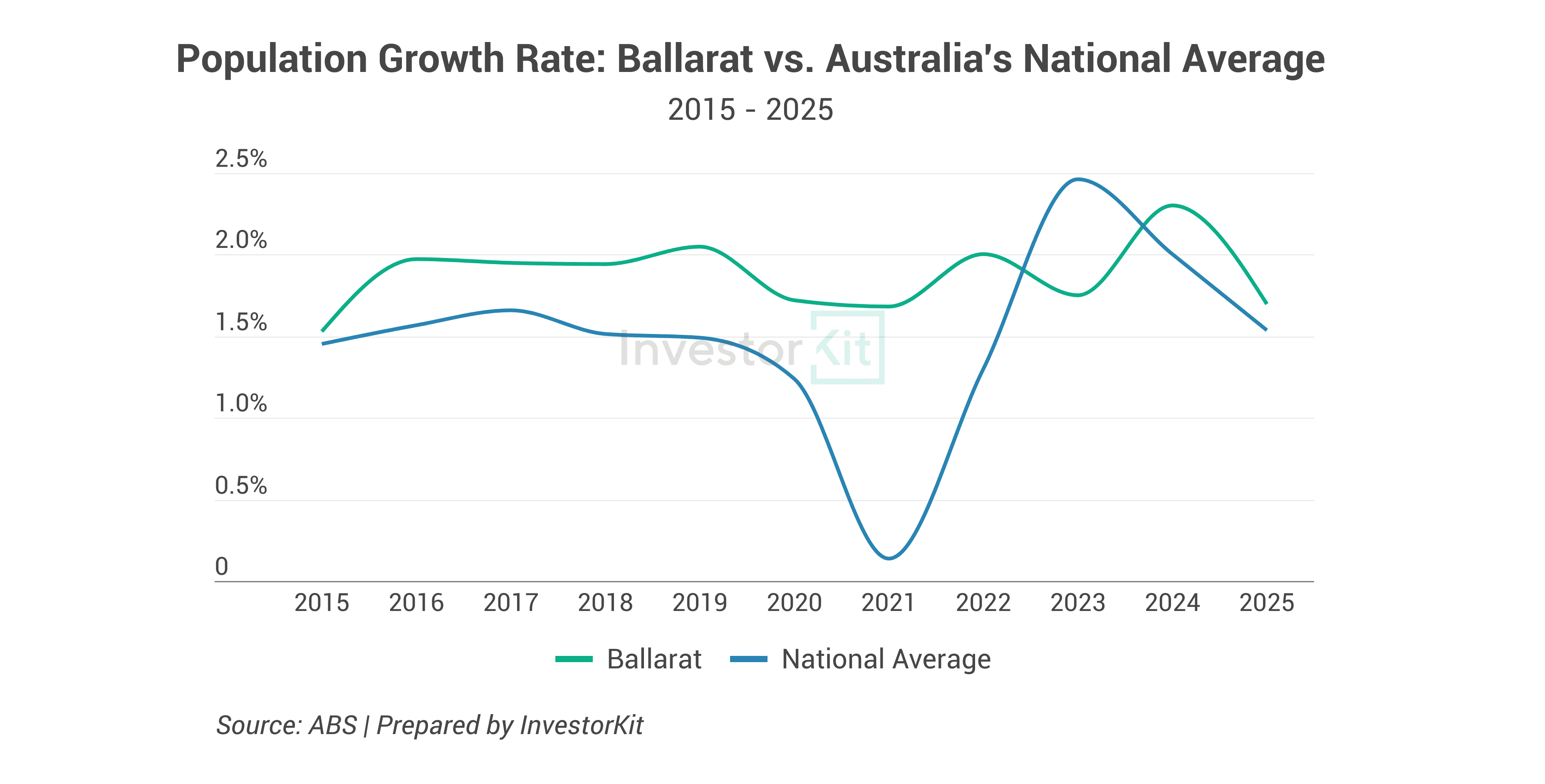
The local economy is diversified, unemployment sits at a healthy 4.5%, and population growth remains solid at 1.7%, above the national average (chart below).
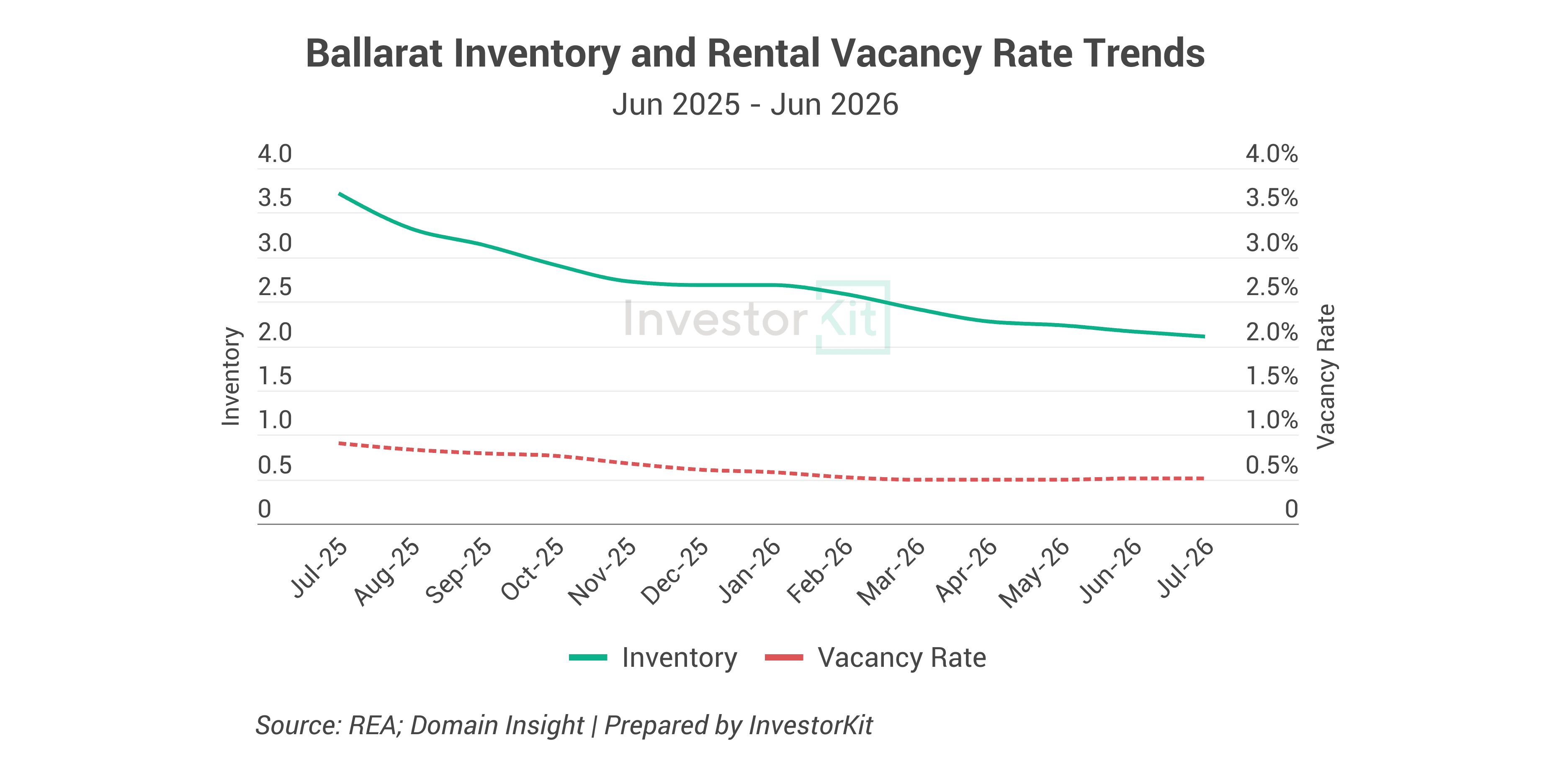
On the housing side, inventory has been trending down for more than a year and now sits at around 2.1 months of stock, while the vacancy rate remains extremely low at 0.5%, pointing to sustained housing demand and constrained supply (chart below).
With a median house price of around $600,000, Ballarat also remains relatively affordable, further strengthening the market’s attractiveness in the high-interest-rate environment.
Put together, these indicators paint a much stronger picture than one month of falling prices might suggest.
That’s why we remain confident in Ballarat’s outlook. When sentiment stabilises, the underlying supply-demand pressure would provide a strong foundation for price growth to resume.
What Happens From Here?
Zooming back out, Australia’s housing market continues to face a challenging short-term environment due to weak sentiment, but the underlying housing fundamentals haven’t weakened much.
Australia still faces a genuine housing shortage in many parts of the country. As of July 2026, the national total for-sale listings are only 11% below their pre-COVID level. However, excluding Sydney and Melbourne, national listings are 24% lower than the pre-COVID levels. Some cities are even tighter. For example, in Brisbane and Perth, current listings are 36% and 38% lower than in 2019.
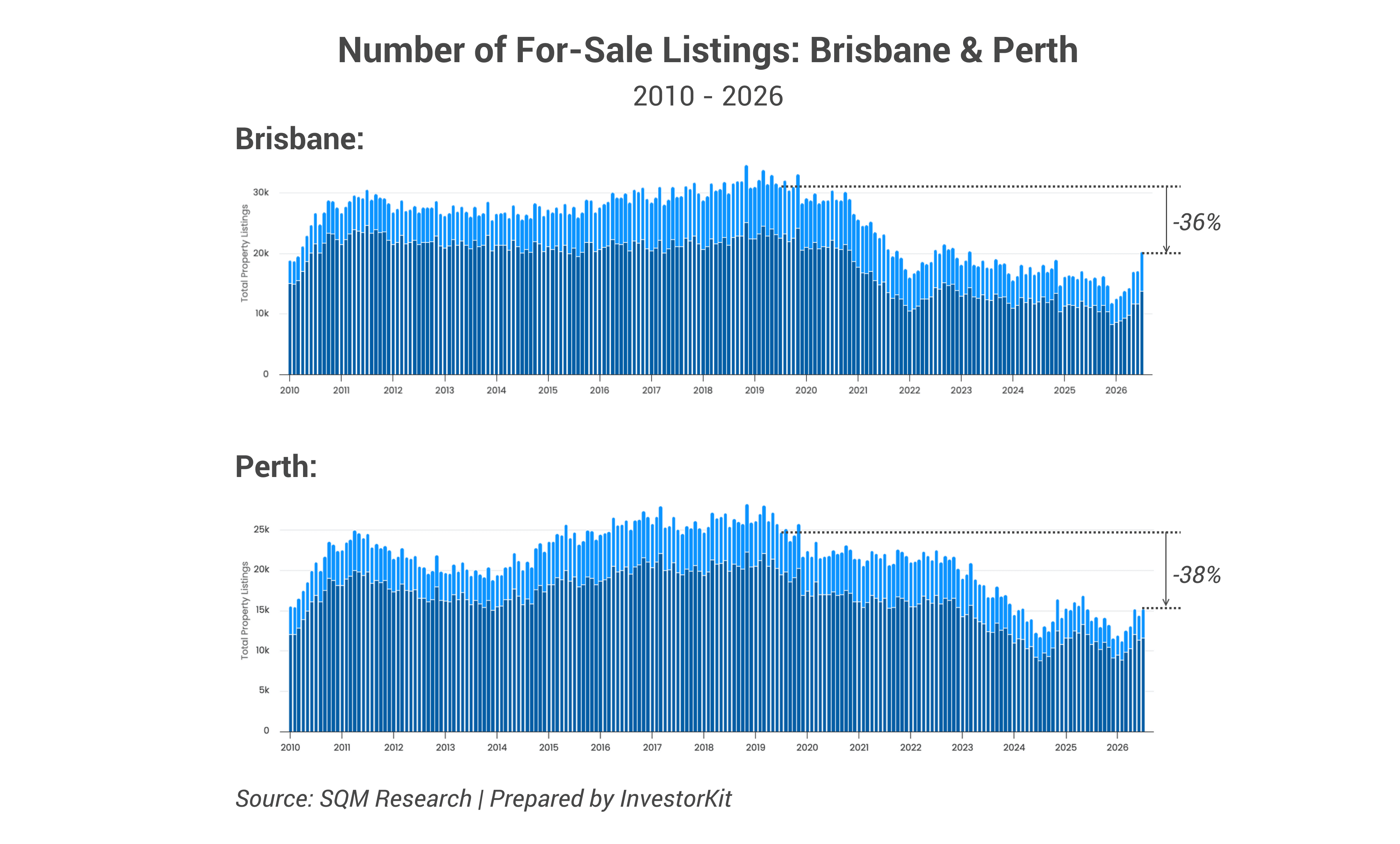
In the meantime, strong population growth continues to create demand for homes, while construction costs, development feasibility and the slow delivery of new housing continue to constrain supply.
That’s the important distinction between sentiment and fundamentals.
Sentiment can change quickly. It influences when most buyers enter the market confidently and how much competition exists for property. But a few months of weak sentiment doesn’t solve the underlying housing shortage that continues to put upward pressure on prices.
In summary, the short-term environment remains challenging. The longer-term housing fundamentals remain supportive.
Ready to Invest, But Not Sure If Now Is the Right Time?
There is no risk-free time to invest in property.
When markets are weak, uncertainty can make it harder to act. But when markets are booming, investors would face different challenges: stronger competition, higher prices and a greater risk of missing opportunities.
If you’re financially ready to invest, trying to perfectly time the bottom is less important than choosing the right market and property for your long-term strategy. Because time in the market gives compounding time to work.
That doesn’t mean ignoring risk. Property investment always carries risk. But good data, careful market selection and thorough due diligence can help identify and minimise risks.
If you’re ready to invest but aren’t sure where to buy or what to buy, book a FREE discovery call and talk to our team. We’ll help you build a strategy based on your circumstances, the data and the fundamentals, not the fear.
Keep Reading



" transform="translate(5 5)" width="14px"/></svg>)