
" transform="translate(9 6)" width="6px"/></svg>)
3 Magic Numbers You Should Know When Renting Your Property Out
Property investment is not just about buying in but also renting out. In today’s blog, we have three magic numbers for you that will make your life easier when renting…
Property investment is not just about buying in but also renting out.
Say that you have successfully settled on a lovely house. What can you do to make an equally successful rental campaign?
Besides working with a good property manager, you need to know some landlord basics, like how to set a reasonable rental price, when to increase the price, how to tell a rental campaign is successful, etc.
In today’s blog, we have three magic numbers for you that will make your life easier when renting your properties out.

3 weeks
A simplified benchmark to assess your rental campaign
How to tell if a rental campaign is good or not? A simple way is to see if securing a high-quality tenant takes more than 3 weeks. If not, it’s a successful campaign. The below table shows a further breakdown:
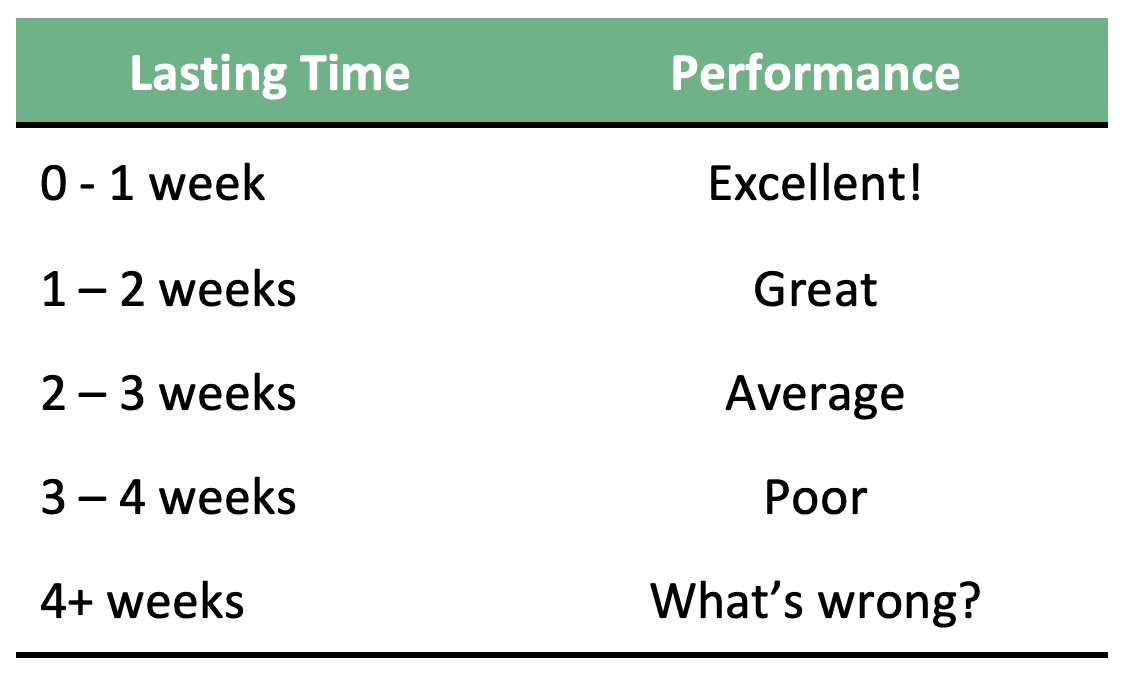
However, conditions apply to this rule.
First, the 3 weeks do not count move-in time. In many cases, the new tenants can’t move in immediately, so you may need to bear a few extra weeks of vacancy. However, the tenant’s preference doesn’t change the fact that you and your property manager have done a good job in pricing, marketing, and presenting the property.
Second, if you want to be bold and try asking for a higher-than-market price, don’t start timing until you lower the asking price to a reasonable level. For example, your property should be able to rent for around $500 based on the current market condition, but you want to try and ask for $550 because the market is so tight. It’s no problem to try it out but remember, price rules everything in the rental market, and you have competitors. So just grant yourself 1 or 2 extra weeks experimenting with the higher price and, if it doesn’t work, bring your asking price down to one in line with the market and start your timer then.

$40/w
The rule of deciding when to increase your rent
Now let’s talk rent. How much should you ask for? When should I increase my current tenant’s rent?
There are two ways to decide your rental price:
1. Comparable properties – check the price range of similar properties in your area. If you can’t find similar properties, use the sandwich strategy: properties A&B are inferior to mine, and C&D are superior, so my property’s price should be somewhere between A&B and C&D.
2. Historical data – check how much the suburb’s rental prices have increased in the past year and apply that to yours. However, be mindful if your previous rent did not align with the market.
For example, let’s assume that similar properties to yours typically grew from $500 last year to $550 this year, achieving 10% growth; If you already rented your property for $530 last year, you might want to increase the rent by only $20 (3.7%), and if your previous rent was $480, you might want to increase it by $70 (14.6%) instead of a simple 10% rise.
When it comes to increasing your asking rental price, there’s something else to consider: Is it better to raise your rent, squeeze the current tenant away, and spend weeks on finding a new tenant, or keep the current rent unchanged to avoid vacancy and campaign costs?
Here’s when the $40 rule comes in.
Assuming your property’s weekly rent now is $500, guess which of the two scenarios below is better.
Raise the weekly rent to $530, the tenant moves, and you expect to secure a new tenant in 2 weeks;
Keep the weekly rent as it is.
In Scenario A, you would be losing at least 2 weeks’ rental income( $1000); You will pay $583 letting fee (1.1 times the new weekly rent) to your PM; Plus you might spend a few hundred dollars on advertising. That is approximately $2000 in expenses, equivalent to losing $40 a week, leading your weekly rental income to just $490.
Scenario B wins.
So unless you’re confident that you can quickly get a new tenant with a $40+ rent rise, it’s worthwhile not to increase your rent, or increase just slightly, to build a great relationship with your current tenant and enjoy a stable cashflow.
Another way to use this $40 rule is when you invest in a region with higher holding costs, for example, Far North Queensland.
Holding costs, such as property insurance, maintenance, and property management fees in Far North QLD are higher than in the southern regions due to many reasons, such as the tropical climate and labour shortage. When doing a feasibility analysis for a purchase in that region, you can simply deduct $40 from your weekly rental income to offset the higher holding costs. Rise it to $50 if you want to be more conservative.

63%
of Australian households who rent own pets: An underestimated tip to increase your success rate
The latest Pets in Australia report by Animal Medicines Australia shows that 69% of Australian households own pets as of 2022, up from 61% pre-COVID (2019). The report also shows that 28% of pet owners and 36% of non-owners rent their homes. Simple math would tell you that around 63% of home renters are pet owners.
In contrast, only a small portion of landlords are willing to consider pets. On 22 July 2023, Australia had 54,000 properties listed on REA for lease, and only 7506 were ‘pet-considered’, representing 13.9% of all. The percentile is even lower in Metro Sydney – only 12.2%.
A roughly 50% difference! Look how tight the pet-friendly rental market is and how much higher success rate you’ll have by considering pets!
Many investors are against having pets in their property because pets can cause damage. However, you’re not defenceless. Just make sure you have a good PM who generates condition reports responsibly. If there’s any significant difference between the move-in and move-out reports, whether caused by pets or anything else, you can raise that to a discussion and protect your rights.
This blog is inspired by one of the InvestorKit Podcasts: Renting Out Your Property Made Easy: Learn the Science Behind Successful Campaigns. Check the podcast for more tips to make a successful rental campaign for your property!
InvestorKit buyers’ agency isn’t just good at market analysing and purchasing, but also a pro in renting. Our clients enjoy ongoing rental support, including PM referring, rental campaign/price suggestions, renovation (to optimise rental yields) tips, and more.
Would like to have such an all-rounder helper on your property investment journey? Talk to us today by clicking here and requesting your 45-min FREE no-obligation consultation!
Keep Reading



" transform="translate(5 5)" width="14px"/></svg>)