
May 8, 2026
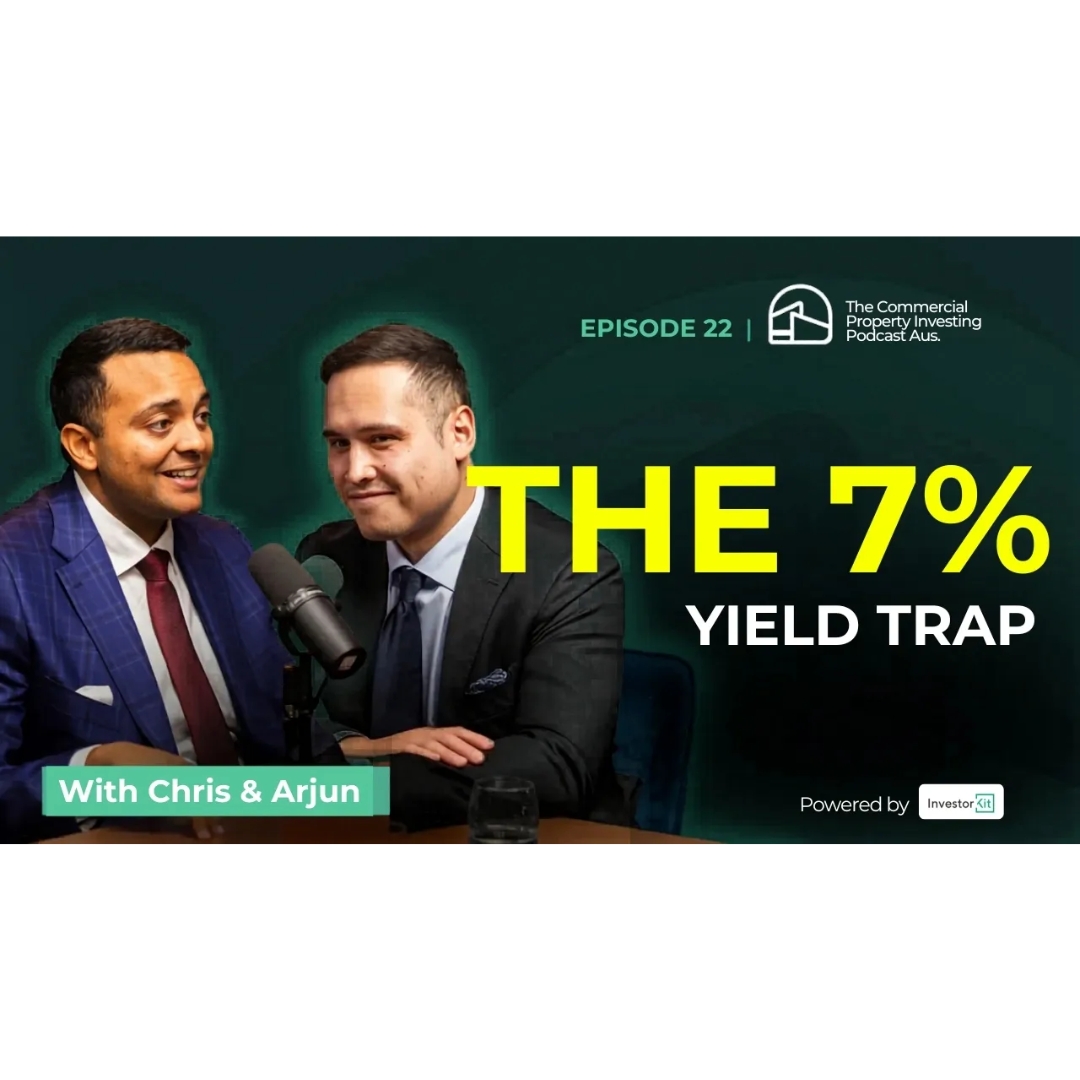
Why Chasing 7% Commercial Property Yields Can Backfire
Listen to it on


Commercial property investors often chase one number.
7% net yield.
On paper, it sounds attractive. Higher cash flow. Better returns. Faster passive income growth.
But in commercial property, higher yield often means higher risk.
That risk can come through vacancy, poor tenant quality, higher capital expenditure, weaker locations, or assets that become difficult to lease later.
In this episode of the Commercial Property Investing Show Australia, the discussion focused on two commercial acquisitions completed for InvestorKit clients. One was a childcare centre in South Australia. The other was an industrial warehouse in Clayton, Victoria.
The broader conversation explored how experienced commercial investors assess tenant quality, lease strength, market depth, and downside protection before looking at yield alone.
What Happened
The episode broke down two commercial acquisitions completed for InvestorKit clients.
Deal 1: $5.35 Million Childcare Centre in South Australia
The first acquisition was a childcare centre in metropolitan Adelaide purchased for $5.35 million with:
- A 5.43% net yield
- First-year net income of approximately $290,000
- A strong national operator
- Long lease security
- Significant surrounding population growth
- Reduced acquisition costs due to South Australia’s commercial duty structure
The deal was specifically sourced for a business owner seeking passive income security for his family.
The strategy focused on:
- Low-touch ownership
- Strong tenant demand
- Defensive income
- Long-term lease stability
- Population growth fundamentals
The team also completed extensive due diligence including:
- Competitor analysis
- Operator assessment
- Tenant interviews
- Local market inspections
- Childcare vacancy analysis
Importantly, nearby childcare centres were already at capacity, confirming strong local demand.
Deal 2: $3.8 Million Industrial Warehouse in Clayton
The second acquisition involved an industrial office warehouse in Clayton, Victoria.
The property was secured off-market for $3.8 million against a $4 million asking price with:
- Passing net rent of $225,000
- Day-one yield of approximately 5.92%
- A medical cannabis facility tenant
- Tight industrial vacancy conditions
- Strong long-term leasing demand
What made the deal exceptional was not simply the yield.
It was the negotiation.
InvestorKit negotiated:
- Full structural rectification works
- Plumbing repairs
- Roof and gutter rectification
- A $100,000 bond held in trust
- Removal of a $400,000 make-good cap
- A 12-month gross rent bank guarantee
This transformed a potentially risky acquisition into a highly protected commercial investment.
Key Findings
1. High yield often means higher risk
One of the strongest insights from the episode was that many investors misunderstand yield.
A 7% commercial asset may produce higher income initially, but it often carries:
- Higher vacancy exposure
- Older building stock
- More maintenance costs
- Weaker tenant demand
- Reduced leasing depth
The discussion explained that many of Australia’s strongest investment-grade commercial assets now transact closer to the 5% to 6% net yield range because investors are paying for stronger fundamentals.
2. Tenant quality matters more than lease length
A long lease does not automatically make a property safe.
The podcast shared an example of a childcare investor whose tenant struggled operationally despite having a long-term lease in place.
The operator eventually attempted to negotiate an exit due to underperformance and occupancy issues.
That created:
- Vacancy risk
- Legal complexity
- Reduced rental certainty
- Re-leasing pressure
The broader lesson was clear.
A lease is only as strong as the tenant behind it.
3. Commercial due diligence goes beyond the property
The childcare acquisition highlighted how much research occurs outside the building itself.
The team assessed:
- Competing childcare centres
- Occupancy levels
- Population growth
- Supply pipelines
- Operator capability
- Catchment demand
They even contacted nearby operators to understand local vacancy conditions and placement availability.
The discussion reinforced that commercial investing requires understanding both the real estate and the underlying business ecosystem supporting it.
4. Industrial demand remains extremely tight in key markets
The Clayton warehouse acquisition demonstrated why industrial property continues attracting strong investor demand.
The area had:
- Vacancy below 3%
- Restricted future supply
- Strong tenant demand
- Short leasing downtime
That depth matters because if a tenant eventually leaves, there are still multiple businesses capable of occupying the asset.
Location strength creates flexibility.
5. Negotiation can dramatically reduce commercial risk
One of the most important parts of the warehouse acquisition was the negotiation process.
The deal included:
- Structural rectification works
- Roof and plumbing repairs
- A $100,000 bond held in trust
- Removal of a make-good cap
- A 12-month gross rent bank guarantee
The episode highlighted how commercial negotiations differ significantly from residential property.
Large commercial transactions regularly involve six-figure rectification discussions, legal protections, and tenant covenant negotiations.
6. South Australia’s commercial transfer duty changes investor maths
The episode also discussed how South Australia removed traditional stamp duty on commercial assets.
That materially lowers acquisition costs compared to other states.
However, the market has adjusted quickly, with stronger investor demand compressing yields across South Australia over recent years.
The takeaway was that investors need to assess total transaction economics rather than focusing only on headline yield percentages.
Action Steps
Before purchasing commercial property, investors should assess more than just the advertised return.
Focus on:
- Tenant strength
- Vacancy risk
- Market depth
- Supply pipelines
- Building condition
- Lease enforceability
- Capital expenditure exposure
- Re-leasing flexibility
- Local demand drivers
It is also important to understand how negotiation impacts long-term risk. Strong commercial deals are often improved through:
- Bank guarantees
- Rectification clauses
- Vendor concessions
- Lease protections
- Better due diligence terms
Finally, investors should ensure the asset matches their long-term strategy. The right commercial property should support income stability, portfolio growth, and lifestyle flexibility over time.
If you want help assessing commercial opportunities properly, book a discovery call with InvestorKit. The strongest commercial assets are rarely identified by yield alone.