

May 8, 2026
Has Australia’s Rental Crunch Come to an End? A New Phase of the Crisis
Australia’s rental growth has now stabilised. Is this an early signal of the end of the crisis? Let’s take a closer look.
After the 2022 rental growth peak, Australia’s rental growth declined, but it has now stabilised at around mid-single digits.
One could argue these are early signals of the end of the crisis; nevertheless, the structural drivers that led to this phenomenon are still very much in place, with rental growth easing in pace but not in pressure. Let’s take a closer look.
Is the Market Stabilising?
As seen in the chart below, national rental growth is now at around 5%, a significant step down from the double-digit surges seen across both regional and capital markets in 2022.
Could this mean that we’re past the demand-supply imbalance?
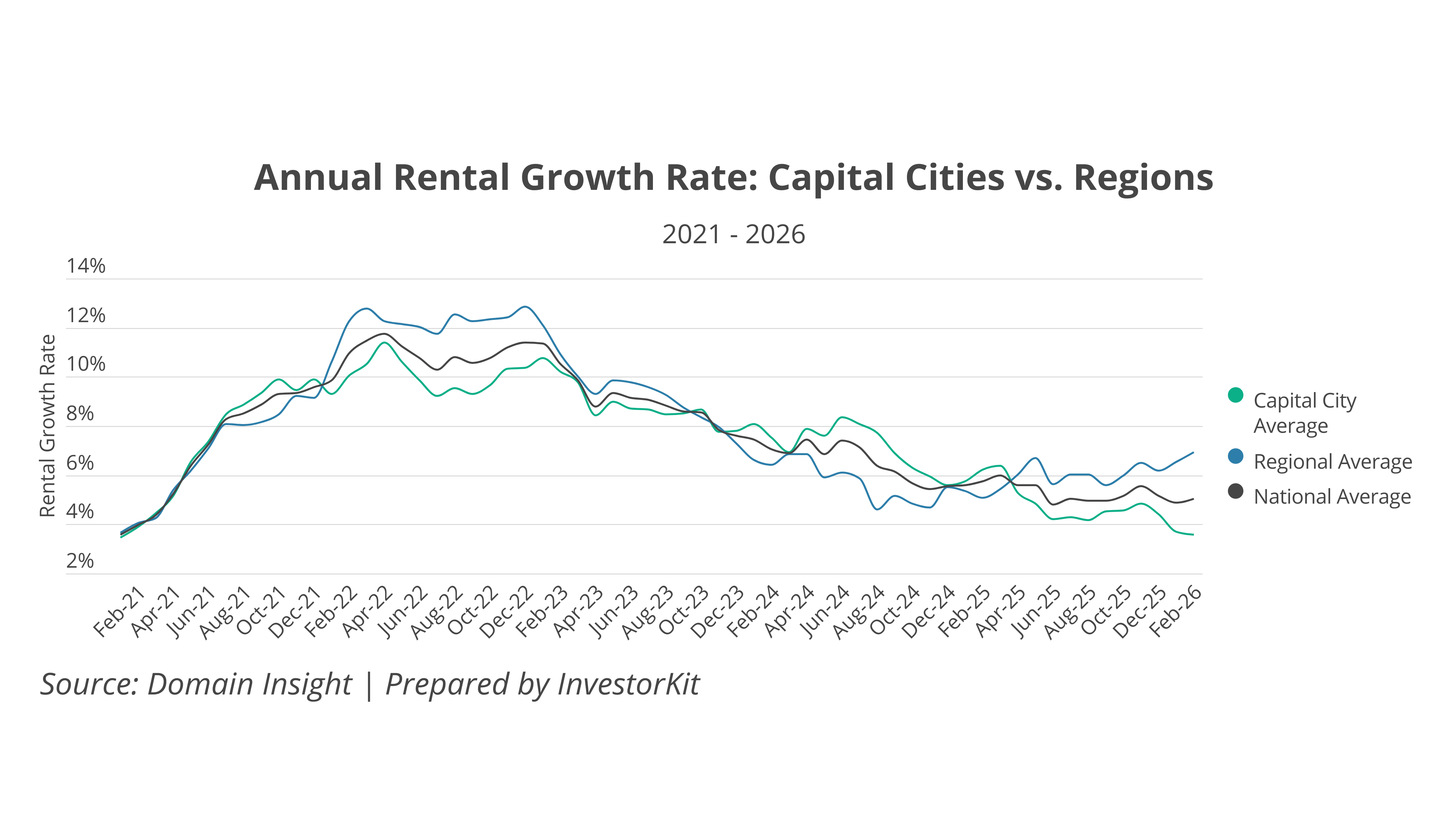
The current stability in the growth trend is of great significance, especially in contrast with the large divergence in growth rates observed over the prior four years.
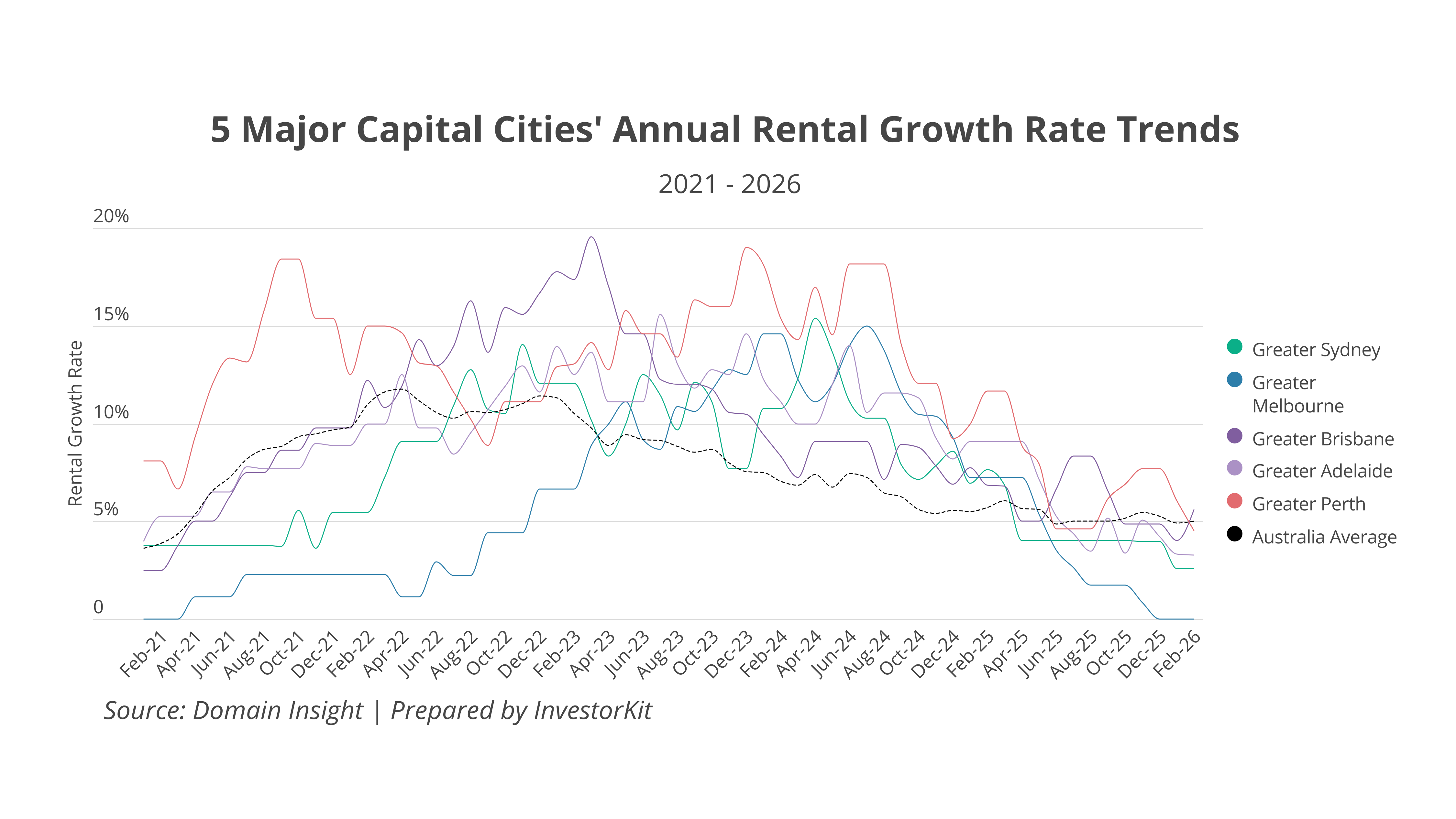
This convergence likely reflects increasing affordability constraints for tenants, limiting the capacity for further rapid rental growth, rather than a market pressure release. Here, we’ll guide you through three key drivers of the rental crisis that remain deeply embedded in Australia’s housing market.
Supply Remains Constrained
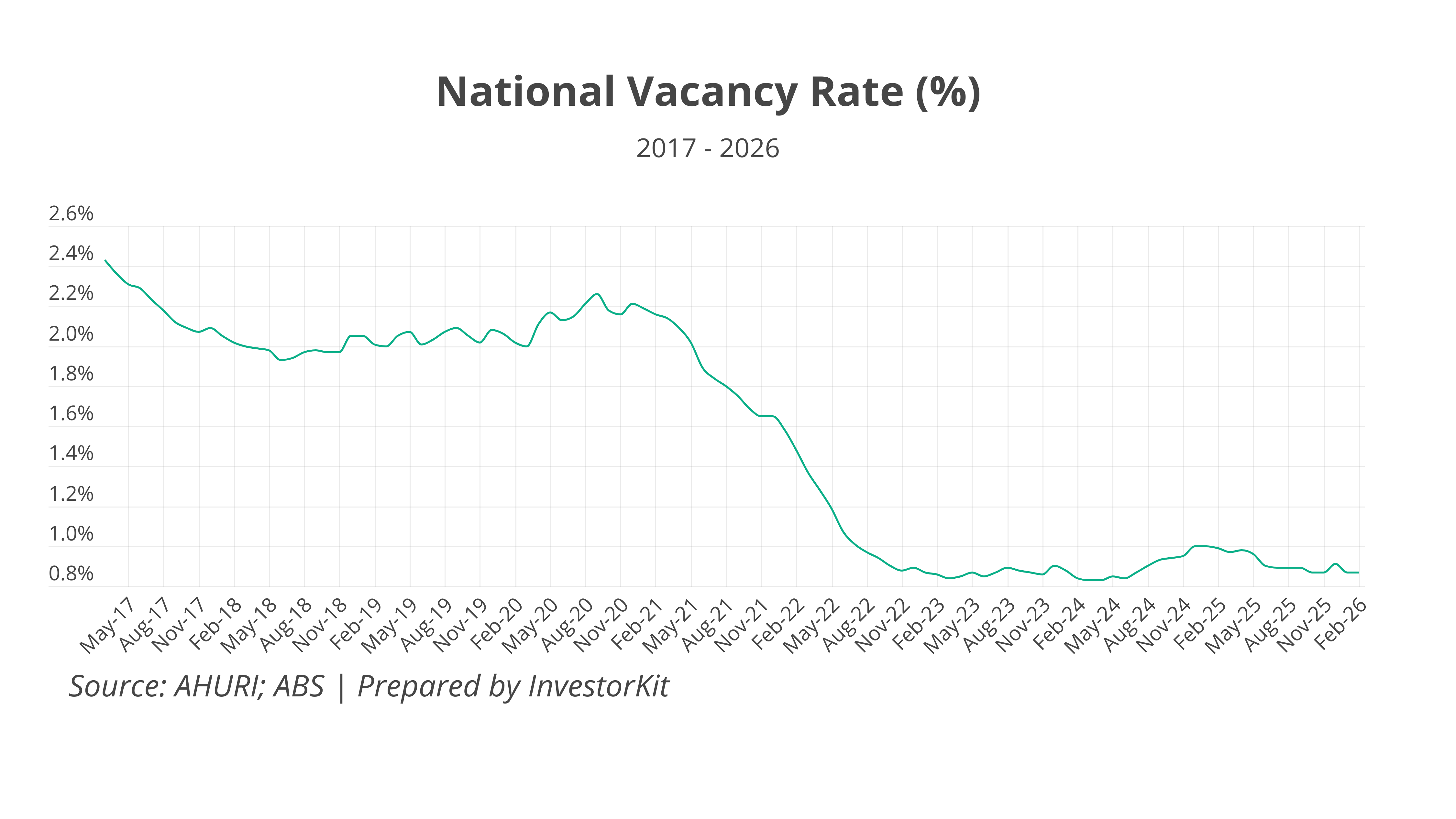
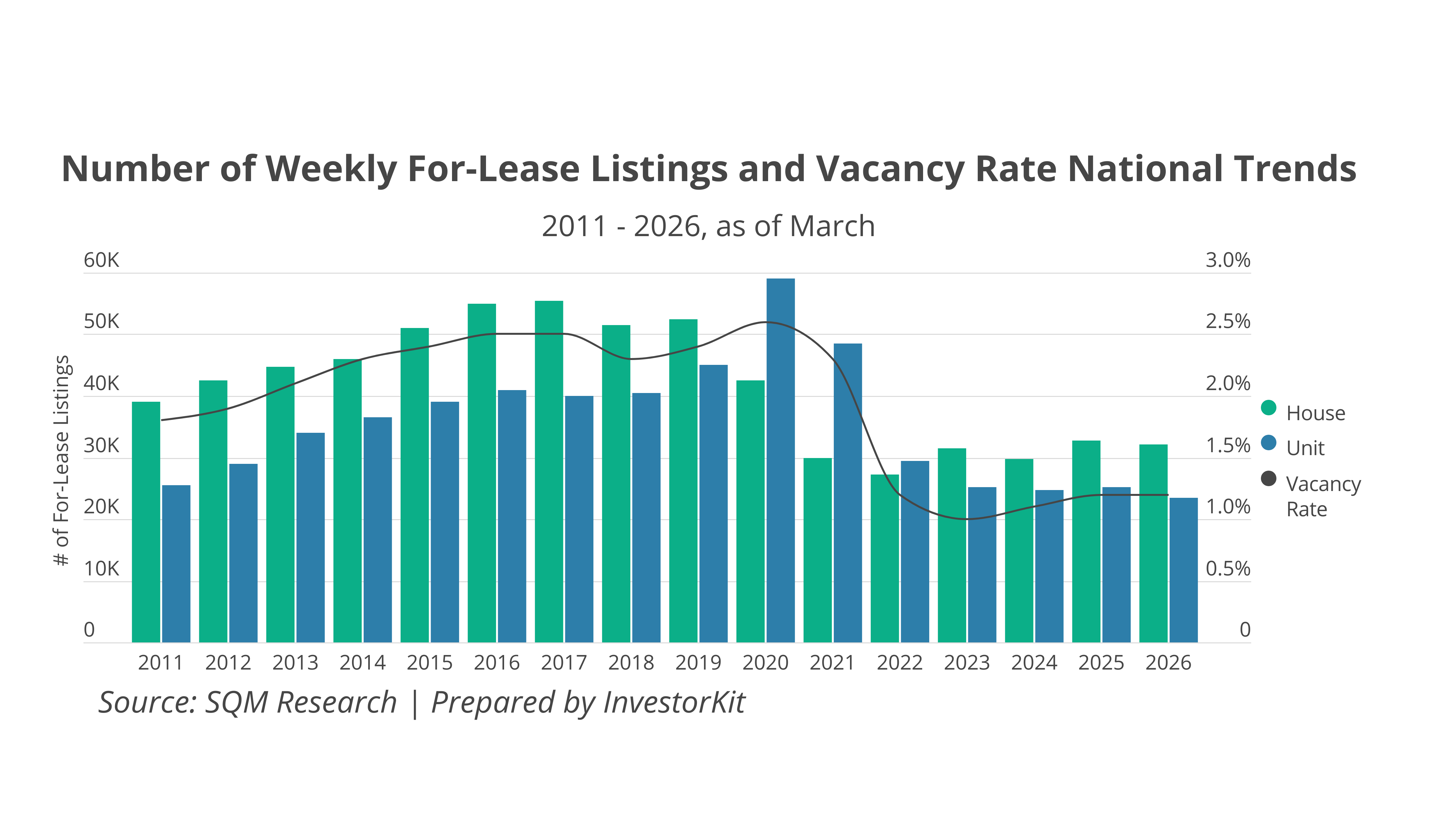
While the pace of growth has, in fact, slowed, supply remains highly constrained, with vacancy rates at record lows of 0.8%.
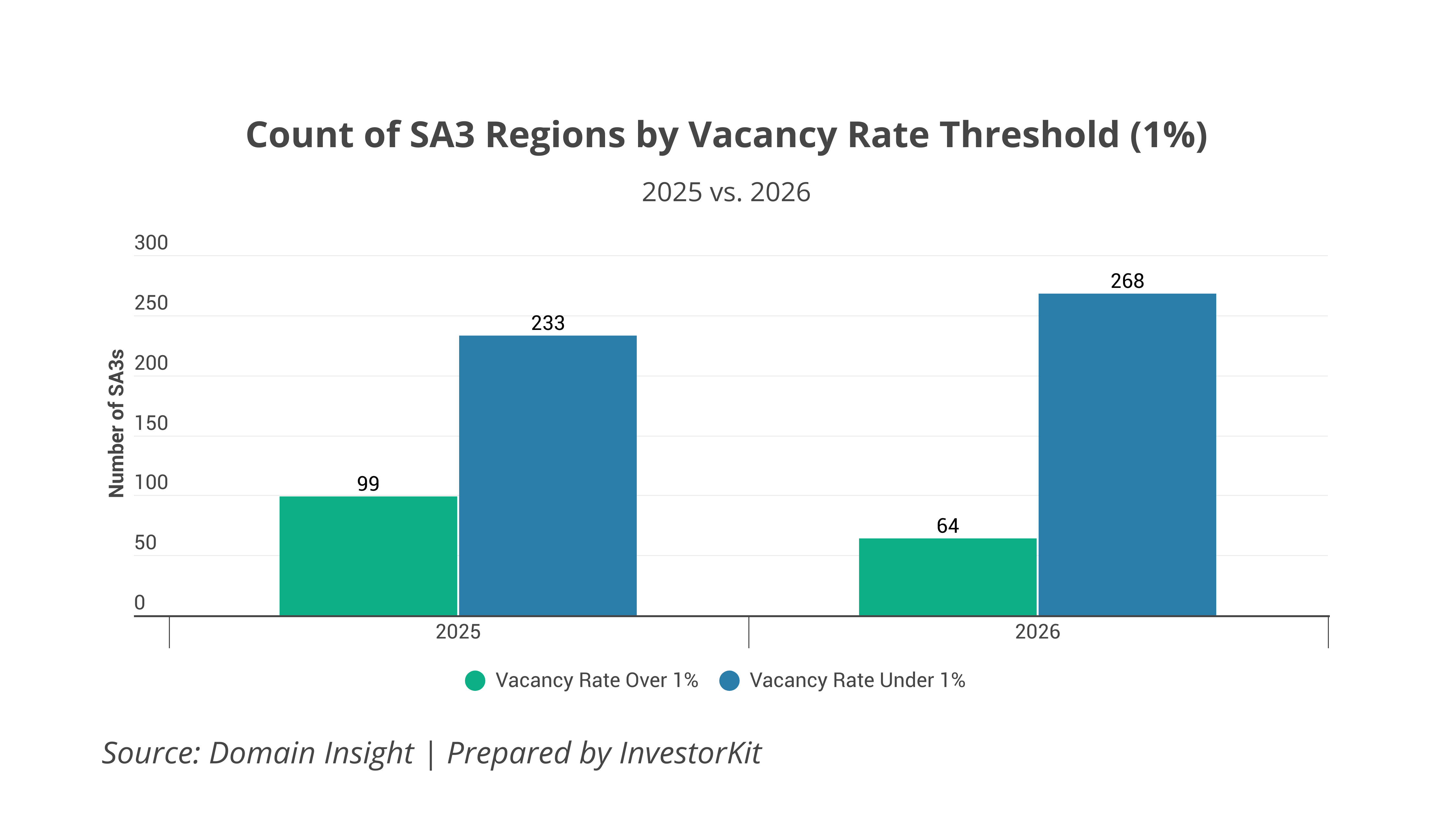
At a more granular level, a large and growing majority of SA3 regions are recording sub-1% vacancy rates, with 10.5% of SA3s crossing this high-pressure threshold in the past year alone.
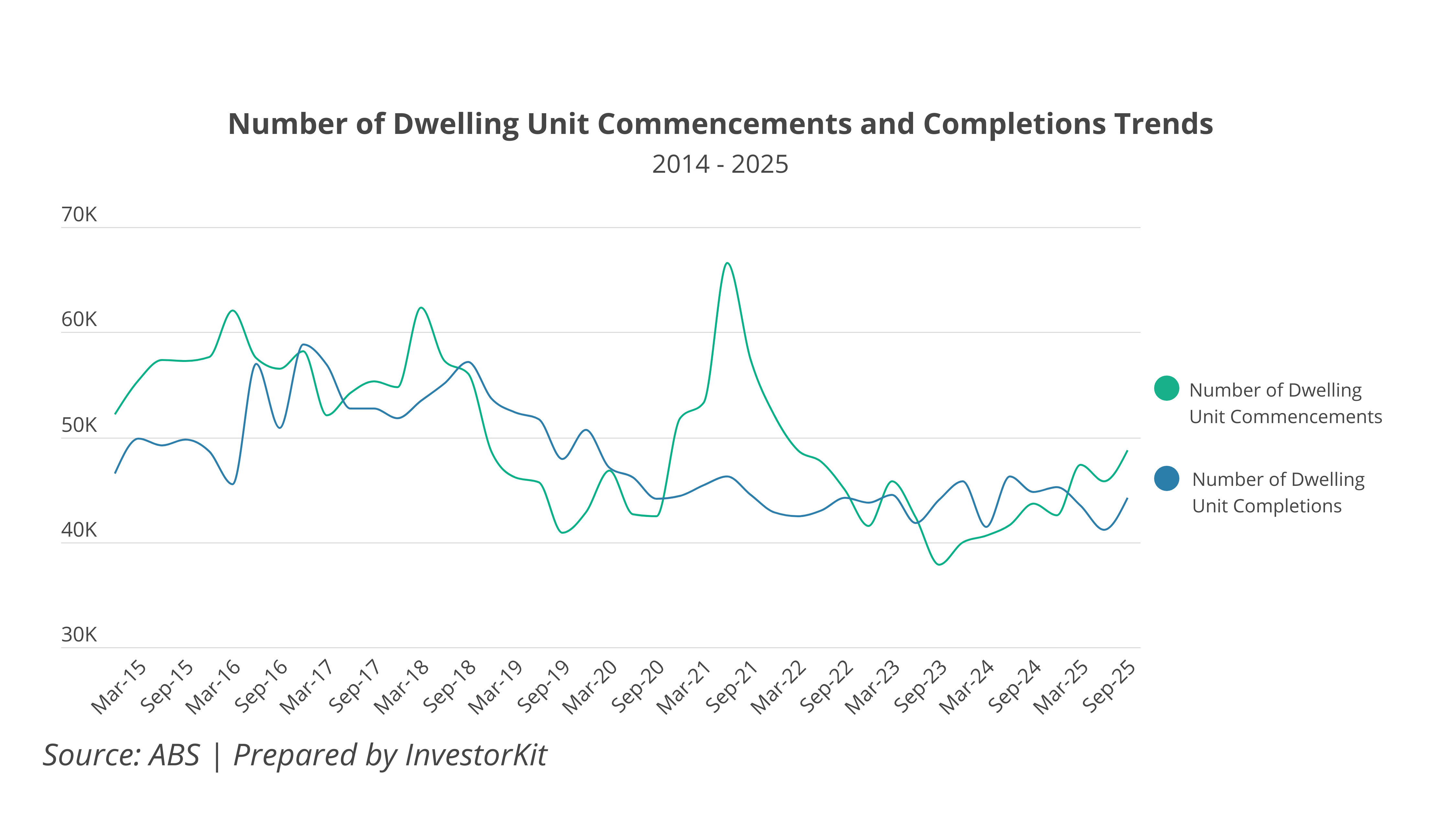
As for future supply, despite a gradual recovery in construction starts since late 2023, the number of completed dwellings has remained at decade-low levels. Rising construction costs, labour shortages, and tightened lending conditions for developers are key challenges causing this trend and will likely take years to resolve.
Alternative Rental Supply Channels Are Still Underdeveloped
The private rental sector provides more than 80% of Australia’s rental housing and continues to operate below pre-COVID listing levels in both houses and units, leading to record-low vacancy rates depicted above.
While the private rental sector continues to be under pressure, other renting forms, such as Build-to-Rent (BTR) and Social Housing, remain underdeveloped and structurally unwelcomed.
Build-to-Rent (BTR) properties are scarce in the Australian housing system, accounting for less than 0.4% of the national dwelling stock. Tax structures, DA hurdles, and limited financing models continue to slow meaningful rollouts.
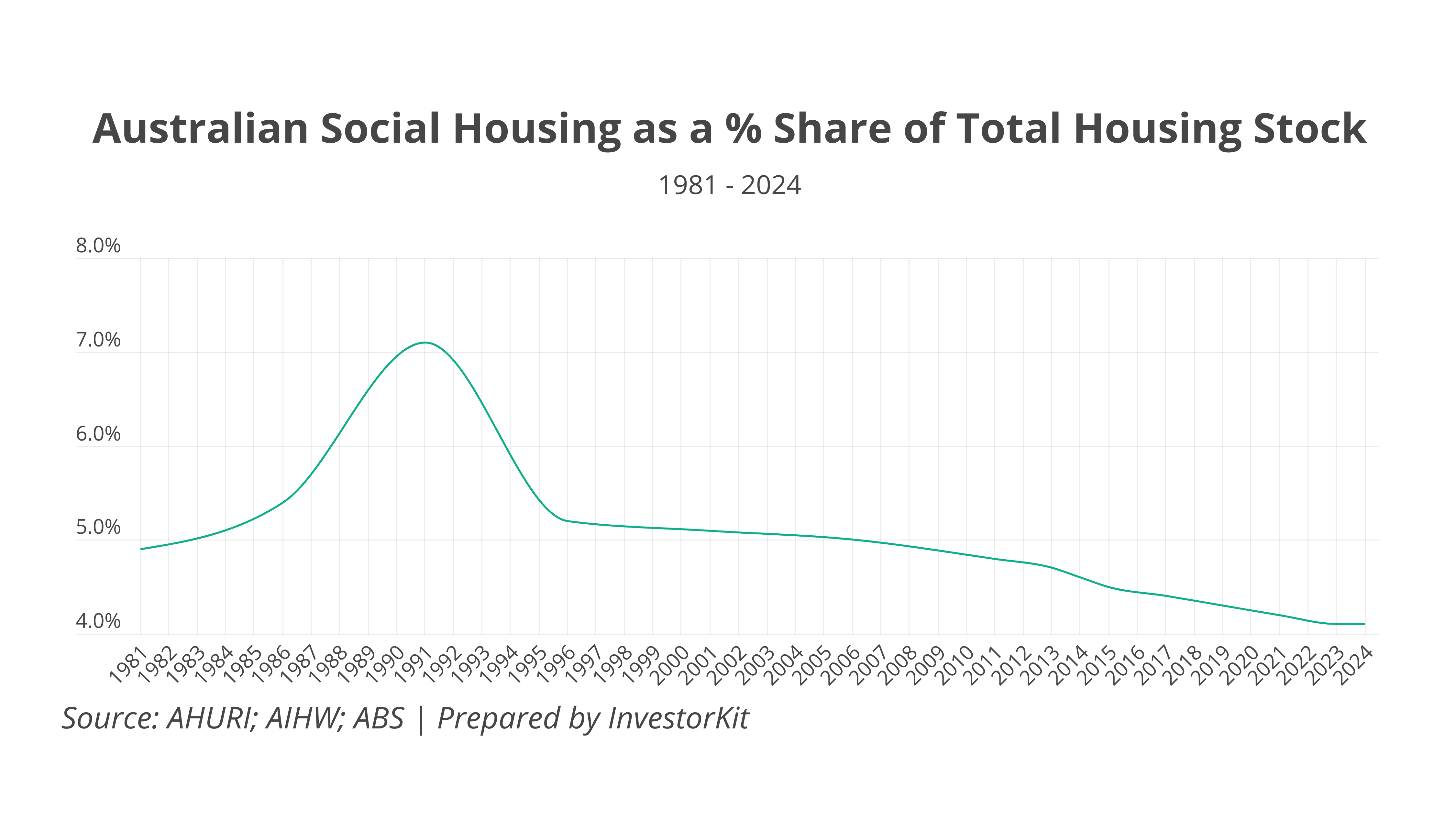
Social housing, an essential safety net in countries like Denmark and Austria, where it accounts for over 20% of housing, has declined persistently in Australia over the past 30 years, falling to around 4% of total housing stock.
At the same time, demand for social housing has surged. Public housing waitlists are near record highs, and the number of households in greatest need (eg. homeless applicants) has risen by 66% over the past decade.
Demand Continues to Rise
While supply struggles to respond, rental demand continues to be reinforced by multiple drivers at once.
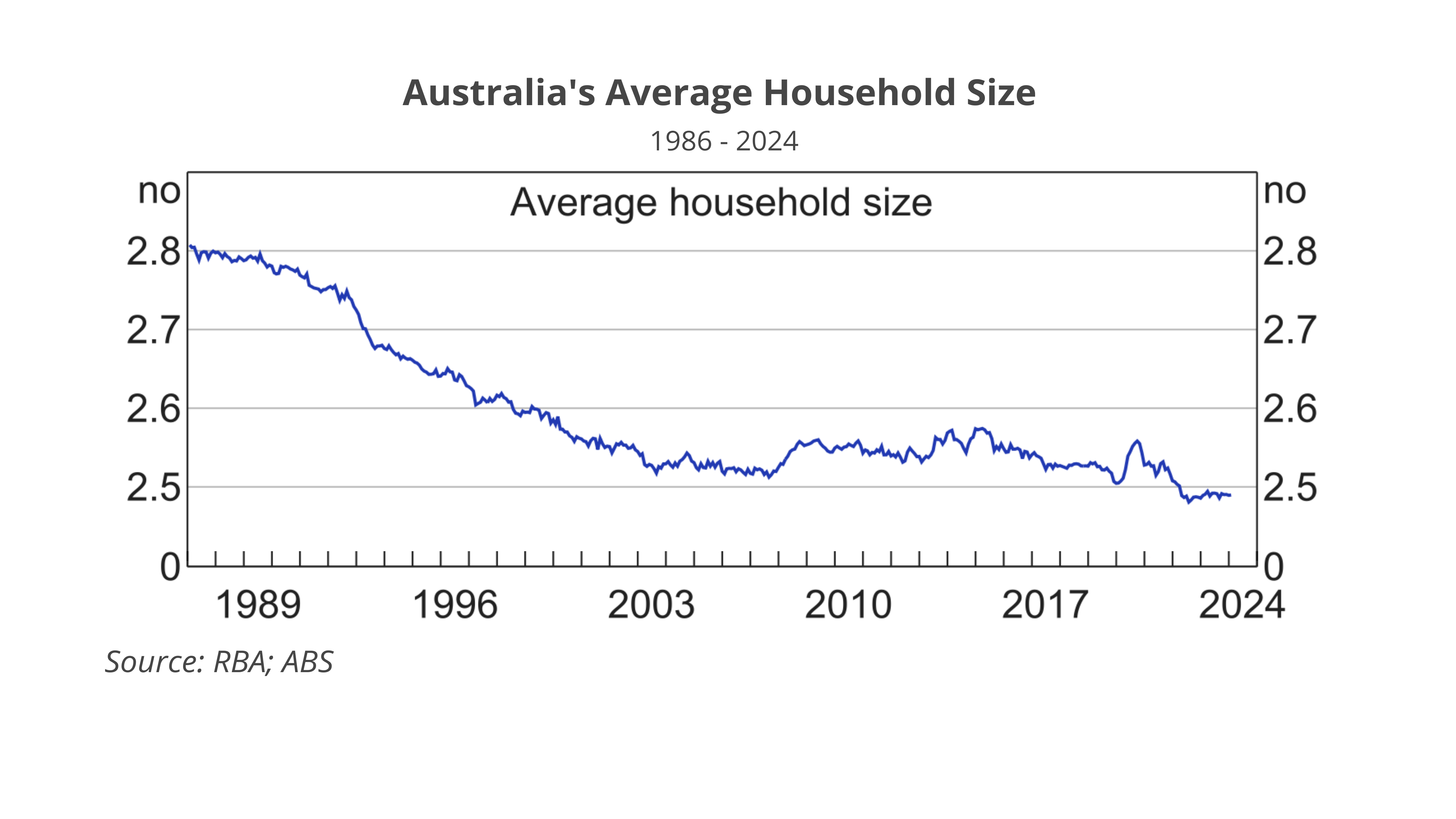
At the structural level, Australia’s average household size has been declining for years. Fewer people per dwelling means more dwellings are needed to house the same population, a quiet but persistent driver of rental demand.
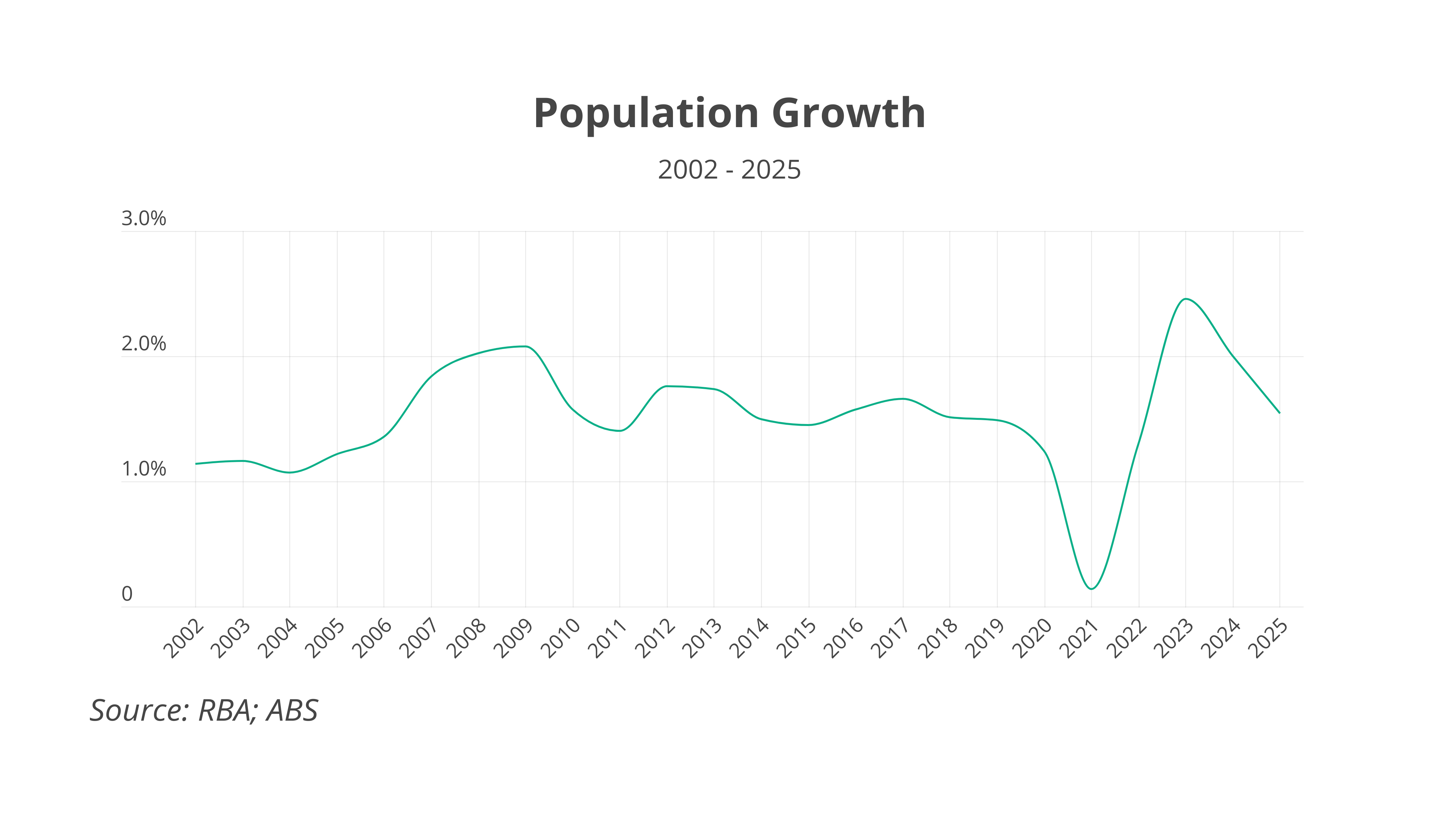
When it comes to population growth, the sudden drop following COVID border closures rebounded rapidly, peaking in 2023. Since then, persistent inflows have continued to add immediate pressure to the rental market, as most new arrivals rent before they buy.
What This Means for Investors
The rental crisis is evolving, but far from over. The pace of change has slowed, but the underlying imbalance remains firmly in place. Extremely low vacancy rates, reduced future supply, limited rental alternatives, and increasing demand will continue to put upward pressure on rental prices.
Looking ahead, elevated interest rates are likely to add another layer of demand-side pressure. With the RBA cash rate at 4.10% and major banks expecting further increases, prospective home buyers may find the path to ownership harder.
For investors, that sustained pressure creates durable rental demand and yield opportunities, particularly in markets where affordability prevails. If your intention is to identify where these markets are, our whitepaper, 20 Regions Where Rent Will Continue Rising in 2026, covers 20 SA3 areas across both capital cities and regional areas where rental growth is most likely to remain elevated or accelerate further.
With the right approach, this moment in the market could offer several strategic advantages by recognising the structural trends others are ignoring and the value they represent. Need assistance with identifying trends and the right markets? Talk to us today by clicking here and scheduling your 15-minute Discovery Call!