

May 4, 2026
Population, Infrastructure & Job Market: Do They Actually Drive Price Growth?
This blog examines three case studies where these commonly cited “growth drivers” were present, yet price growth was limited or inconsistent.
Population growth, infrastructure investment, and a strong labour market are often seen as key drivers of property price growth. The logic feels straightforward: more people increase housing demand, infrastructure improves liveability, and employment supports household incomes.
However, these factors do not operate in isolation. Property markets are influenced by a combination of macro conditions (such as interest rates and market cycles) and local dynamics (such as supply, demographics, and economic structure). Relying on any single indicator can lead to incomplete or misleading conclusions.
This blog examines three case studies where these commonly cited “growth drivers” were present, yet price growth was limited or inconsistent. The aim is to show that understanding how different forces interact is more important than focusing on any one factor in isolation.
Population Growth Doesn’t Guarantee Price Growth
Population growth is often interpreted as a direct signal of rising housing demand. But the key question is how that demand interacts with broader market conditions and local supply.
Case Study: Box Hill NSW 2765
Box Hill sits within Sydney’s North West Growth Area, where large-scale development has been planned and delivered over the past decade. Between 2021 and 2025, the population increased from 6,482 to 17,712 – a 173% rise, making it one of the fastest-growing areas in Australia.
However, from Nov 2022 to Nov 2025, despite this strong population growth, the median house price did not increase at all.
This was primarily due to the broader interest rate cycle. Between 2022 and 2024, rising interest rates reduced borrowing capacity across Australia, leading to price declines and stagnation across Sydney and many major property markets.
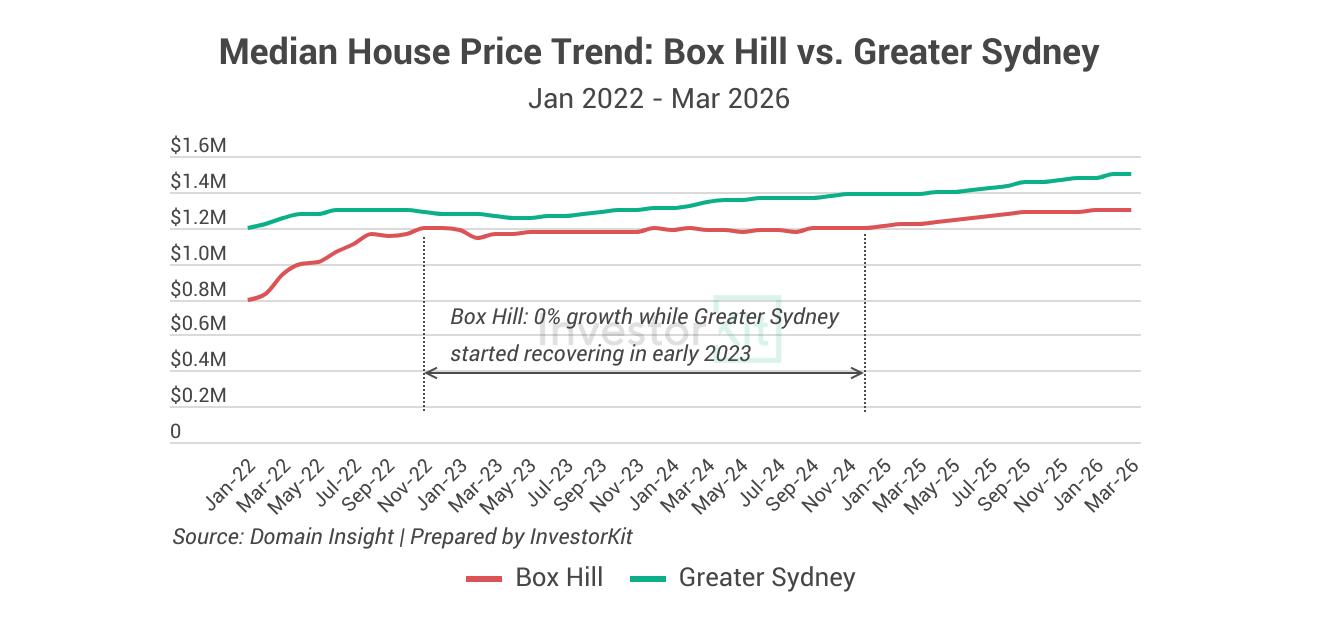
In Box Hill, this demand-side weakness was compounded by a high level of new supply (chart below). While supply did not drive the initial slowdown, it played a supporting role by limiting the speed of recovery as market conditions began to stabilise.
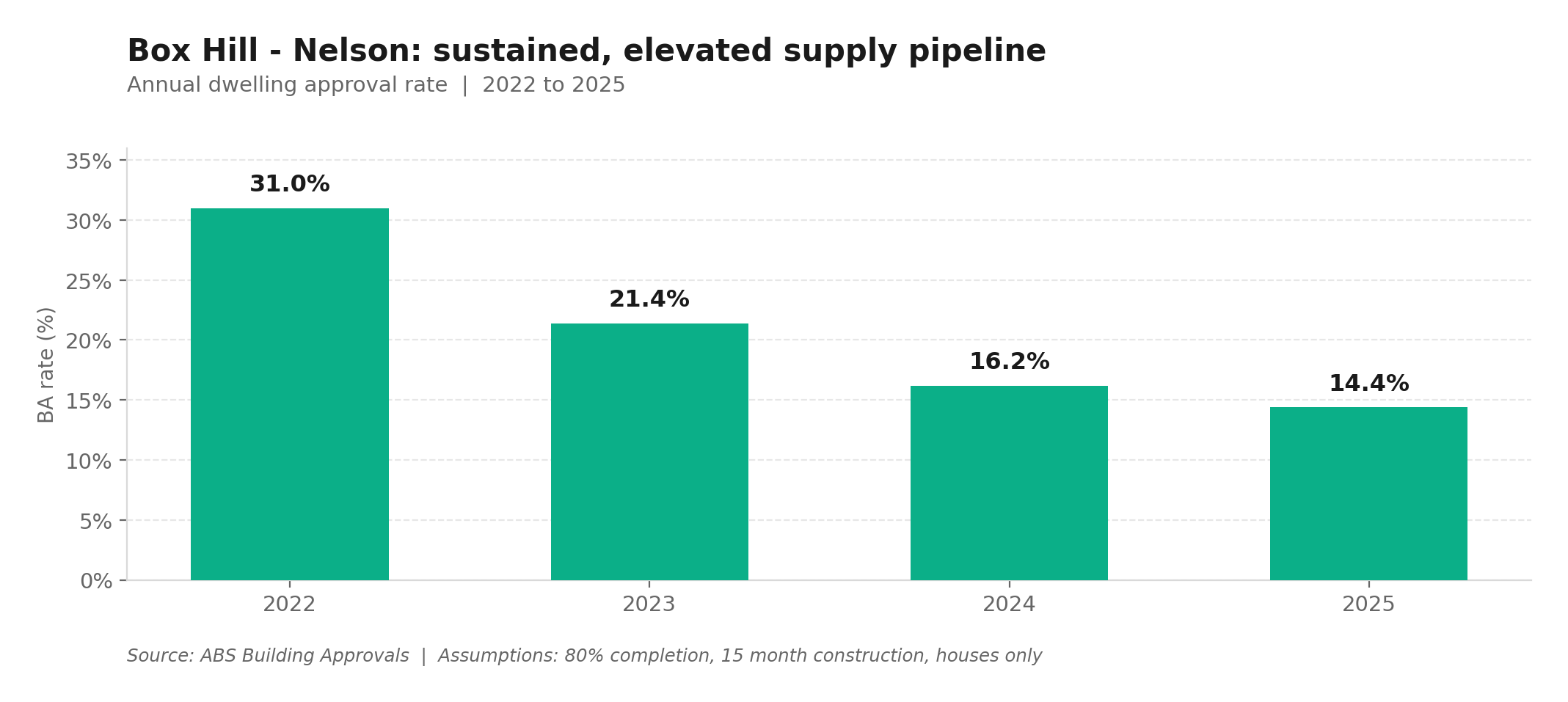
Takeaway: Population growth alone does not drive price growth. Broader demand conditions, particularly borrowing capacity, set the direction of the market, while supply influences the strength of price responses.
Infrastructure Investment Doesn’t Override Market Cycles
Infrastructure projects, such as roads, rail, and major developments, are often expected to drive price growth by improving accessibility and liveability. While they can enhance an area’s long-term appeal, they do not operate independently of broader market conditions.
Case Study: Bringelly – Green Valley (SA3) NSW
Bringelly – Green Valley experienced significant infrastructure investment between 2016 and 2020, including major road upgrades and the announcement of the Western Sydney Airport.
House prices surged initially, rising through 2016 and peaking in late 2017. However, from late 2017 through to 2020, prices declined.
This movement was primarily driven by the broader Sydney market cycle. During this period, Greater Sydney experienced a cyclical downturn following the 2017 peak, and Bringelly – Green Valley moved in line with that trend (chart below).
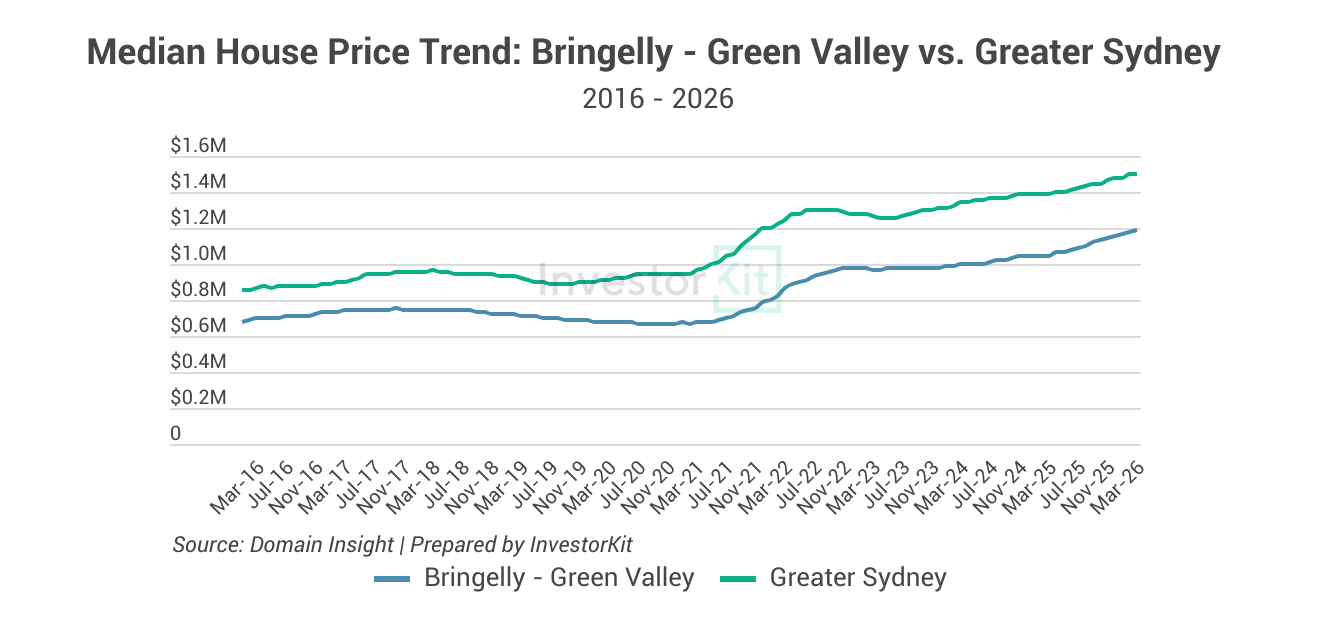
Despite substantial infrastructure investment and the confidence boost associated with the Western Sydney Airport, these local factors were not enough to offset the broader decline in the market.
Takeaway: Infrastructure can improve long-term fundamentals, but it does not override market cycles. When the broader market is declining, even well-positioned areas with strong infrastructure investment are likely to follow.
A Low Unemployment Rate Doesn’t Always Indicate a Strong Market
Low unemployment is often interpreted as a sign of economic strength and, by extension, housing demand. However, this metric can be misleading if not considered in context.
Case Study: Wingecarribee (LGA) / Southern Highlands (SA3) NSW
Wingecarribee LGA reports an unemployment rate of just 1.3%, well below state and national averages. Intuitively, this would suggest a strong labour market and support the expectation of robust property price growth, as has been observed in regional centres such as Dubbo (chart below).
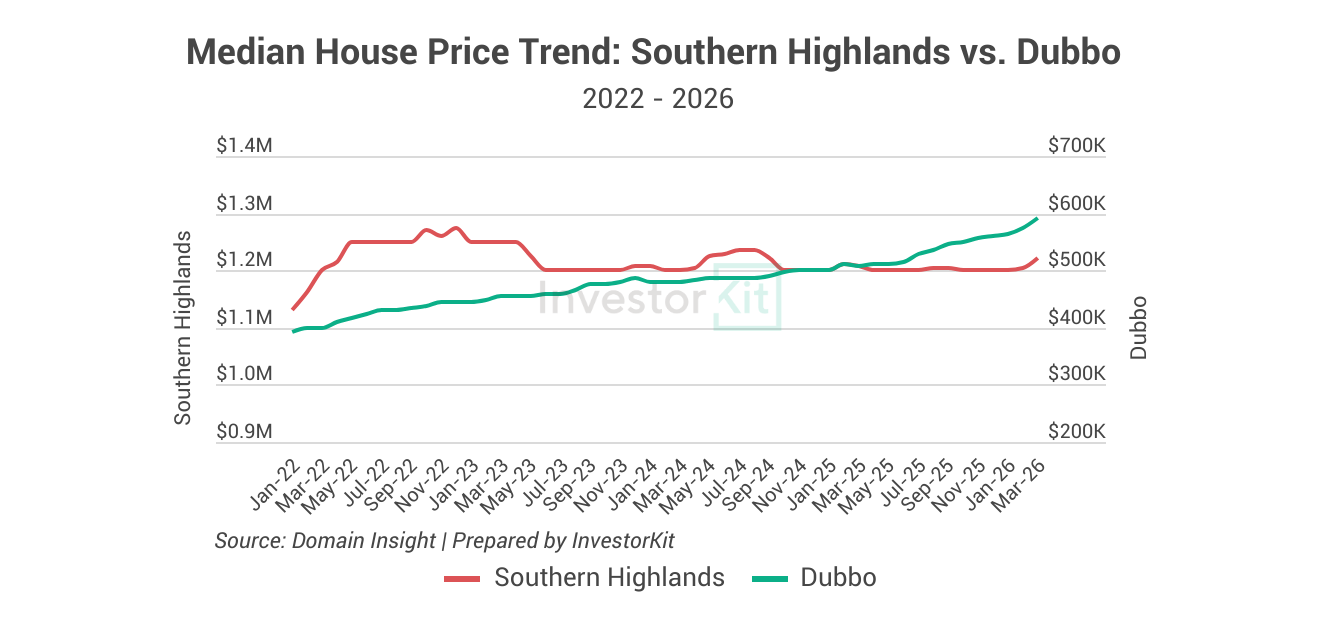
However, this has not been the case. Price growth in the Southern Highlands has been subdued in recent years.
The reason lies in the structure of the local labour market. Wingecarribee has a median age of 48, with 27% of residents aged over 65. This points to a smaller, less active labour force. As a result, the low unemployment rate reflects limited labour participation rather than strong job creation or economic expansion.
This distinction was less relevant during the COVID period, when low interest rates, strong borrowing capacity, and lifestyle-driven migration supported demand across many regional markets.
However, the environment has since shifted. Higher interest rates have reduced borrowing capacity, affordability has deteriorated following the COVID-era price surge, and the work-from-home trend has moderated. In this context, markets without a strong and expanding local job base have struggled to sustain demand.
As a result, the Southern Highlands has not experienced the same level of recovery seen in other regional markets with stronger underlying economic drivers.
Takeaway: A low unemployment rate does not necessarily indicate a strong or growing economy. To assess housing demand, it is essential to consider labour force size, economic activity, and affordability, not just headline employment metrics.
Conclusion
Population growth, infrastructure investment, and low unemployment are all important signals, but none of them, on their own, reliably predict price growth.
Each case study highlights a different limitation:
- Box Hill: Strong population growth was outweighed by rising interest rates, with supply influencing the pace of recovery.
- Bringelly – Green Valley: Infrastructure investment did not prevent prices from following the broader Sydney market cycle.
- Wingecarribee/Southern Highlands: Low unemployment reflected demographic structure rather than economic strength, while affordability constrained demand.
The consistent theme is that property markets are driven by multiple interacting forces, with macro conditions often setting the direction and local factors shaping the outcome.
A more robust approach is to assess all influencing factors holistically, including:
- Macro drivers: interest rates, borrowing capacity, market cycles, etc.
- Local demand factors: population, employment, income, demographics, etc.
- Supply conditions: approvals, inventory, development pipeline, etc.
Understanding how these elements interact provides a clearer view of where genuine market pressure, and therefore price growth, is likely to emerge.
InvestorKit is focused on cutting through market noise by analysing property markets from a holistic, data-driven perspective. If you’re looking for clarity on where the next growth opportunities lie, book a free discovery call with our team.