

April 27, 2026
The Accidental Investor Trap: 3 Costly Mistakes to Watch Out For
Without a clear investment lens, a decision that feels reasonable can quietly work against your long-term benefit.
Most Australians build their property portfolio backwards.
They begin by purchasing a home, and somewhere along the way, that home becomes an investment property. We refer to this pattern as accidental investing.
While repurposing what was once home might seem like a good approach at times, this decision does not come without risks.
There’s nothing inherently wrong with a property entering a portfolio by circumstance rather than by design. The problem is in the sequencing and structure behind that decision. Without a clear investment lens, a decision that feels reasonable can quietly work against your long-term benefit.
Here are three of the most common mistakes we see in accidental investors, and why they matter more than you may have realised.
Mistake 1: Assuming a property appealing to owner-occupiers is also appealing to renters.
When a property is bought with the objective of making it home, the evaluation might naturally prioritise aspects such as proximity to school, neighbourhood character, lifestyle amenities, space, and liveability.
These are all great features. Nevertheless, tenants can be driven by different priorities; in particular, younger renters are more likely to prioritise proximity to employment hubs, access to public transport, convenience to retail and services, and affordability relative to their income.
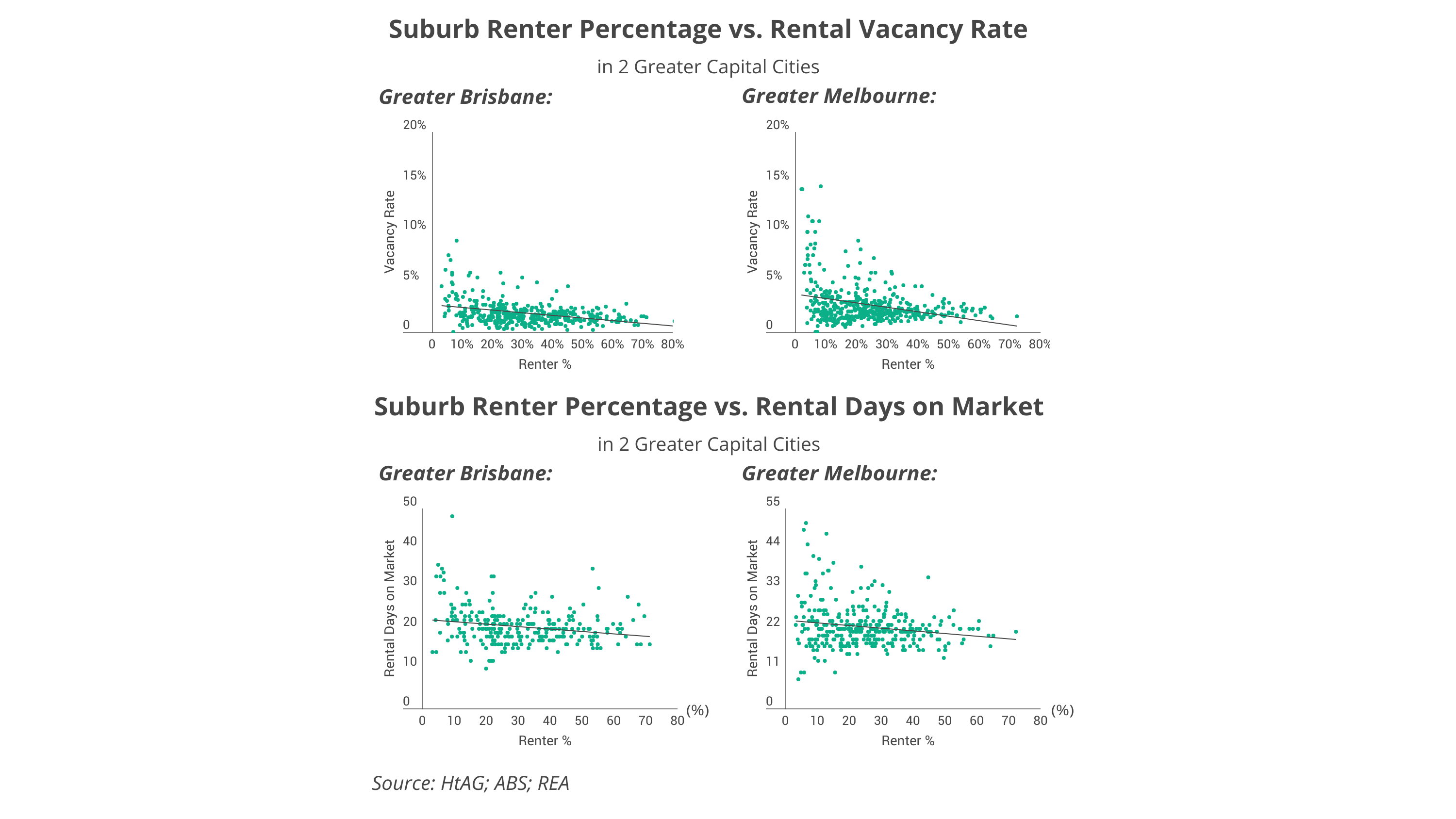
As seen below, across major capital cities, suburbs with lower proportions of renters and higher proportions of owner-occupiers tend to exhibit longer rental days on market and higher vacancy rates.
Some may argue that some features, such as top schools, can be appealing to renters as well, especially families.
That is true, but the high demand isn’t necessarily demonstrated in the right asset for investors, i.e. houses.
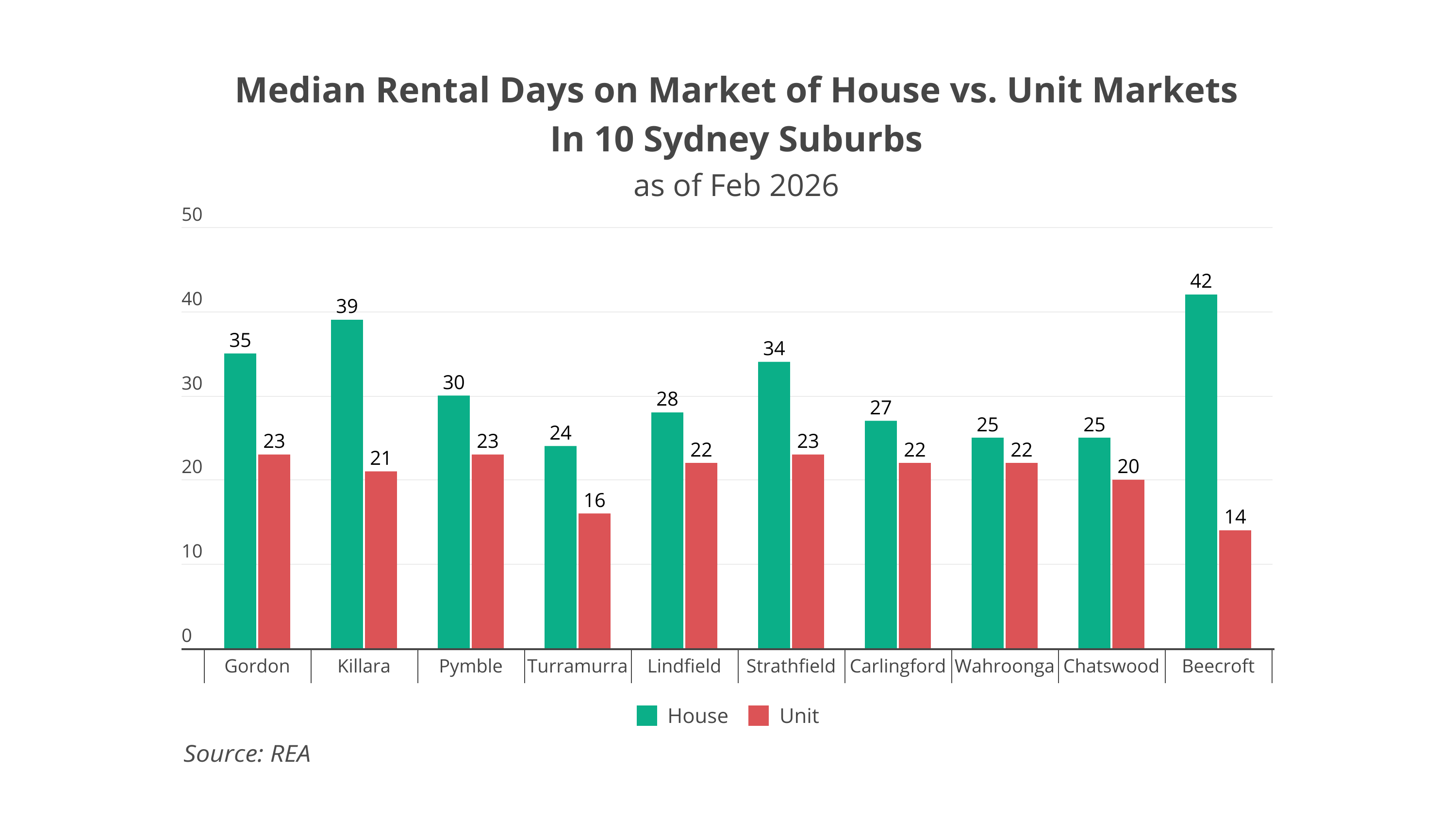
Let’s look at a Sydney example. The chart below shows rental days on market, an indicator of rental demand, of houses and units in 10 Sydney suburbs within elite school catchments. It’s clear that apartments in all these suburbs are more popular to rent.
However, would you hold an apartment in these suburbs? You’ll find a clear answer in the second mistake below.
Retaining a property that’s solely evaluated from an owner-occupier lens puts you at risk of reduced rental performance and cash flow outcomes. Effective portfolio construction requires distinguishing who a location is suitable for and why.
Mistake 2: Holding an underperformer because “property value will go up anyway”
The belief that property values always increase over the long run is persistent in Australian investing. While broadly true, this assumption overlooks critical distinctions in portfolio building. The problem is not simply that property doesn’t grow; it’s that it doesn’t all grow equally, and doesn’t always grow consistently.
First, let’s discuss houses’ vs. units’ performance.
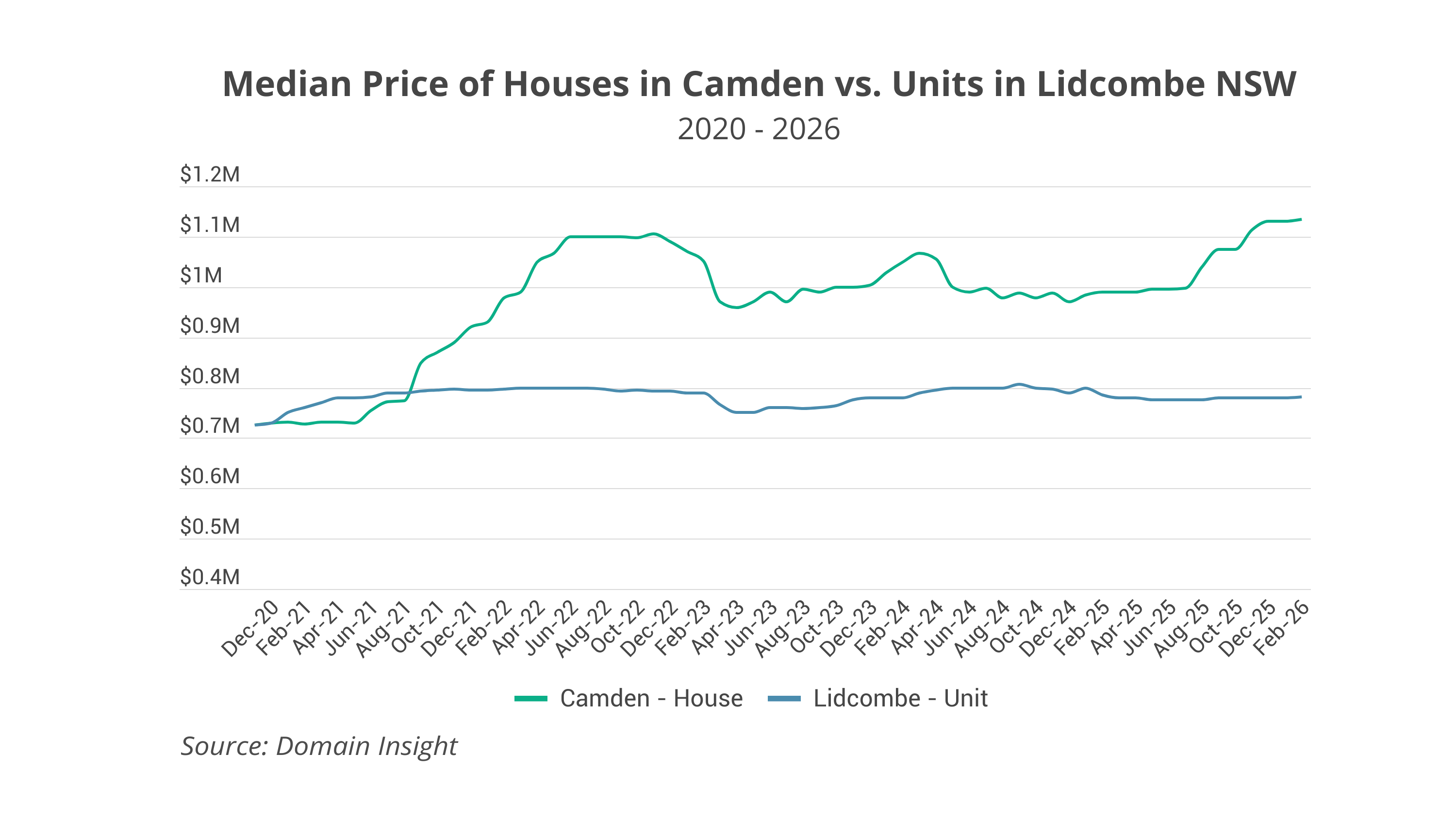
The house market of Camden, when compared with the unit market of Lidcombe, both within Greater Sydney, illustrates this well: with broadly similar prices in 2020, house growth has run well ahead over recent years. Holding a unit on the assumption that time will deliver growth could mean missing out on meaningfully higher returns over time.
Furthermore, let’s look at market cycles.
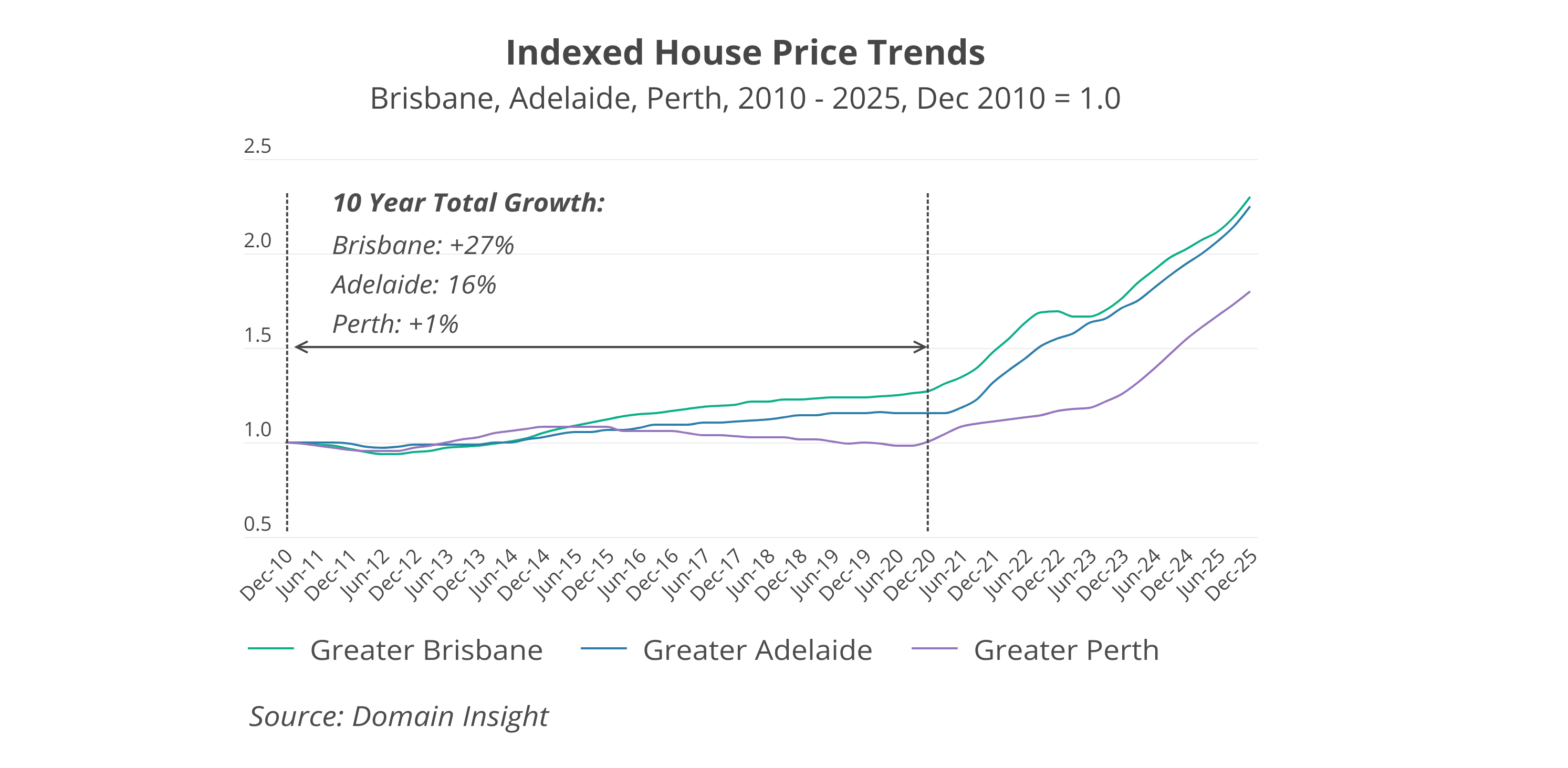
The “long run” is a vague measure that collapses years of flat conditions into a single endpoint. Brisbane, Adelaide, and Perth, for example, delivered very limited price growth through much of the 2010s before finally experiencing sharp gains from 2021 onward. For an investor relying on equity growth to fund the next acquisition, those quiet years would represent real lost momentum.
Mistake 3: Concentrating your portfolio in familiar territory
Familiarity feels like prudence. When investors know an area well, because they’ve lived there, worked there, or raised a family there, holding and buying in that location can feel inherently safer. The streets are familiar, and the amenities are understood.
While these are all positives, accidental investors who retain their former home because they “know the area” can also be tempted to purchase subsequent properties in the same region or similar areas, driven by the same economic forces. The result is a portfolio that’s geographically concentrated with performance compounding in one direction, both during periods of strength and periods of stagnation.
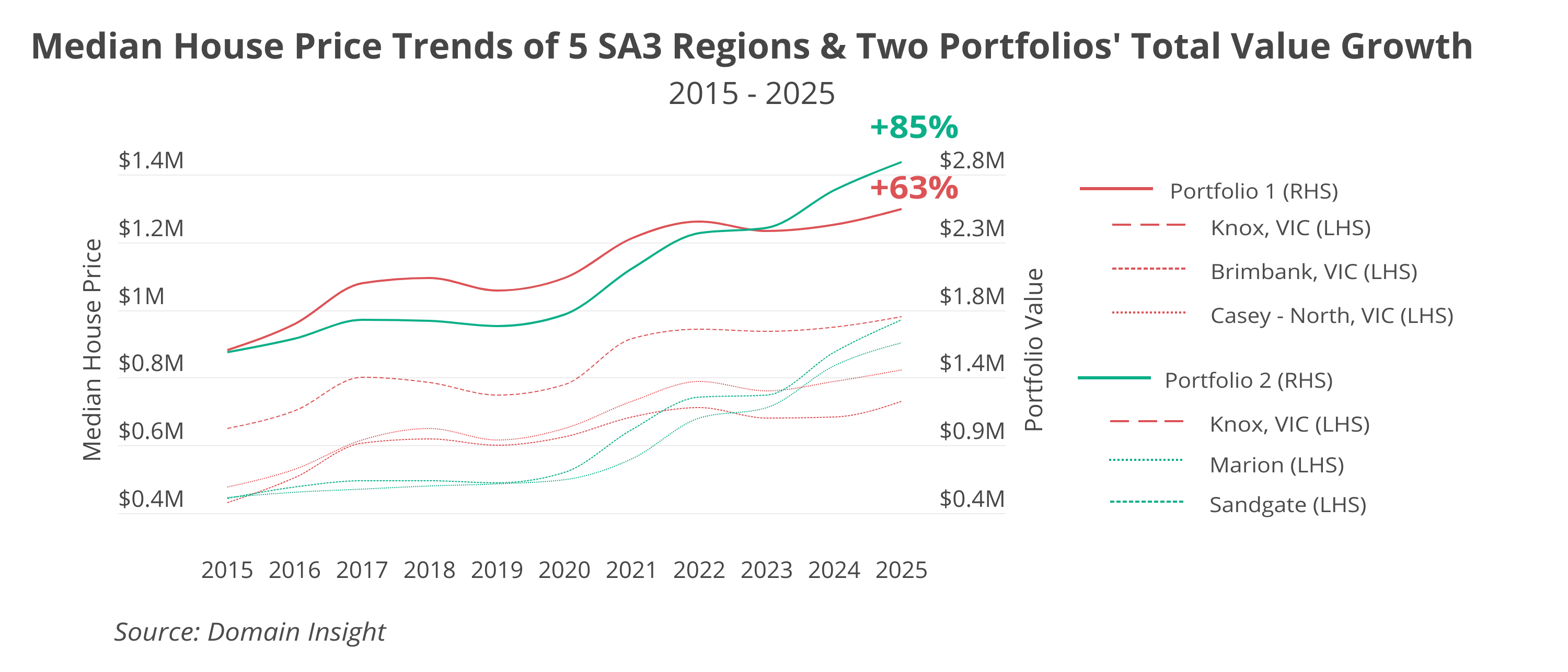
Consider the following two portfolios held from 2015 to 2025: one concentrated in Melbourne (Red), and another diversified across Melbourne, Brisbane, and Adelaide (Green). While the Melbourne markets moved largely in sync, with more volatility and limited growth, the diversified portfolio saw smoother and faster growth as Brisbane and Adelaide not only run in different cycles, but also experienced stronger growth cycles from 2021 onward.
Making the Shift from Accidental to Intentional
None of these mistakes is unusual. They naturally follow the way most Australians enter the property market and can, in many cases, seem entirely reasonable. The alternative, and the one we encourage, is intentional investing: Applying logic before decisions are made and dynamically assessing the property portfolio in order to maximise growth.
To find out what intentional investing is like, check out our whitepaper: The Accidental Investor Trap. The whitepaper not only demonstrates the causes and hidden costs of accidental investing with examples, but also shows how you can avoid the trap and transition into intentional investing.
InvestorKit is a data-driven buyer’s agency focused on reducing avoidable mistakes through thorough market research. If you are not sure whether your current portfolio is structured to support your goals, book a FREE 15-minute discovery call to see if InvestorKit is the right fit to help you make smarter decisions and build your portfolio with confidence.