

May 15, 2026
Brisbane Western Corridor: The Interplay of Macro & Local Conditions
Greater Brisbane has recorded the fastest 1-year price growth among the capital cities (14.8%) and ranks among the fastest-growing in recent years. This is supported, among other factors, by the…
Greater Brisbane has recorded the fastest 1-year price growth among the capital cities (14.8%) and ranks among the fastest-growing in recent years. This is supported, among other factors, by the strongest consecutive internal migration numbers over the past 2 years and a substantial infrastructure pipeline, including projects linked to the 2032 Brisbane Olympics.
Within Greater Brisbane, growth has not been uniform. Some areas have grown faster than others, with the Western Corridor among the standout areas. To explore how this plays out at the local level, we put 3 SA3 regions under the lens: Ipswich Inner, Springfield – Redbank and Forest Lake – Oxley.
To assess the growth outlook across these SA3s, this blog examines two layers: macro fundamentals and local property market conditions that shape each market.
The Demand Foundation: People, Jobs & Infrastructure
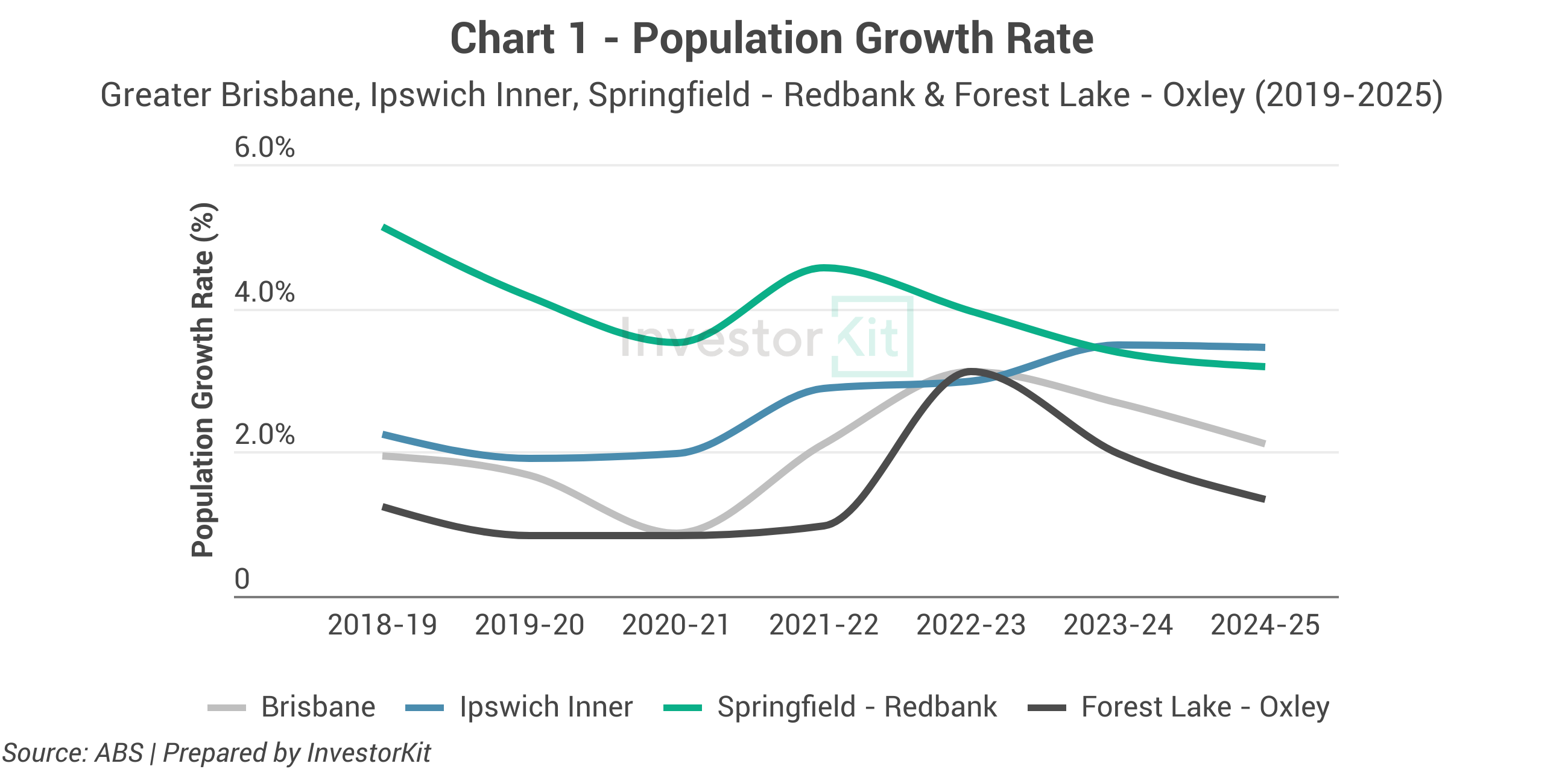
The 3 SA3s have recorded population growth above 1% in recent years, with two outpacing the Greater Brisbane benchmark. Greater Brisbane’s growth troughed at 0.88% during the COVID border closure, peaked at 3.1% in 2022-23, and has remained healthy since.
Ipswich Inner has trended steadily upwards, reaching 3.4% in 2024-25, the strongest of the 3 SA3s. Springfield – Redbank has consistently outpaced the Brisbane benchmark and remained strong over the past year (3.2%). Forest Lake – Oxley has mostly tracked below the benchmark, with recent years showing healthy year-on-year growth exceeding 1%.
A healthy population alone is not enough to support housing demand. The local labour market provides the income capacity that helps sustain demand at current price levels.
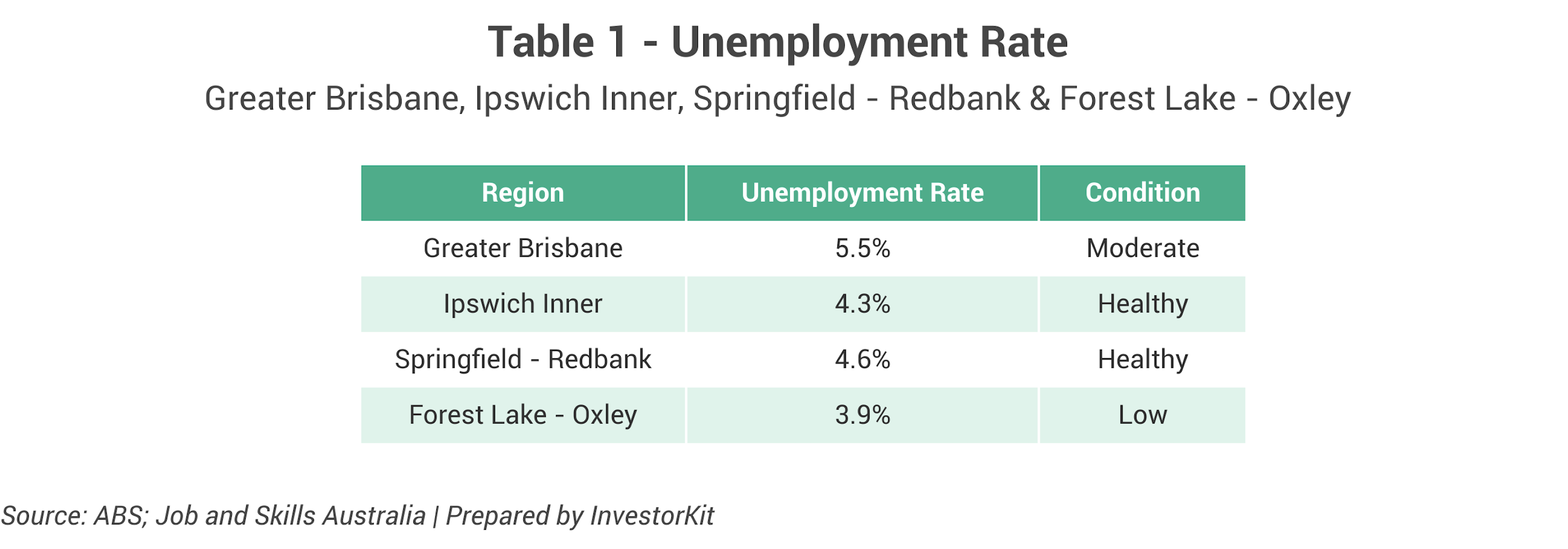
The 3 SA3s sit below Greater Brisbane’s unemployment rate of 5.5%, with Forest Lake – Oxley the lowest (3.9%), followed by Ipswich Inner and Springfield – Redbank (4.3% and 4.6%, respectively). These low and healthy rates provide income support for housing demand in the local market.
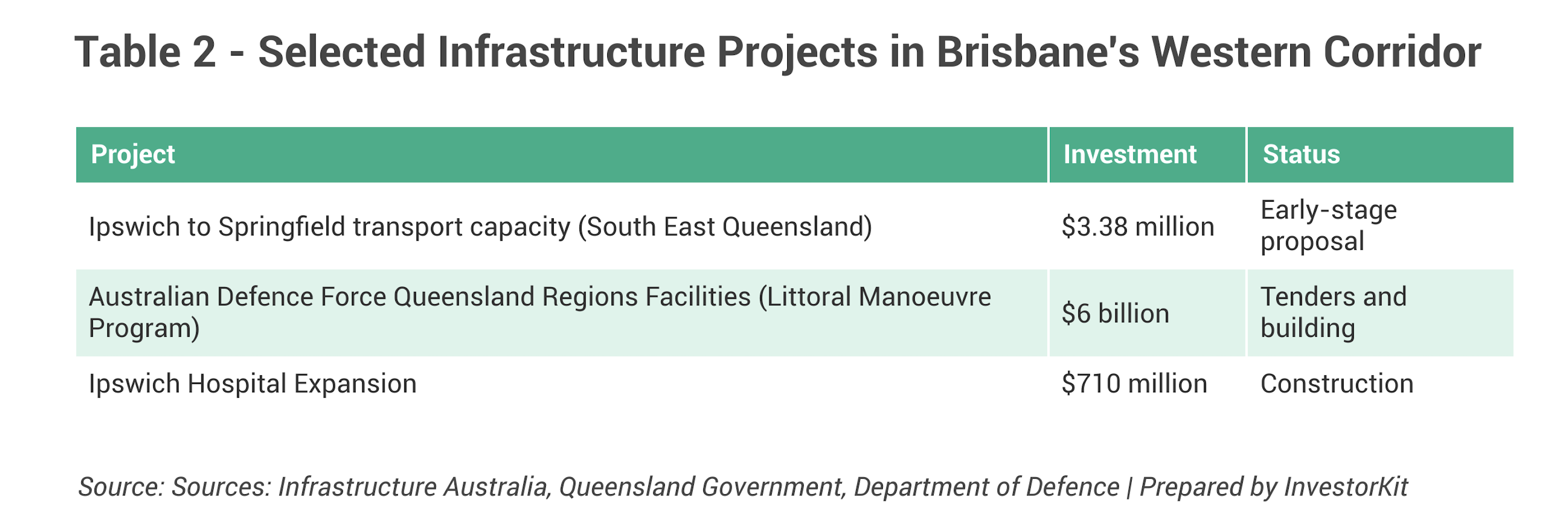
Brisbane’s Western Corridor is part of a substantial infrastructure pipeline spanning transport, defence, and healthcare. Examples include capacity upgrades to the Ipswich and Springfield Lines, which improve connectivity to the Brisbane CBD; investment by the Australian Defence Force at RAAF Amberley; and the Ipswich Hospital expansion, which creates healthcare jobs in the corridor. Together with other public and private investments, these projects contribute to the local economy and lifestyle appeal, supporting the long-term foundations of migration.
Sales Market Pressure: Strong Demand, Tight Supply
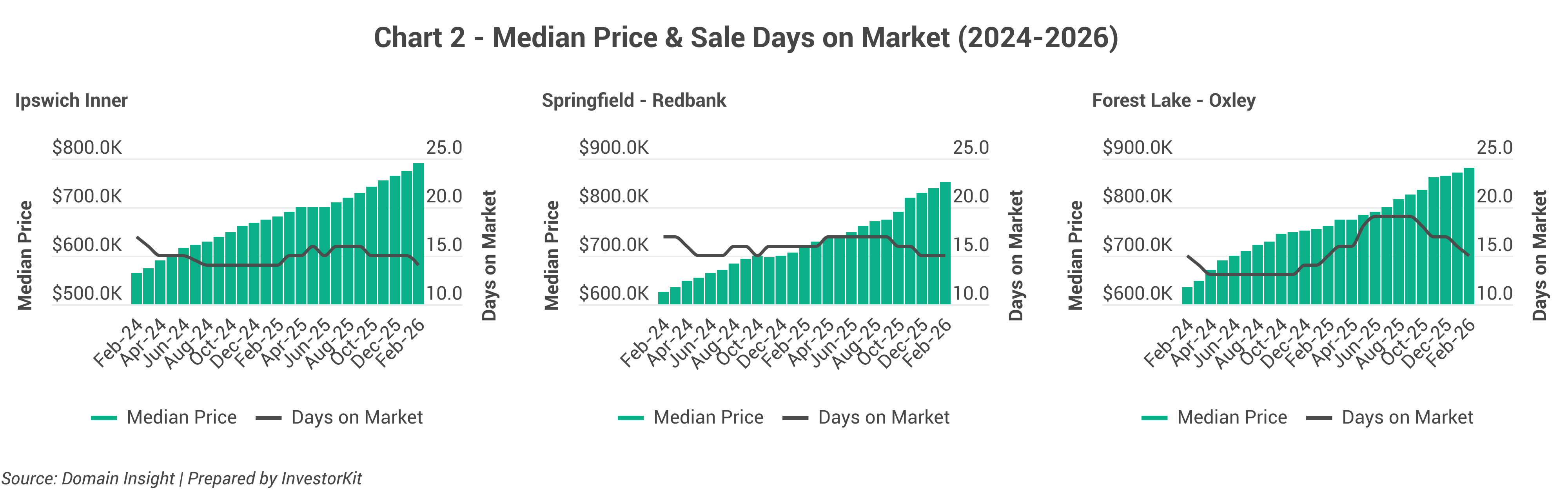
Median prices across the 3 SA3s have recorded double-digit growth over the past year (Ipswich Inner: 15.8%; Springfield – Redbank: 18.1%; Forest Lake – Oxley: 15.6%). All three SA3s have consistently maintained low DOM for 20 days or less over the past 2 years, with current levels at 14 days for Ipswich Inner and 15 days for both Springfield – Redbank and Forest Lake – Oxley. The low DOM across all three suggests strong demand absorption.
Currently, all 3 SA3s show low inventory: Ipswich Inner at 2.08, Springfield – Redbank at 1.64, and Forest Lake – Oxley at 1.68. All three have seen inventory decline over the past year, with Springfield – Redbank and Forest Lake – Oxley declining in recent months, while Ipswich Inner has trended lower gradually.
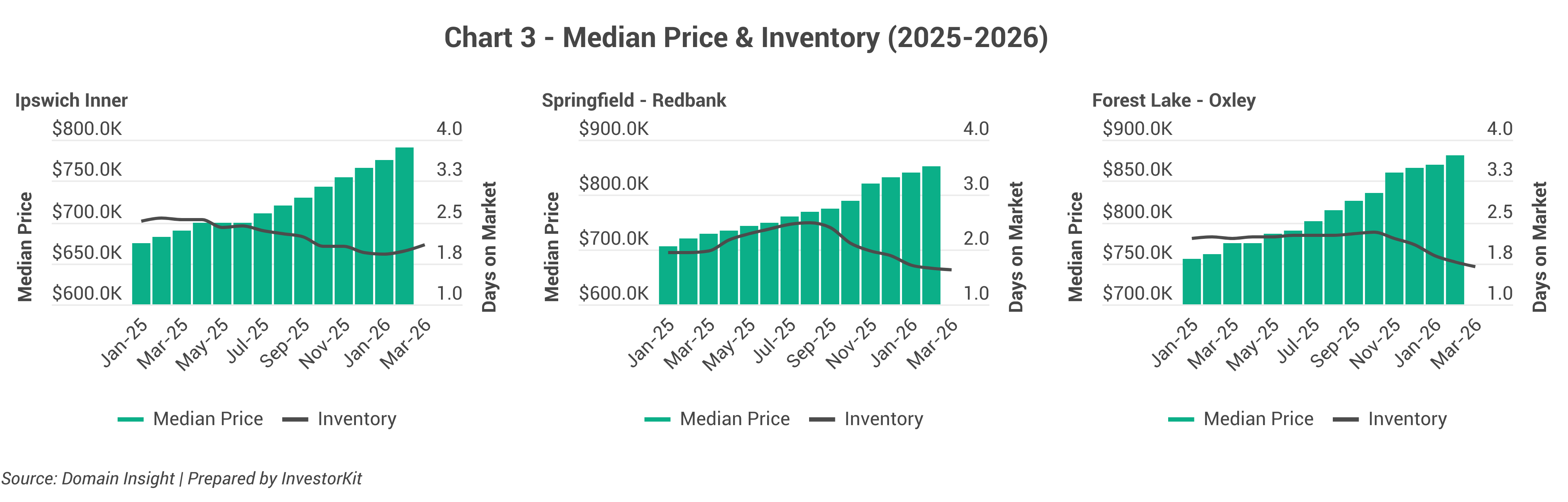
The 3 SA3s pair low DOM with low and falling inventory. Demand absorption has remained strong, while available stock continues to contract, pointing to strengthening market pressure across the corridor.
Long-Term Sales: Different Supply Paths, Similar Price Outcomes
Incoming supply, measured by building approval rates, varies sharply across the 3 SA3s, ranging from 1.2% to over 5.0%. Springfield – Redbank’s approval rate remained elevated from 2017 to 2020 and is now balanced at 2.3%. Ipswich Inner has trended upward since 2022 and is currently elevated at over 5.0%. Forest Lake – Oxley has remained low, currently at 1.2%, reflecting persistently limited new supply.
Springfield – Redbank and Ipswich Inner have experienced supply-driven population growth in recent years. Their elevated approval pipelines added housing stock, which attracted migration to these markets.
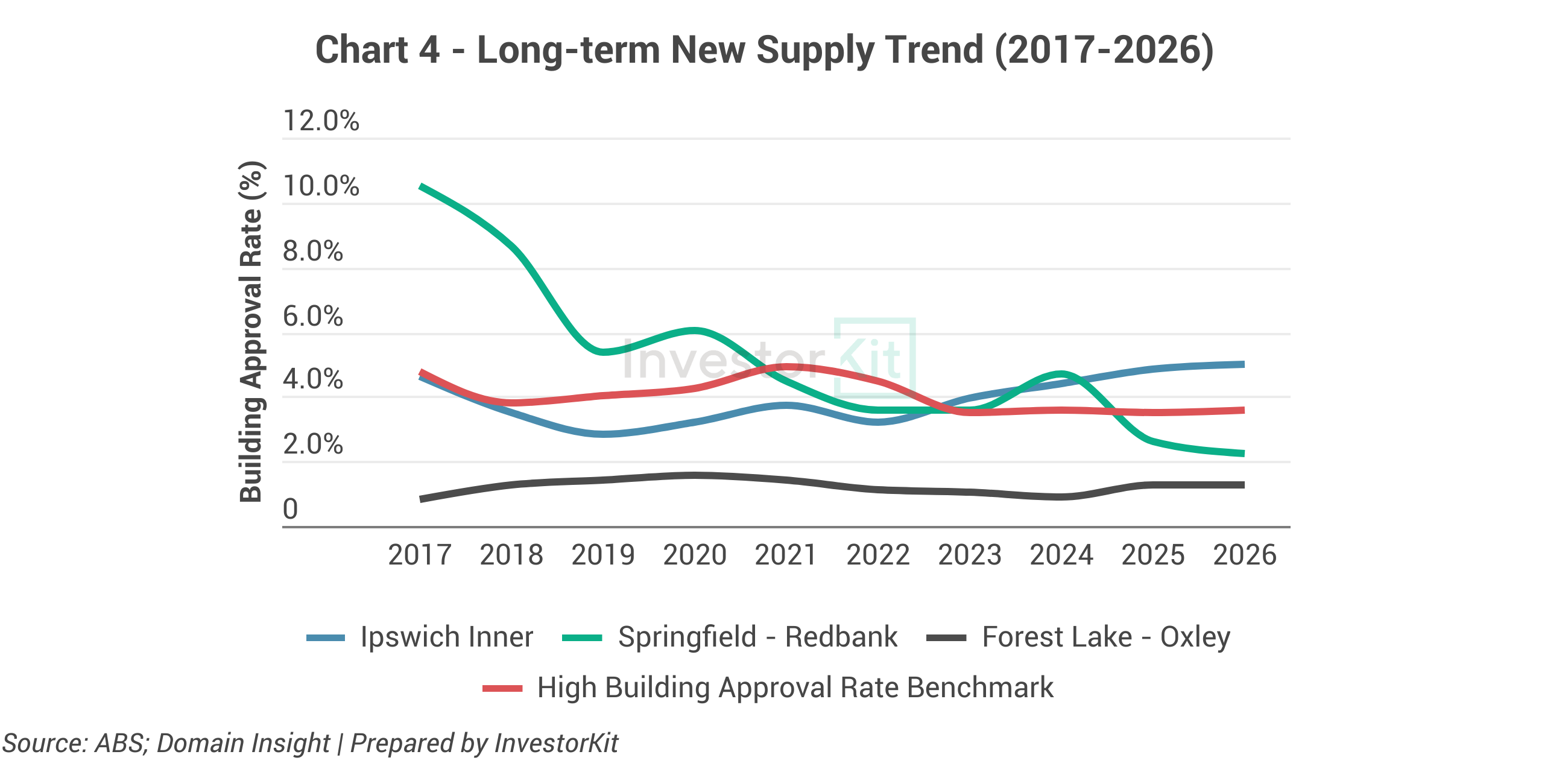
The 3 SA3s have all delivered solid long-term growth, with performance accelerating in the most recent decade. Over the 20-year time horizon, Ipswich Inner and Forest Lake sit within Australia’s long-term national average of 5%-7% (Ipswich Inner: 6.9% and Forest Lake – Oxley: 6.3%), while Springfield – Redbank has outperformed, holding above the national average across multiple market cycles. The 10-year picture shows all 3 SA3s tracking above the long-term national average, with annualised growth between 8.5% and 9.7%.
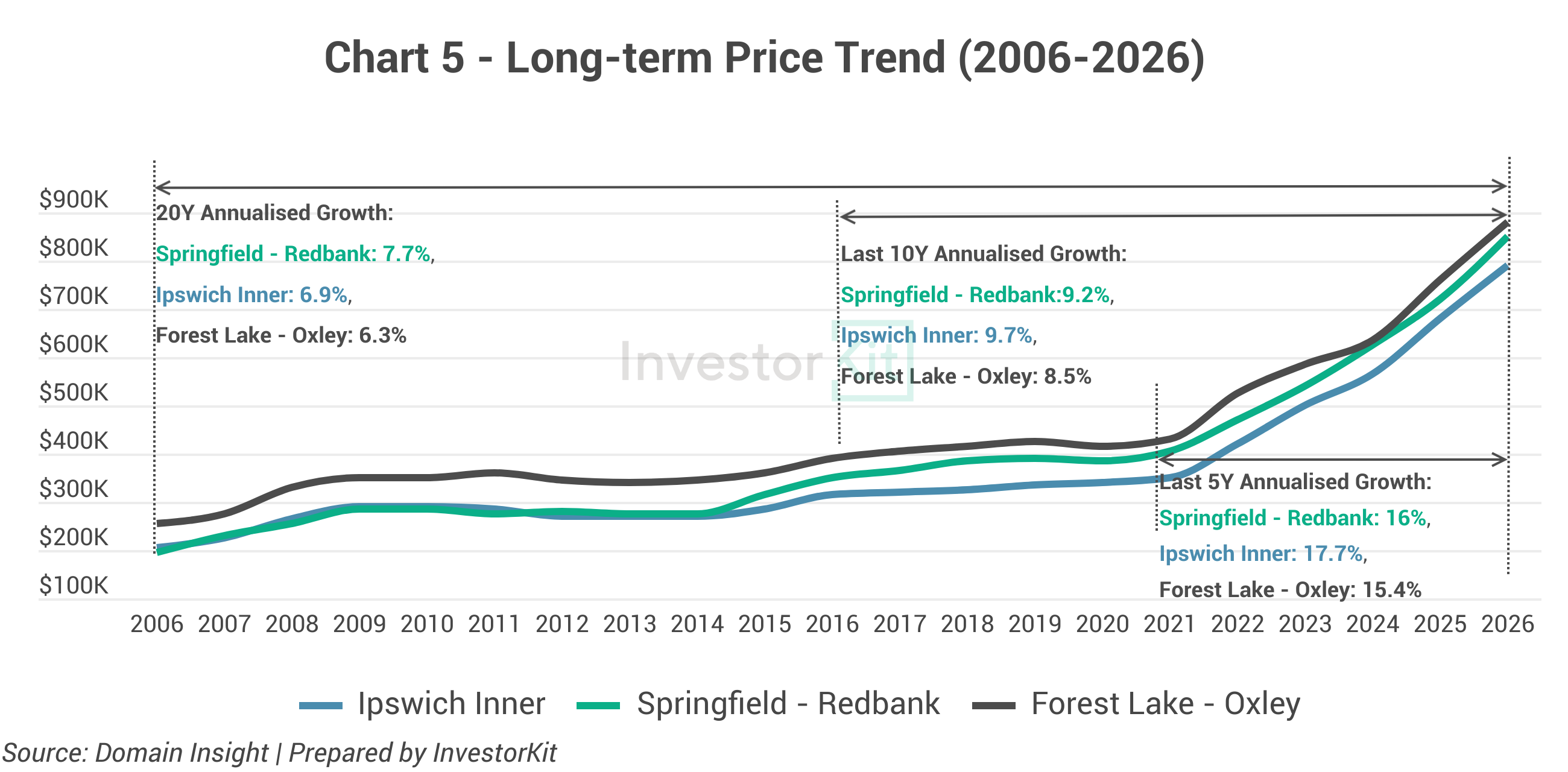
The 5-year annualised growth (15.4% to 17.7%) indicates a clear acceleration. This acceleration likely reflects a combination of factors: low interest rates during 2020-2022; Brisbane’s broader market recovery over the past decade; the Brisbane market’s strength (12.7% 5-year annualised); and relative affordability compared with inner Brisbane suburbs, especially since 2023.
Rental market: low vacancy, strong rent growth
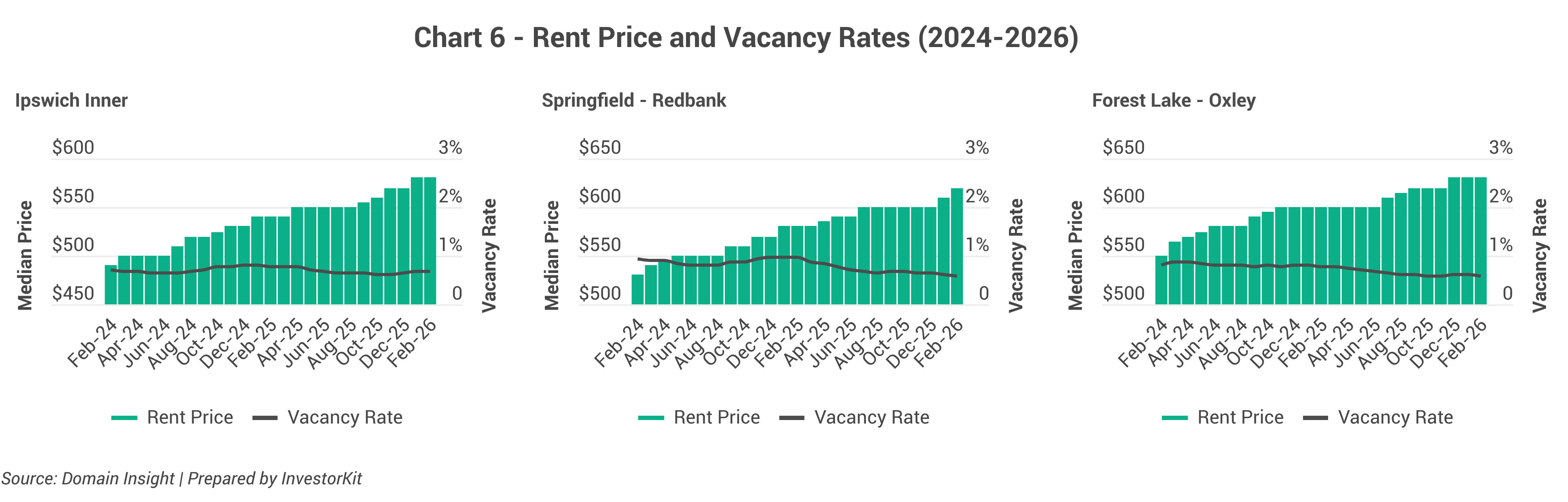
The vacancy rate across the 3 regions is below 1%, indicating tight rental conditions. Rent growth over the past year has been healthy across all 3 SA3s (Ipswich Inner: 7.4%; Springfield – Redbank: 6.9%; Forest Lake – Oxley: 5.0%). With strong internal migration and tight rental conditions, rents are likely to remain under upward pressure over the next 6-12 months.
Stretched Affordability
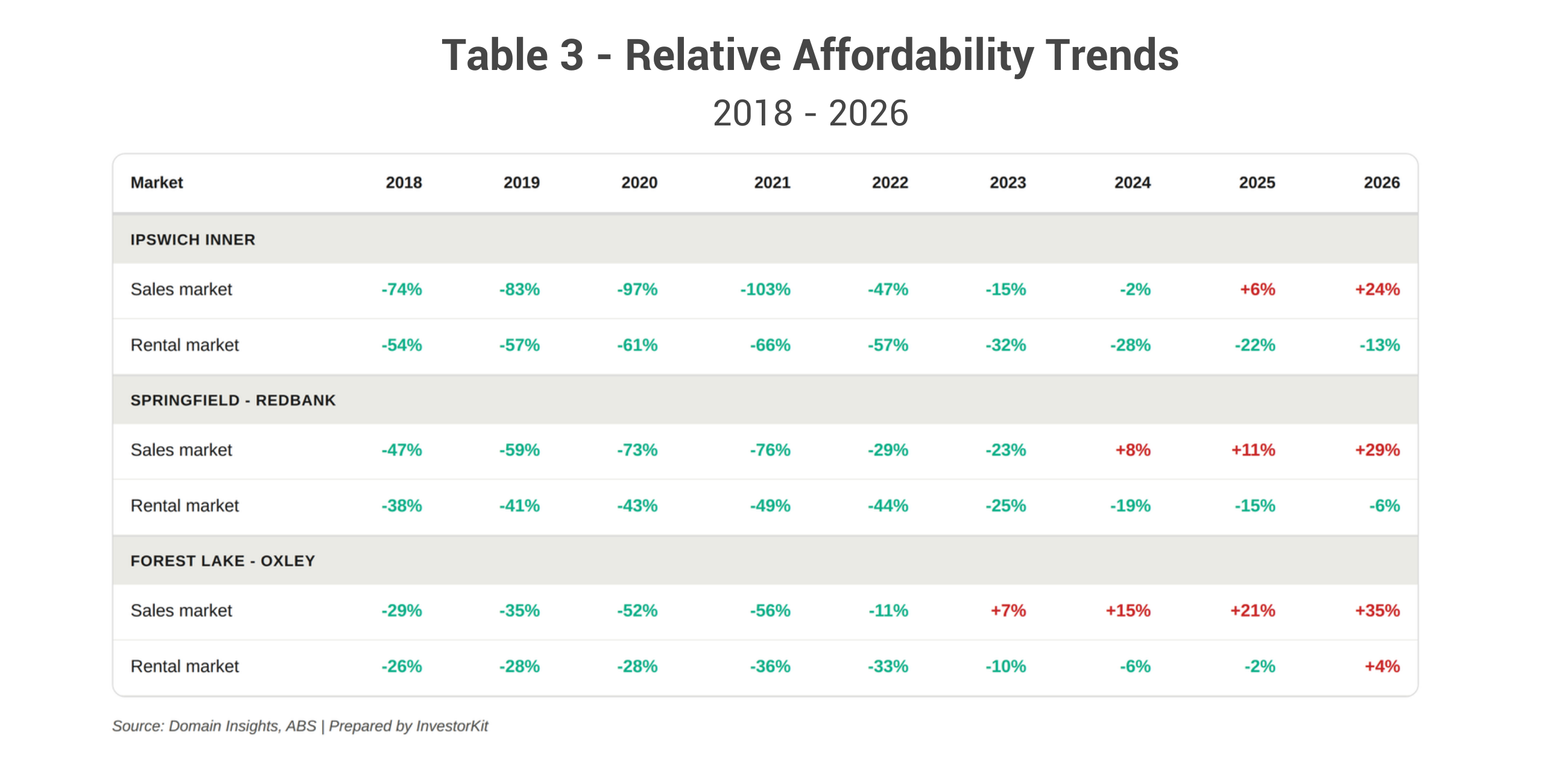
Affordability across the 3 SA3s has shifted from undervalued territory pre-2022 to overvalued territory by 2026, with Ipswich Inner at +24%, Springfield – Redbank at +29%, and Forest Lake – Oxley at +35%, broadly in line with Greater Brisbane at +32%.
Rental affordability sits closer to local income levels but has also deteriorated, with Ipswich Inner and Springfield Redbank still undervalued (-13% and -6% respectively), while Forest Lake – Oxley is marginally overvalued (+4%).
Short-Term Outlook
Strong growth in both the sales and rental markets is expected across Brisbane’s Western Corridor over the next 6 to 12 months, driven by tight market conditions, a relative affordability advantage over inner-Brisbane suburbs, and supportive macro fundamentals, particularly in a high-interest-rate environment.
This outlook is supported by macro fundamentals and local property conditions, which are broadly aligned across all 3 SA3s. At InvestorKit, this combined macro and local lens underpins our research process across every market we recommend. If you’d like to apply it to your investment goals, click here to book a discovery call.