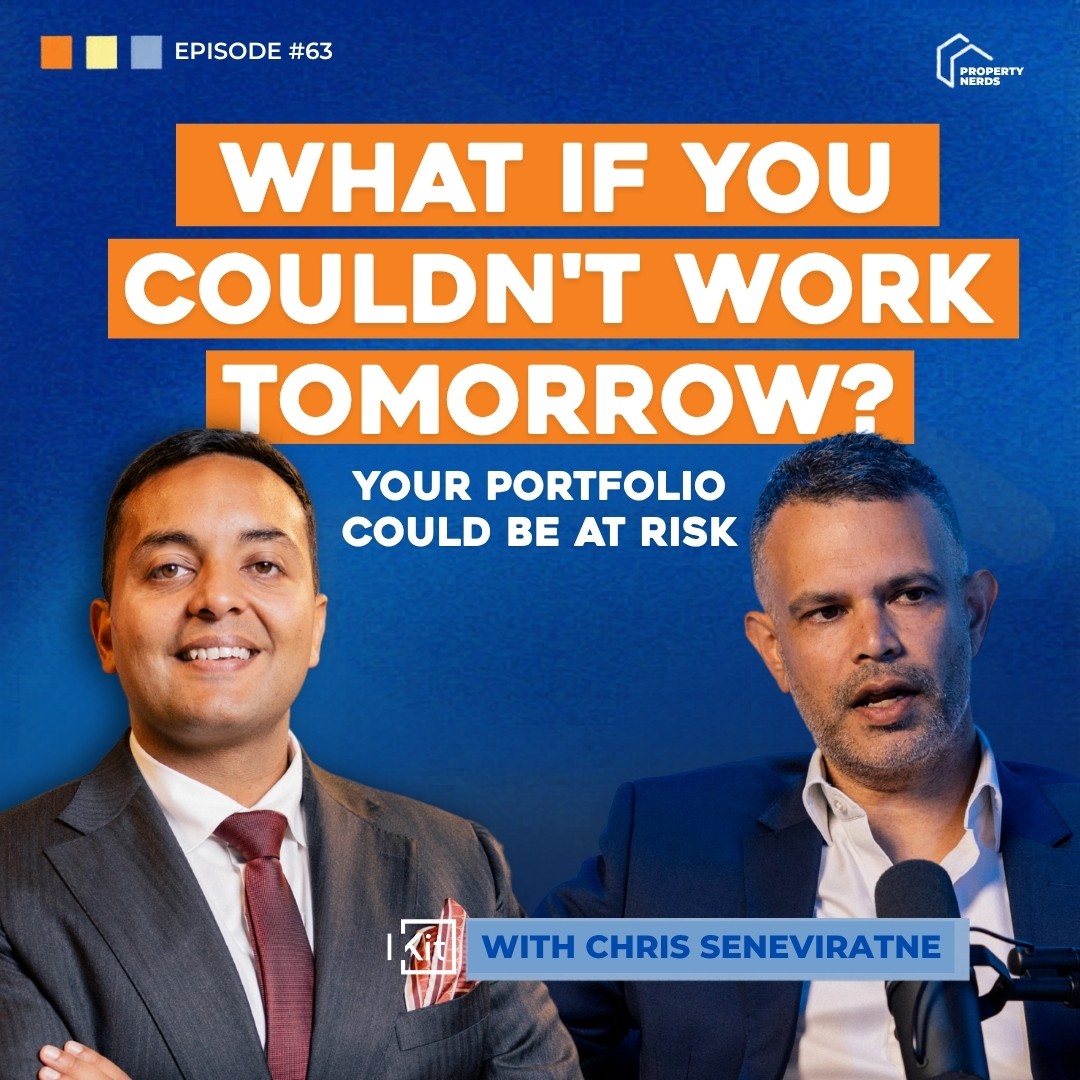
The Risk Property Investors Rarely Plan For: Protecting the Wealth You're Building
Listen to it on


Most people building a property portfolio can explain why they're doing it. Better schools, more choice, financial freedom, a legacy for their family. What far fewer people can explain is what happens to that plan if they suddenly can't work.
It's an uncomfortable question to sit with, which is probably why so many investors avoid it. But the mechanism that actually derails a wealth-building journey isn't usually a bad property decision. It's an unexpected disruption to income, at exactly the point when cash flow and debt matter most.
A conversation between Arjun Paliwal and Chris Seneviratne, Director of Wealth Protection at Solace Life, looks at why personal insurance deserves the same deliberate attention property investors already give to yields, equity and diversification, and why so many people only think about it after something has already gone wrong.
What Happened
The conversation opens by unpacking what people actually mean when they say they're "building wealth for their family," tracing that motivation back to its deeper roots rather than its surface-level goals like buying a home or growing a portfolio. From there, it turns to the common misconceptions Australians hold about what would happen financially if they became seriously ill or unable to work, including the assumption that superannuation or government support would be enough.
A significant part of the discussion centres on timing: when people typically start thinking about protection, why cover tends to get cheaper the earlier it's arranged, and the real cost of delaying it until after health issues or life changes have already occurred. Arjun shares a personal account of a lapsed policy that, upon reapplication, led to the diagnosis of a serious heart condition, and a separate case involving a client's family history of bowel cancer that shaped how her cover was ultimately structured.
The conversation closes by connecting personal insurance directly to property investing, arguing that a forced sale during weak market sentiment can cost an investor far more than a insurance premium ever would, and that protection should be treated as a cost of doing business rather than an afterthought.
Key Takeaways
The Real Reason People Say They're "Doing This for Their Family"
When people describe their wealth-building goals, they often talk about tangible things, a home, a property portfolio, a share portfolio. According to the discussion, repeatedly asking what that goal actually means tends to surface a deeper motivation: love, provision, and legacy. The tangible asset is the vehicle, not the reason.
Common Misconceptions About What Happens if You Can't Work
Many people assume they're covered by default, whether through limited insurance inside their superannuation, an expectation that government support will fill the gap, or an assumption that family will step in if needed. The discussion notes that superannuation cover is often minimal, and that changes to government policy in recent times make relying on public support an increasingly uncertain plan.
The "Suddenly Responsible" Moment Most People Wait For
Rather than proactively arranging cover, many people only engage with protection at specific life triggers, described in the discussion as becoming "suddenly responsible." These moments typically cluster around getting married, buying a home, or having children, generally somewhere between the late 20s and 40s. The gap identified in the conversation isn't awareness of these life events, but a lack of earlier education about protection before those events occur.
Why Cover Is Cheaper and More Accessible When You're Younger and Healthier
Insurers generally assess applications based on health at the time of application, not ongoing changes afterward. According to the discussion, arranging cover earlier in life, while healthy and without emerging conditions, often means a simpler application process and can lock in terms that remain in place even if health changes later. Waiting until later in life can mean more extensive medical checks, higher premiums, or policy exclusions.
A Lapsed Policy That Led to an Unexpected Diagnosis
Arjun shares his own experience of arranging cover early in life with minimal underwriting, then later transferring to a self-managed super fund without carrying that cover across, causing it to lapse. When he reapplied years later, the more thorough medical checks required at that stage led to the diagnosis of a heart condition that required open-heart surgery, an outcome he attributes directly to the delayed reapplication process.
Using Proactive Health Habits to Negotiate Better Terms
A separate case discussed involved a client with a family history linked to bowel cancer risk, an area insurers can be cautious about covering due to genetic factors. Because she had a documented history of regular screening and specialist engagement, it was possible to negotiate coverage for that condition rather than have it excluded outright, at a modest additional monthly cost.
Why a Forced Sale During Weak Market Sentiment Is a Real Portfolio Risk
The discussion connects income disruption directly to portfolio risk: without income, cash flow and debt servicing lose their continuity, which can force a sale at a time and price outside the investor's control. It notes that estimated equity based on bank valuations can differ significantly from what a property actually sells for in a low-sentiment market, potentially reducing proceeds by hundreds of thousands of dollars or more on a larger portfolio.
The Four Core Types of Personal Insurance
The discussion outlines four main categories of cover: life insurance, total and permanent disability insurance, income protection, and trauma or critical illness cover. The first three are often partially available through superannuation, while trauma and critical illness cover generally isn't, despite being a commonly claimed policy type. Critical illness cover is distinct in that it pays out on diagnosis of a condition, regardless of whether the person can still work, with proceeds usable at the policyholder's discretion for costs such as non-PBS-listed medication.
Why Insurance Deserves a Different Mindset Than Car or Home Cover
A recurring point in the discussion is that personal insurance shouldn't be evaluated with the same cost-minimising mindset applied to car or home insurance. Affordability still matters, and the discussion notes that cover isn't recommended where premiums aren't sustainable for a given client, but the framing suggested is one of protecting an irreplaceable asset, rather than simply finding the cheapest available option.
Actionable Lessons for Investors
Review personal insurance cover at the same life stages you review your property strategy, rather than waiting for a health event to prompt it.
If you've changed super funds or consolidated accounts, confirm whether existing insurance cover was carried across, since it can lapse without notice.
Consider arranging or reviewing cover earlier rather than later, since underwriting requirements and premiums can become more complex as health circumstances change over time.
Understand what your superannuation cover does and doesn't include, particularly around trauma or critical illness cover, which is typically not available inside super.
Factor forced-sale risk into your portfolio planning; a loss of income can compress the timing and price of a sale in ways that estimated equity doesn't reflect.
Treat personal insurance as a cost of running your property portfolio like a business, rather than a discretionary expense to minimise.
Property investing is built around managing risk, whether that's diversification across states, buffers for cashflow, or careful yield selection. Personal insurance sits in that same category, even though it's often the last piece investors get around to addressing. The cost of arranging it early is generally modest; the cost of not having it, particularly if income is disrupted at the wrong moment, can undo years of disciplined portfolio building. For investors serious about protecting what they're working toward, reviewing personal cover is as relevant a task as reviewing a loan structure or a market forecast.
If you'd like to speak with Chris about your options, then click here to book a free cover check.
Disclaimer
This article is general information only and does not constitute financial, legal or tax advice. Investors should seek advice relevant to their circumstances.
Keep Reading



" transform="translate(5 5)" width="14px"/></svg>)