

May 25, 2026
How to Make Sure You Don’t “Overpay” When Buying an Investment Property
“I just bought this property. I checked comparable sales and didn’t bid above my personal valuation result. So, why is this property worth less than what I paid for it?”…
“I just bought this property. I checked comparable sales and didn’t bid above my personal valuation result. So, why is this property worth less than what I paid for it?”
It’s a fair and common question. A valuation gap can have several causes, but the most common is overpaying at purchase, and the answer usually lies earlier in the buying process.
Overpayment risk often stems from failures in three areas: not adjusting comparable sales to current market conditions, skipping thorough due diligence on the target property, and failing to adhere to a defensible price ceiling.
Comparable sales are a starting point, not a valuation. Turning them into a defensible price requires both broader market research and property-level due diligence applied to those raw comparables.
Market research: comparable sales need adjustment, not just selection
Comparable sales show you what specific properties have sold for. However, they don’t tell you whether the conditions that supported those prices still apply today. That’s the gap market research fills.
If a comparable sold 3-6 months ago, market conditions may have shifted since then. Prices may have risen, plateaued, or fallen. Without checking how the market has moved, a buyer using comparables as a reference price could anchor to conditions that no longer hold. In a market where conditions are weakening, that anchor can lead directly to overpayment.
Hobart Inner is a useful illustration. The median price in November 2022 was $1,025,000 and declined steadily over the following 12 months to $920,000 by November 2023, a 10.2% decline. During this period, days on market more than doubled from 12 to 29, and inventory rose from 3.44 to 4.5 by April 2023, indicating weakening demand momentum and market pressure.
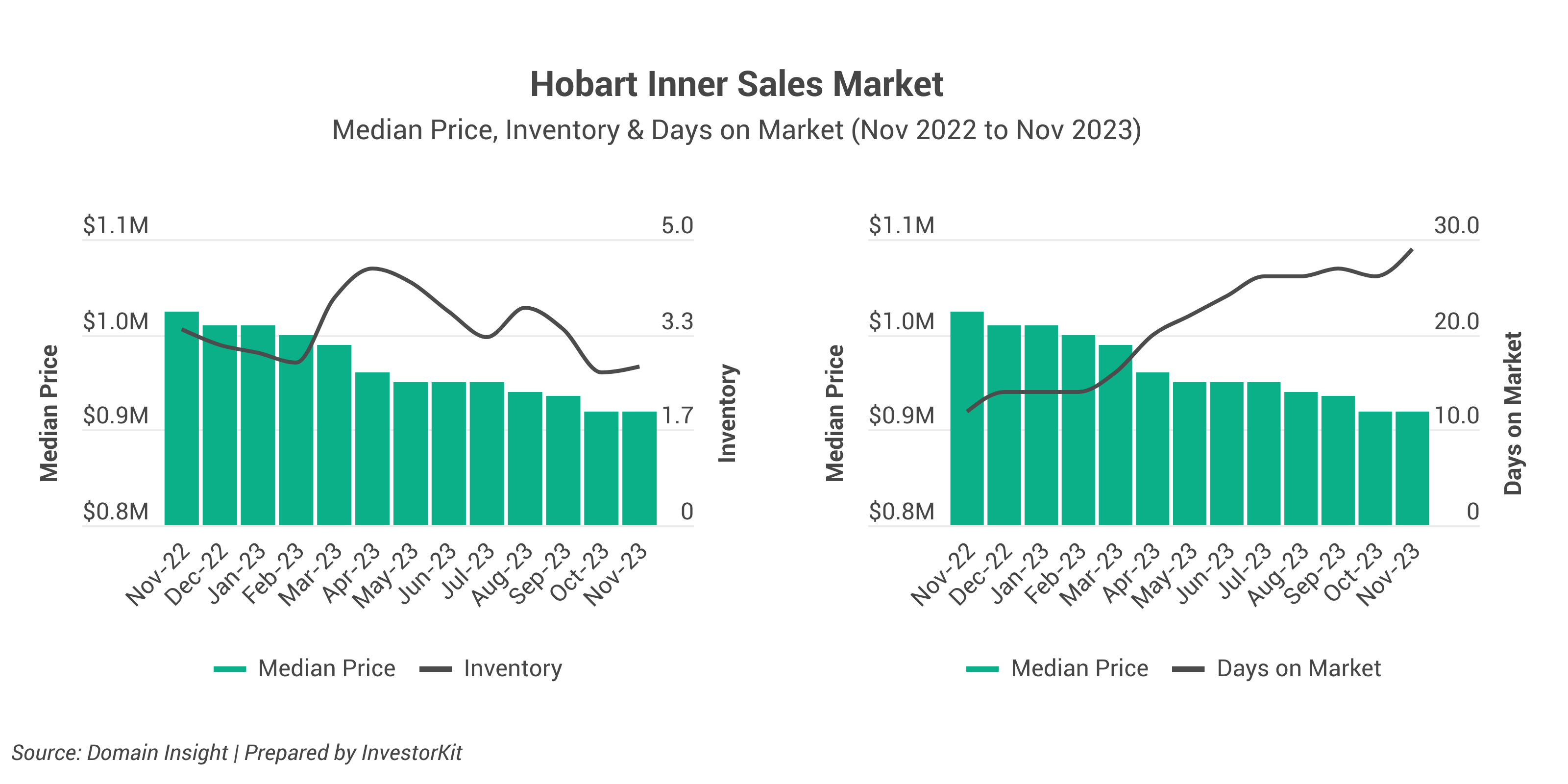
A buyer in May 2023, referencing a November 2022 comparable, would anchor at $1,025,000. By then, the May 2023 median had already fallen to $951,000, a $74,000 (7.2%) gap.
By reviewing how prices, inventory, and days on market have shifted since the comparable sold, the buyer can adjust the reference price downward (or upward in a hot market) to reflect current conditions.
Market research alone doesn’t determine overpayment, but the steps that follow are shaped by it. Without an accurate reference price, the buyer has no defensible basis for setting a price ceiling.
Due diligence: the risks comparables don’t price in
Market research tells you whether the broader market still supports a given price. It can’t tell you whether the target property has risk exposures that the comparables don’t share. That’s where due diligence comes in.
Skipping due diligence means paying a price that doesn’t reflect those risks or the costs they carry. To illustrate, take an investor researching properties across Logan (south of Brisbane).
The first risk is exposure to floods and bushfires. Flood and bushfire-exposed properties tend to carry higher insurance premiums and can experience longer vacancy periods. Free public tools make these risks easy to verify.
Queensland’s State Planning system flags this part of Bahrs Scrub in Logan City (QLD) as bushfire-prone land. The dark red overlay sits directly alongside residential streets, with several properties on the edge of the highest-risk zone.
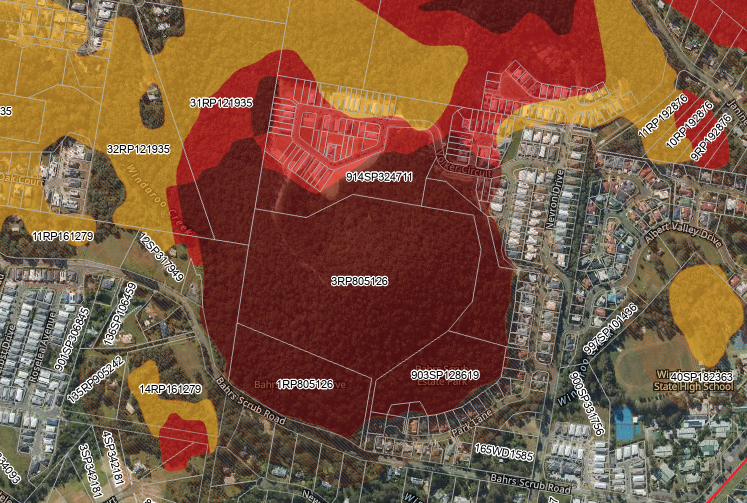
Some high-risk properties include:
- 6 Bahrs Point Drive, Bahrs Scrub QLD 4207
- 23 Neutron Drive, Bahrs Scrub QLD 4207
- 4 Jay Close, Bahrs Scrub QLD 4207
A check of the Logan Flood Portal shows that homes around Sunscape Drive and Fryar Road in Eagleby (Logan, QLD) are within elevated-flood-risk zones, with dark blue shading indicating the highest exposure.
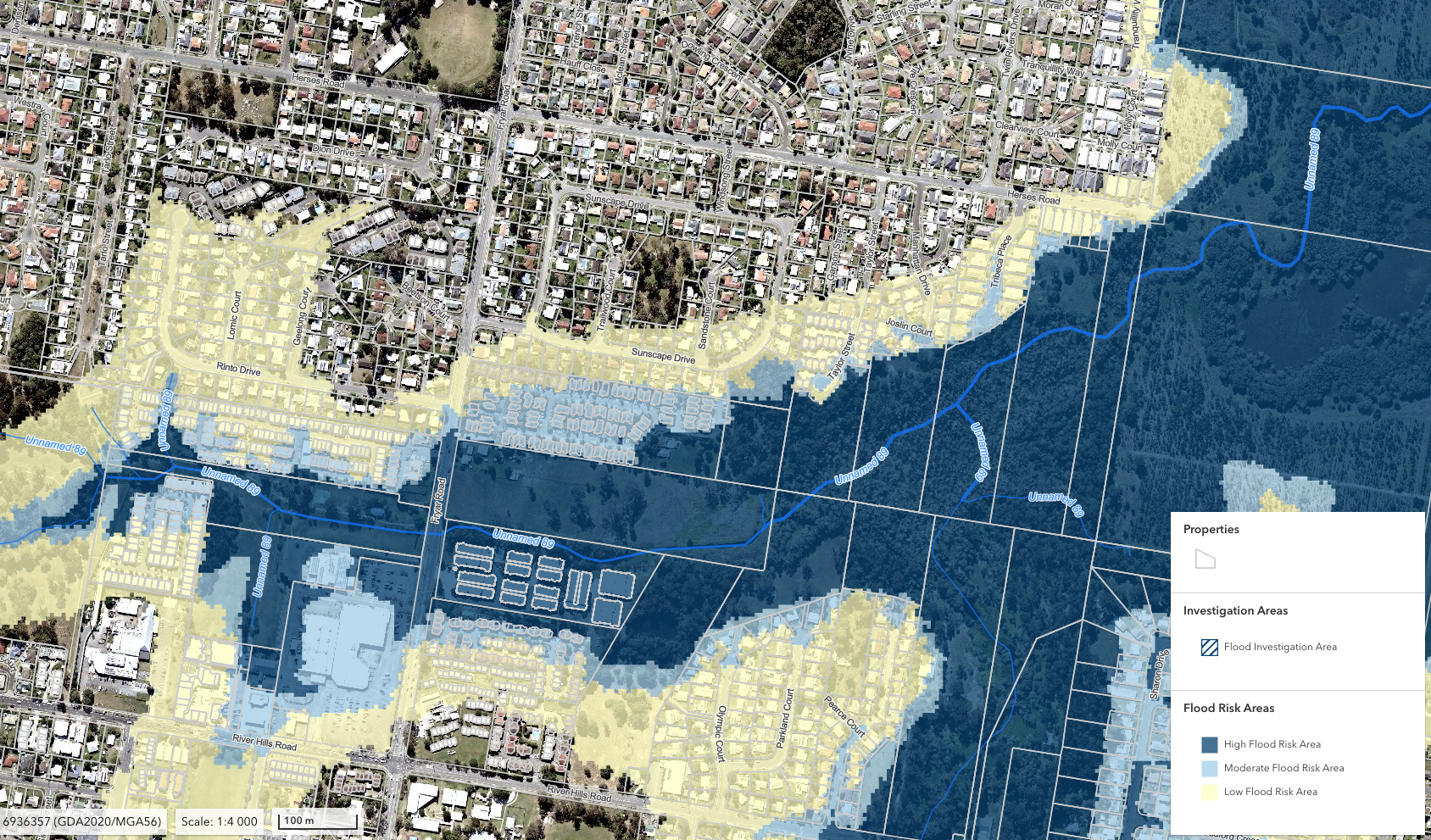
Some flood-prone properties include:
- 27 Sunscape Drive, Eagleby, QLD 4207
- 14 Sunscape Drive, Eagleby, QLD 4207
- 32 Fryar Road, Eagleby, QLD 4207
The other factor is proximity to noise, vibration, and air-quality impacts from rail lines, motorways, or flight paths. These factors can affect renters’ willingness to live in the property.
In Meadowbrook, for instance, several homes sit directly alongside the Logan Motorway, a major freight and commuter route linking Brisbane and the Gold Coast.
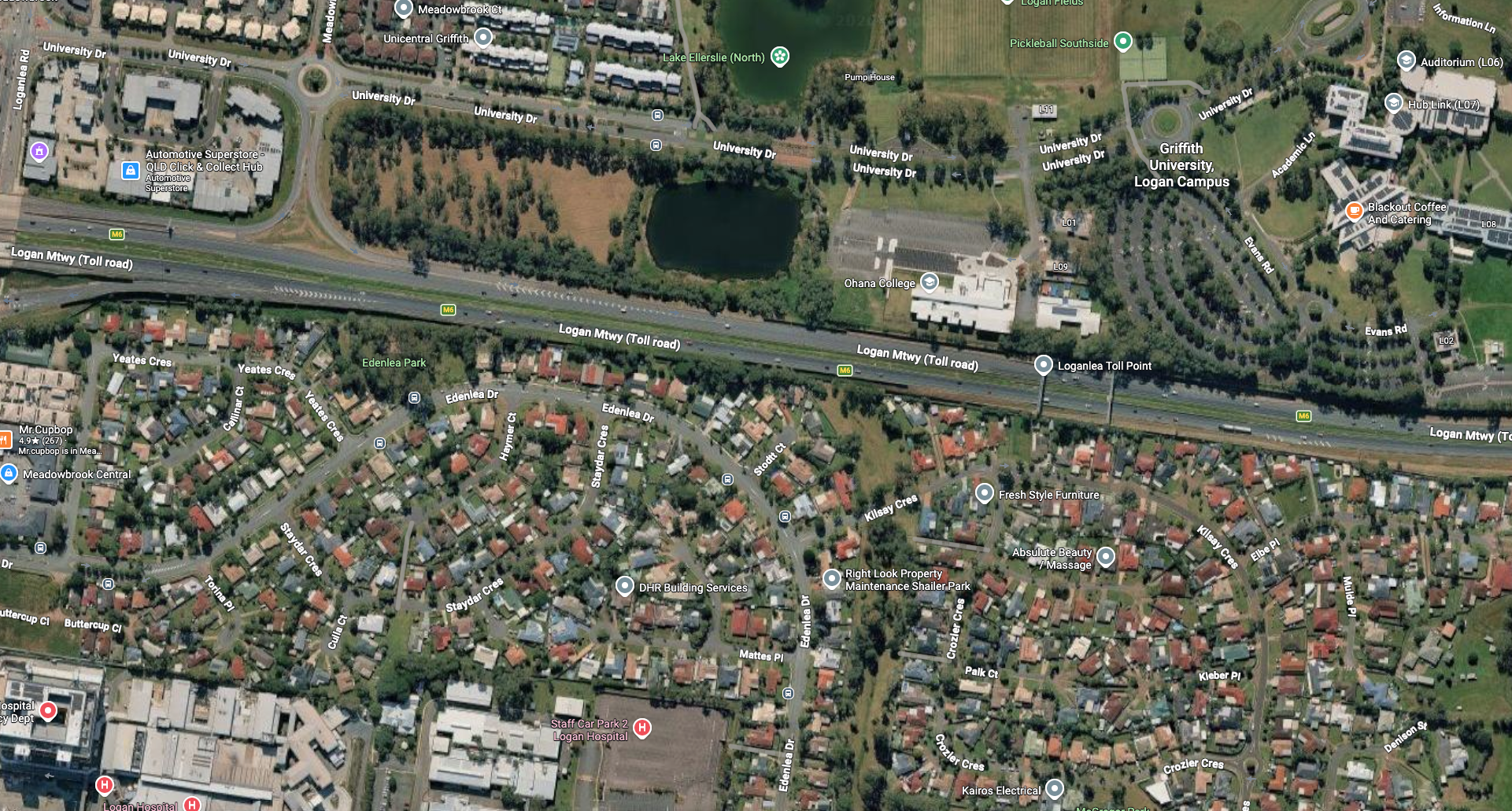
Properties closest to the motorway include:
- 32 Kilsay Crescent, Meadowbrook, QLD 4131
- 4 Saale Court, Meadowbrook, QLD 4131
- 10 Elbe Place, Meadowbrook, QLD 4131
These checks are straightforward to run on any single property. The harder part is knowing what to check in the first place. An inexperienced investor may check flood maps but miss bushfire overlays, or check proximity to a motorway but overlook noise from a flight path. A structured framework ensures every relevant risk is assessed, not just the obvious ones. InvestorKit’s acquisition team applies a 20-point due diligence checklist to every property it assesses, resulting in a 92% rejection rate. If a property fails any criterion, it doesn’t proceed.
Due diligence isn’t a post-offer formality. It’s how a buyer excludes properties whose risk comparables don’t reflect.
Set a strict price ceiling and hold it
Raw comparable sales are the starting point. Adjusting them for current market conditions (Section 1) and the target property’s specific risks (Section 2) produces a price ceiling. This ceiling is the single number you won’t exceed, held as a hard limit throughout the offer process.
For example, suppose research and due diligence indicate a defensible value of $850,000 for a target property. The ceiling is $850,000. Whether the agent says other buyers are willing to pay $880,000 or auction day momentum pushes the bidding past that figure, the ceiling remains at $850,000. Without that hard limit set in advance, contested situations like auctions, multiple offers, or vendor pressure can push the buyer past their price ceiling.
Whether at an auction or in a multiple offer situation, competitive buying environments are designed to extract the buyer’s maximum willingness to pay. Holding a ceiling under that pressure is a learned skill, not an instinct. InvestorKit’s acquisition team is AIM certified in negotiation, the first buyer’s agency in Australia to hold the credential.
Market research and due diligence adjust raw comparables into an accurate valuation. The price ceiling enforces it.
Conclusion
Overpayment is a process failure, set earlier by weak market research, rushed due diligence, or an improperly defended price ceiling. Comparable sales are a starting point, not a valuation.
The question isn’t “Did I stay under comparable sales?” It’s “Did I conduct a holistic analysis that turns a raw comparable into a defensible one?”
Backed by a 20-point due diligence checklist and AIM-certified negotiation, InvestorKit can help you bring that level of rigour to your next purchase. Book a free 15-minute discovery call.