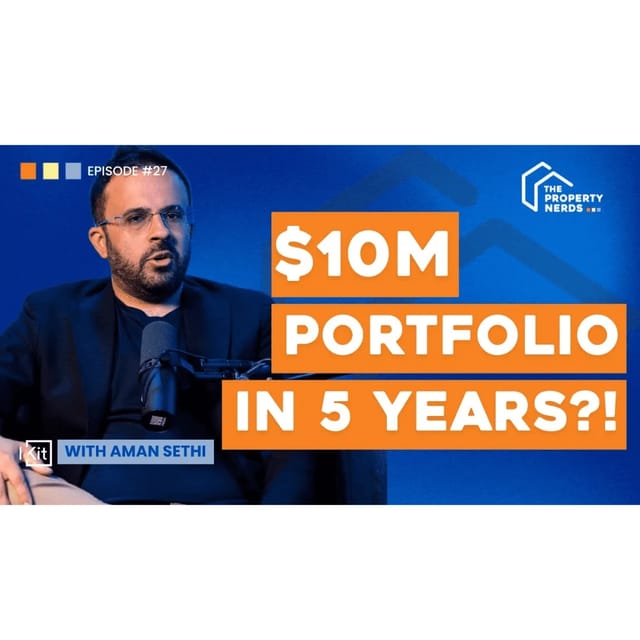
An $11 million portfolio.Eight properties. Five years. All while running a growing immigration and recruitment business.
Aman Sethi did not do this by chasing “as many properties as possible”. He focused on three things:
A large, quality asset base
A clear division between emotion and decision making
For business owners and high income professionals, this is a blueprint for building serious wealth without derailing your main income engine.
What Happened
Aman is the founder of Jigs Australia, a business with two arms:
Immigration and visa advisory
Recruitment and job search coaching, particularly for migrants
He had:
2 properties held for many years
A growing business
Strong income and equity by 2020
But he was not yet in “portfolio builder” mode.
The switch in 2020
Around 2020, several factors aligned:
His business was performing strongly
Equity in existing properties was solid
Lending capacity was high
COVID shifted labour back onshore, supporting his recruitment business instead of hurting it
This created a window where:
Business cash flow was strong
Serviceability was available
Risk felt manageable
That is when he decided to move from “I will build a portfolio one day” to “I am building a serious asset base now.”
With InvestorKit, he moved from 2 to 8 properties in a short span, across 4 states, mostly bought sight unseen.
Key Findings
1. Asset base first, property count second
Aman was clear that his goal was not “20 properties.”
His focus was:
Build a large, high quality asset base that compounds over decades.
He and the team prioritised:
Value of assets over number of doors
Quality locations and dwellings over “cheap and cheerful”
Growth plus yield, not one or the other
Result:
8 properties across 4 states
Approximate portfolio value of $11 million
At a conservative 5 percent growth rate, that is around $550,000 in annual wealth creation on paper
This is the compounding engine that supports his long term choices as a business owner.
2. The COVID uplift and the power of timing
A key tailwind was the COVID period:
He bought several assets just before and during the early stages
Those properties saw 30 to 50 percent value uplift in a relatively short period
That equity was then used to keep amplifying the portfolio
This shows:
Starting from a position of strength matters
Rapid but controlled accumulation can leverage a single strong cycle
Equity growth can become a buffer and a funding source, not just a number on paper
3. Borderless investing works when the process is rigorous
Aman’s portfolio is spread across 4 states.Many properties were bought without him physically visiting them at the time of purchase.
What made this feasible:
Local teams inspecting on the ground
Detailed videos of each room and streetscape
Analysis of nearby features, zoning, amenities and supply
Use of maps and satellite imagery for context
Once that data and on the ground feedback came through, his nerves eased.
He now has:
Properties interstate
Confidence in quality and area selection
The ability to buy where the data and conditions are right, not just in his backyard
4. The “ugly” Adelaide property that outperformed
One of the standout performers was:
Now worth close to $1 million
Around 30-40 years old
Not the prettiest in the portfolio
Yet:
Long term tenants have stayed for 4-5 years
Maintenance has been minimal
Tenants are so settled they have enquired about buying it
This reinforced key points:
Age does not equal high maintenance
Older, well built homes can outperform newer stock
“Pretty” is not the same as profitable
5. Executive homes in the middle ring, not trophies in the inner ring
Aman pushed hard on a theme: X factors.
For his higher budget purchases, the strategy focused on:
Executive style homes in middle ring suburbs
Features like a fifth bedroom, third bathroom, extra living areas, studies, or cinema rooms
Properties that are clearly above suburb standard but not inner city trophy homes
Why this works:
Inner ring with big budgets often means “entry level” houses on prestige land with very low yields
Outer ring would let him buy many cheaper properties but create management and diversification complexity
Middle ring executive homes create a sweet spot:
Better yield than typical high value homes
Appeal to affluent tenants willing to pay a premium
Strong owner occupier demand for resale
Example from his portfolio:
Purchased around $1.175 million
Original rent about $900 per week
Now renting for about $1,250 per week
That is a strong yield for a high value asset relative to suburb averages.
6. Yield cannot be sacrificed for quality
Aman is clear:
Yield matters if you want to keep buying
Cash flow strain kills momentum
The approach:
High quality assets, but not at the cost of permanently weak yield
Test higher rent levels when the property truly offers something unique
Always understand the “base case rent” and the “stretch rent”
He framed it as:
Worst case: the property rents at normal suburb levels
Best case: the X factors unlock a material premium
This allowed him to hold quality stock without facing crippling cash flow.
7. Emotion out, demographics in
Across the portfolio, one mindset shift stands out:
“We are not buying for our lifestyle.”
Examples:
He would not personally live in a five bedroom home, but the local demographic will pay for it
What a Sydney based professional values is often different from what a family in Adelaide or a regional city values
So, decisions were based on:
Local demographic demand
What tenants pay a premium for in that specific market
Layout and features that match local household structures
Not:
His personal taste
How he would like to live
8. Property as a buffer for business, not a burden
As a business owner, Aman has experienced:
Strong years with high cash flow
Quieter periods as market cycles and regulations change
The portfolio functions as:
A growing equity base that compounds in the background
A buffer that can be tapped via equity when needed
A reason he feels comfortable taking more calculated business risk
Key point:
Accessing equity on property is often cheaper and more flexible than business loans, with longer terms and lower rates
Rather than golden handcuffs, the debt and assets have given him options and confidence.
9. Why many high income professionals stay stuck
From his conversations with peers, common blockers are:
Preference for cash sitting in the bank
Discomfort with even a temporary cash flow shortfall
Comfort with volatility in shares or crypto, but not leverage in property
Waiting for the “perfect big purchase” instead of building a repeatable system
Aman’s counter view:
Residential property in Australia is a central pillar of the economy
If that market truly collapses, most other things will likely be falling too
Property has offered him a stable, leveraged way to build an asset base over 10-20 years
10. Buyers agents as insurance, not an indulgence
Aman was candid about how he used the InvestorKit team:
He regularly sent properties he found himself
Many were rejected due to factors he had not seen:
Major power lines
Substations
Nearby public housing concentrations
Heavy retail or traffic nearby
Large future land supply
He describes the fee as:
An insurance premium on a million dollar decision.
If a small percentage cost helps avoid one poor asset selection that drags on the portfolio for decades, it is a rational trade.
For a business owner short on time, this also allowed:
Faster but still rigorous decisions
Confidence that someone had walked the streets and checked the details
A clear separation between his role as decision maker and the team’s role as researcher and negotiator
Lessons for Investors
For The Legacy Builder
Focus on building a large, high quality asset base, not just stacking properties
Target locations and dwellings that will still appeal in 10-20 years
Use strong growth periods to create buffers that protect your family in leaner times
For The Busy Professional
Borderless, data led investing lets you buy where conditions are best, not just where you live
A professional team can handle research, inspections and negotiations while you stay focused on your career
Think of expert help as risk management, not a luxury
For The Conservative Couple
Older, quality builds in solid locations can offer low maintenance and stable tenants
A mix of growth and yield can reduce stress and reliance on your wages
Property can be your defensive core, even when other markets are volatile
For The Ambitious Climber
Executive homes in the middle ring can combine scale with strong yield
Using equity from 30-50 percent uplifts to fund the next step can accelerate your path
A clear system lets you move quickly when conditions are favourable
Action Steps
Define your asset base target, not your property count
Decide what total portfolio value you want in 10-20 years.
Work backwards to how many properties and at what price bands you need.
Audit your current position like a banker would
Equity in existing properties
Business or employment income
Current borrowing capacity and buffers
Decide your lane: growth, yield, or blended
If your income is strong, a growth plus yield blend like Aman used can compound fast.
Clarify your tolerance for short term cash flow pressure.
Consider the executive home middle ring strategy if your budget allows
If you are working with a 1-2 million budget per asset, assess whether:
Inner ring yields are too low for your goals
Middle ring executive homes can give you better yield at similar capital growth potential
Remove emotion from selection criteria
Map what local tenants and buyers value in each target market.
Rank properties by that demand, not by your personal taste.
Commit to a borderless, data first approach
Shortlist markets using data on supply, demand, rents, and incomes.
Use on the ground teams to validate street by street quality.
Build a specialist team around you
Property strategist or buyers agent
Broker who understands business owners and investors
Accountant who structures for both business and portfolio
Property manager aligned with your yield and maintenance goals
Turn investing into a routine, not an event
Set a review rhythm for both your business and your portfolio.
Each year, ask: can I release equity safely and add another quality asset.
Ready To Build Your Own High Performance Portfolio?
If you are a business owner or high income professional and you want an asset base that can:
Compound hundreds of thousands a year
Support you through both strong and quiet years
Give you confidence to take bigger steps in your career or business
then it is time to get strategic.
Book a free discovery call with InvestorKit and we will walk you through how to build a high growth, data driven portfolio without guesswork or emotional decisions.
Visit investorkit.com.au and book your discovery call today.