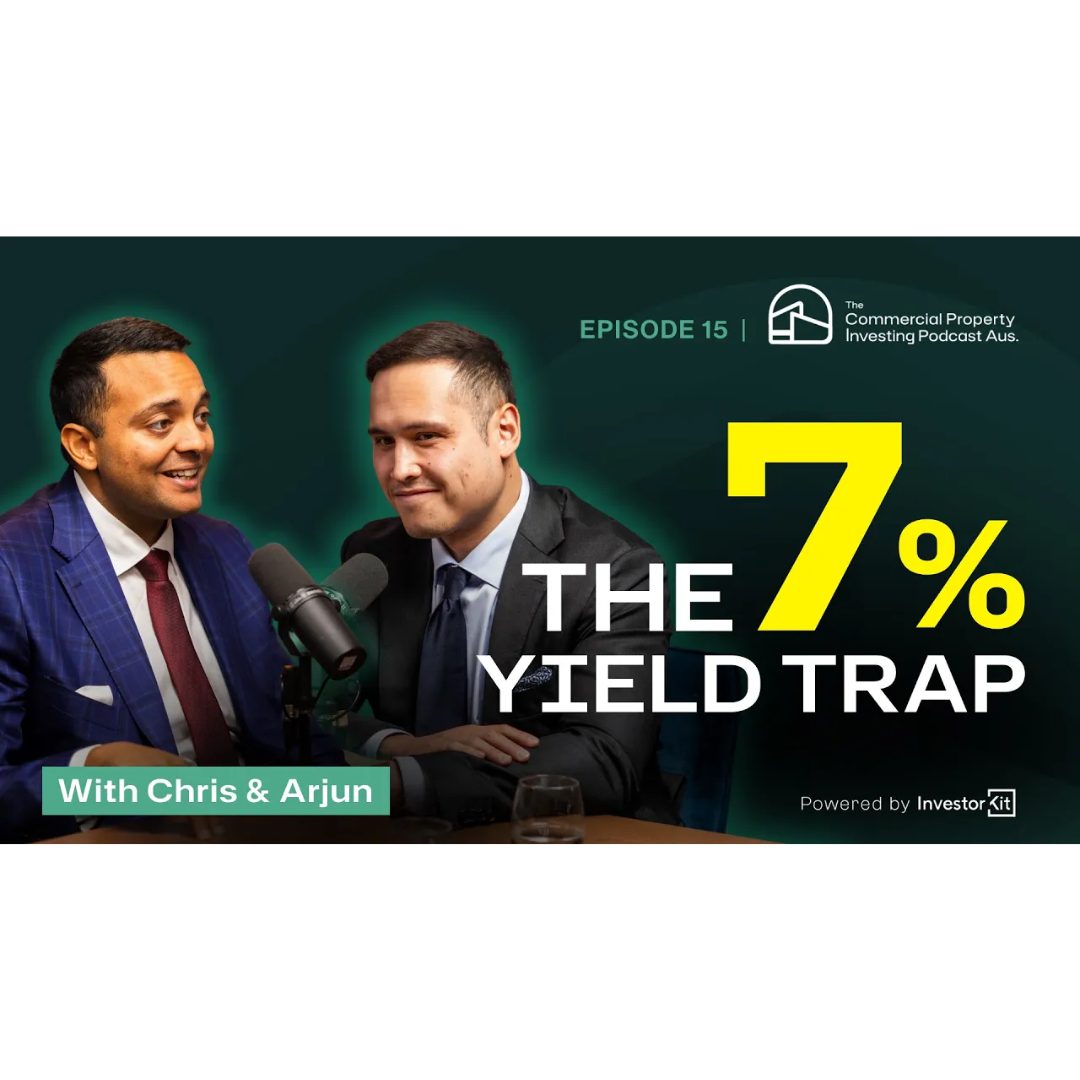
High-Yield Commercial Deals: The Hidden Risks Explained
Listen to it on


In retirement, the metric that matters is not yield. It is dollars landing in your bank account.
This episode unpacks a common investor mistake. Chasing the highest net yield, then getting crushed by vacancy, capex, or a rent reset.
What Happened
Chris and the team kicked off 2026 with a warning for commercial buyers.
Net yield is simple:
Net income ÷ purchase price
But the interpretation is where investors get hurt.
Higher yield can mean higher risk. And the risk is not theoretical. It shows up as vacancy, incentives, and surprise capex that wipes out years of “outperformance”.
Key Findings
1. The 5 to 7 percent zone is a deliberate risk band
The conversation framed 5 to 7 percent as a common sweet spot.
Below 5 percent is often not a cash flow play in a higher-rate environment
Above 7 percent can come with higher vacancy risk and higher capex risk
Around 5 percent is often seen as “lower risk” because vacancy and capex tend to be more manageable, asset quality is usually stronger, and locations can be deeper
2. Break-even is driven by funding, not yield pride
A simple napkin example landed the point.
$3,000,000 purchase
70 percent LVR loan = $2,100,000
6 percent interest-only cost = $126,000 per year
$126,000 ÷ $3,000,000 = 4.2 percent
So if the asset yield is under that, you are already fighting just to cover interest, before outgoings, management, land tax exposure, or vacancy buffers.
3. Vacancy changes the maths faster than most investors expect
The episode ran a clean comparison.
$3,000,000 at 7.5 percent net yield = $225,000 net income
$3,000,000 at 6.5 percent net yield = $195,000 net income
The annual income gap is $30,000
But if the high-yield asset suffers a 12-month vacancy, you lose $225,000. If the lower-yield asset is vacant for 6 months, you lose about $97,500.
The core insight: A single prolonged vacancy on a 7 percent plus asset can wipe out multiple years of extra yield.
4. Why high yields exist
High yields are often a signal, not a gift. Common drivers discussed:
Third-tier or slower-growth locations where demand for tenants is thinner
Older buildings with latent capital expenditure risk
Specialised assets that are harder to re-lease, like cold storage
Industry risk, where a sector is structurally weaker or oversupplied
Uniqueness risk, where there are limited comparable tenants and limited buyer demand on exit
5. The over-rented trap can destroy your next lease deal
Over-rented typically means the rent is above market.
It can be manufactured when:
The landlord and tenant are related parties
A business leases from a structure like an SMSF and the rent is set aggressively
The headline lease makes the yield look “sexy” at sale time
When the tenant leaves, the lease can reset to market rent and your income drops sharply. That hits valuation and refinance capacity, not just cash flow.
6. Melbourne CBD office yields can be a warning, not an opportunity
The episode highlighted why high office yields can be misleading.
Even if the yield looks attractive on paper, leasing conditions can be brutal. High incentives can effectively give away a large chunk of income just to secure a tenant, which means the true return can be far lower than the advertised yield.
Action Steps
Model vacancy properly
Run scenarios for 3, 6, and 12 months vacant and see how many years of extra yield it takes to recover.Stress test capex
Identify big-ticket items, roof, electrical, plumbing, air con, and price them. If one failure breaks the model, the deal is fragile.Verify market rent
Treat “over-rented” as a red flag. Check comparable leases, incentives, and time on market.Check releasability
Ask, if the tenant left tomorrow, who is the next buyer or tenant and how long would it take.Match leverage to risk
The more leveraged you are, the more you should reduce asset risk. High leverage plus high yield risk can become 100 percent of the pain.
Want help building a commercial or mixed portfolio that targets real cash flow, not just a headline yield? Book a free discovery call with InvestorKit. Visit investorkit.com.au and lock in a time.
Keep Reading



" transform="translate(5 5)" width="14px"/></svg>)