
" transform="translate(9 6)" width="6px"/></svg>)
Why Interstate Investing Isn’t as Scary as You Might Think
“The idea of buying interstate feels like taking a leap of faith.” For most buyers, this hesitation stems from three concerns: misjudging an unfamiliar neighbourhood, missing a structural red flag…
“The idea of buying interstate feels like taking a leap of faith.”
For most buyers, this hesitation stems from three concerns: misjudging an unfamiliar neighbourhood, missing a structural red flag you’d normally spot in person, and losing the ability to intervene when management goes sideways.
That discomfort is understandable. However, distance itself is not the cause of a bad investment. The real risk lies in process breakdown: choosing a market based on assumptions, skipping independent due diligence, or running management without clear structure.
Distance can make the consequences harder to manage when those steps are weak, but it’s rarely the root problem itself.
This blog will unpack how to assess a market (even with FREE data), how to audit a property using digital tools and council records, and how to manage an interstate investment effectively.
Using Free Data to Assess a Market
We’ll use Loganlea (QLD) to walk through a “data-led” market selection process using publicly available data.
Step 1: Know your Price Range
Assume a budget of $800k–$900k. Loganlea’s median house price sits around $850k (REA data). Price is the first filter. It keeps the search grounded in what’s financially workable from day one.
Step 2: Short-Term Sales Market Outlook
Three data points provide a practical read.
REA data shows a tight inventory (2.3), well below the balanced range of 3-4.
Calculation: (Current Listings * 12) / Annual Sales Volume
Days on market is 31 and trending down, pointing to strengthening demand (SQM).
Prices have grown 12.6% over the past year, with momentum building since mid-2023 (REA data). Taken together, this looks like a market in genuine upswing, not speculative heat.
Step 3: Rental Market Outlook
A strong rental market protects cash flow. SQM research shows Loganlea’s vacancy rate at 0.7%. At that level, rental pressure is likely strong, with rent growth of 7.8% over the past year. (REA data).
Step 4: Medium-Term Outlook
Short-term momentum can shift. For growth to be sustained, there needs to be a solid economic base.
Below are 4 factors:
Building Approval Rate: Loganlea’s BA rate is low at 0.63% (ABS), suggesting minimal oversupply risk.
Population Growth Rate: Loganlea recorded a moderate 1.18% growth over the past year (ABS)
Unemployment Rate: Logan (LGA) has a low unemployment rate (4.3%), suggesting an active job market that supports housing demand (ABS).
Infrastructure:
Logan and Gold Coast Faster Rail ($5.8 billion) – connectivity and freight efficiency
Logan Hospital Expansion ($1.1 billion) – additional jobs and area appeal
Step 5: Bringing It Together
No single metric tells you whether a market is a good investment. However, layer these together, and the picture is encouraging. Strong short-term pressure in both the sales and rental markets, alongside solid medium-term fundamentals, points toward sustained growth over the coming years.
That doesn’t guarantee success, but it means the decision is anchored to data rather than assumption.
Testing the Price Before You Commit
Using Meadowbrook as the example, we compare a target property against recent comparable sales to test whether the asking price is supported by market evidence. Based on February 2026 sales of similar properties on the same street, a reasonable price range sits between $950,000 and $1,100,000. This anchors the negotiation to evidence rather than the agent’s asking price.
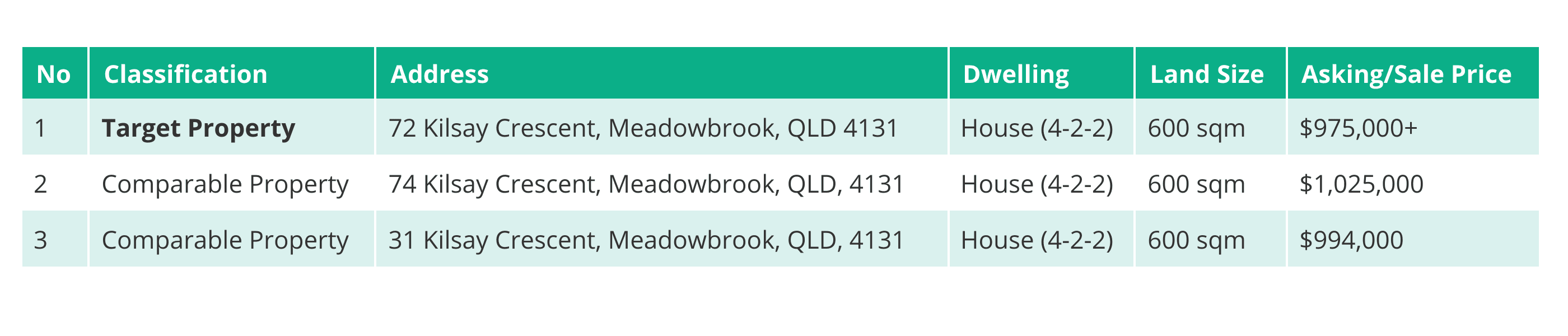
Sources: Target Property, Comparable Sale #1, Comparable Sale #2
Due Diligence: Reducing Interstate Risk Before You Buy
A property walk-through is not a substitute for thorough due diligence. Many of the risks that affect performance are not visible during a short inspection.
Geographic Constraints: Satellite & Street View
Google Maps Satellite and Street View can flag areas to exclude before you shortlist.
For example, properties positioned near busy roads, rail corridors, or industrial uses often face weaker demand from both renters and buyers.
Figure 1 shows houses in Meadowbrook that are located next to the Logan Motorway, a major transport route linking Brisbane’s southern suburbs to the Gold Coast.
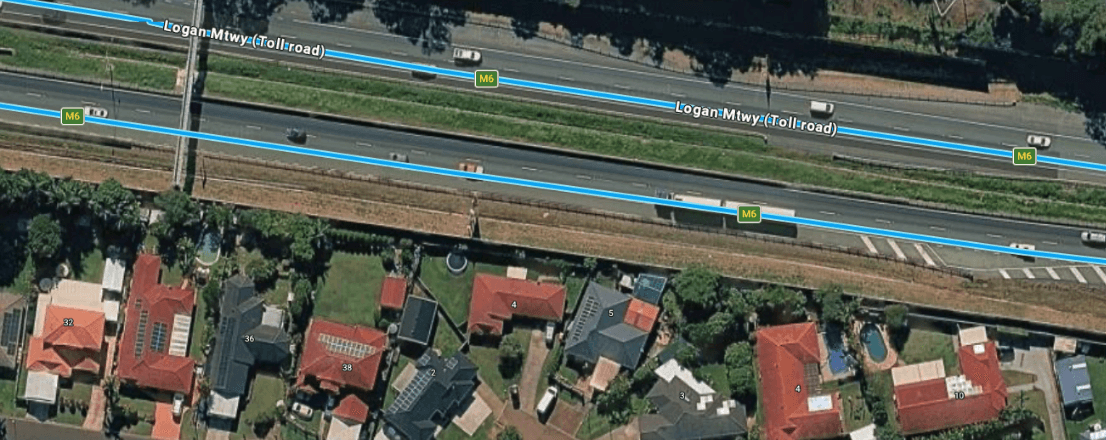
Figure 1: Logan Motorway Proximity, Meadowbrook (Google Maps)
Natural Hazard Mapping: Flood and Bushfire Risk
Most councils now provide interactive online maps for flood and bushfire assessment. Using the Queensland State Planning mapping system, Abang Avenue in Tanah Merah shows up as a bushfire-prone area, with nearby housing directly exposed to the constraint (Figure 2-3).
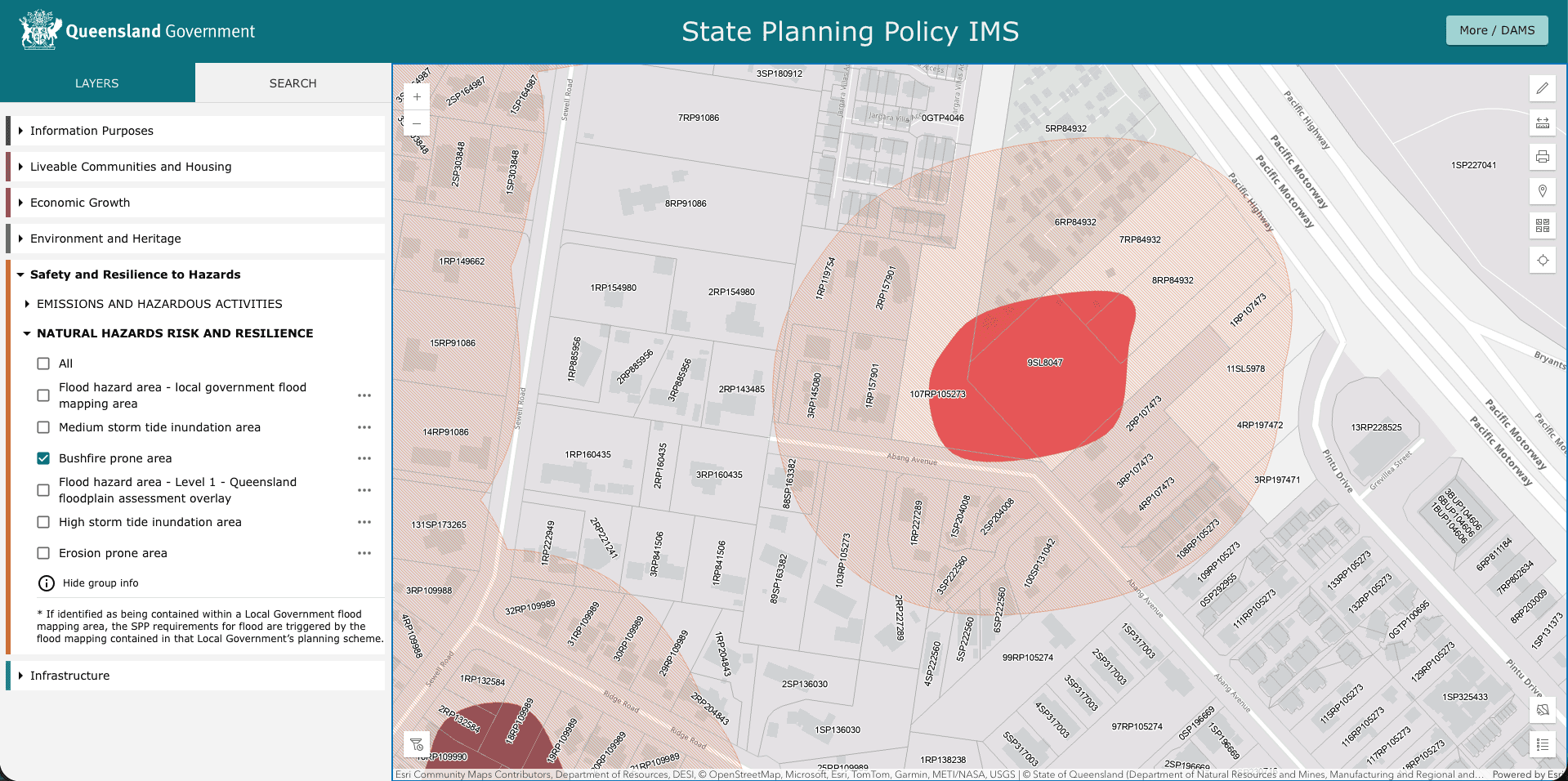
Figure 2: Bushfire Risk, Abang Avenue, Tanah Merah (QLD State Planning)
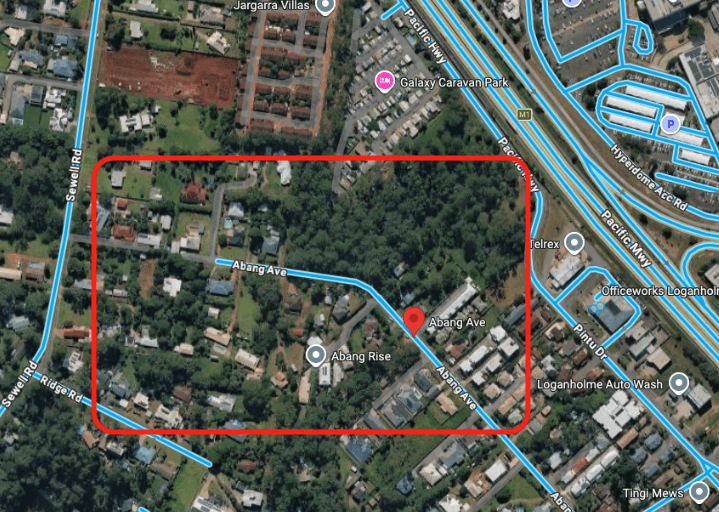
Figure 3: Bushfire Risk, Abang Avenue, Tanah Merah (Google Maps)
The Logan Flood Portal reveals a similar story for Eagleby, where areas around Fryar Road carry elevated flood risk (Figure 4-5).
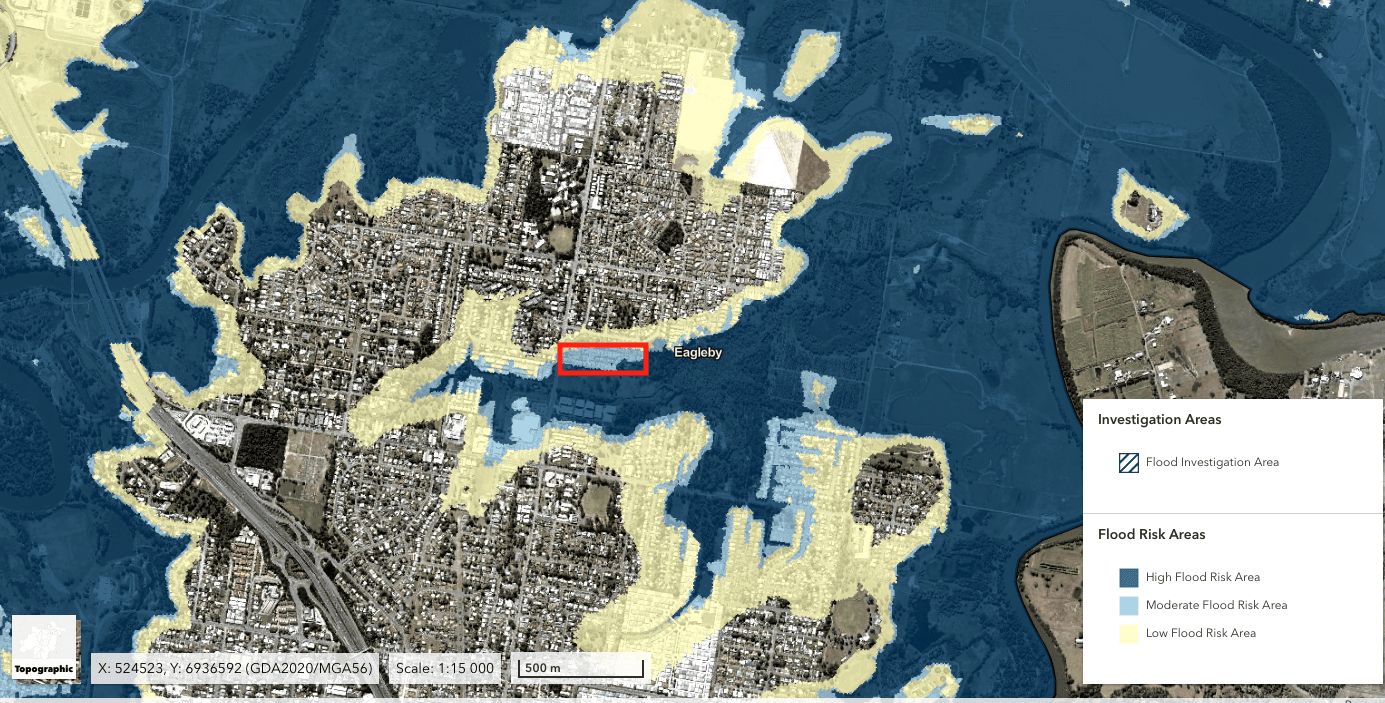
Figure 4: Flood Risk, Eagleby, Fryar Road (Logan Flood Portal)
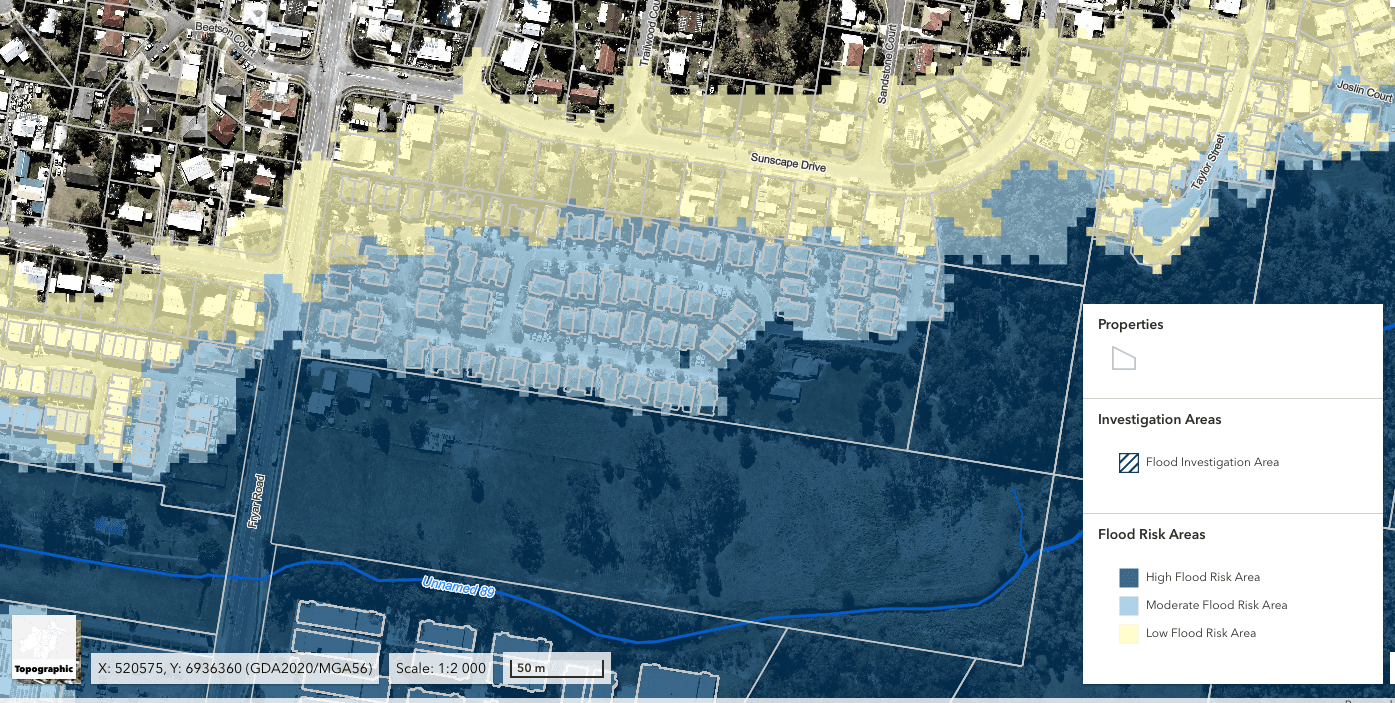
Figure 5: Flood Risk, Eagleby, Fryar Road (Logan Flood Portal)
Why evidence-based due diligence reduces risk
Each of these checks is independent, verifiable and repeatable, which is what separates a structured process from a walk-through or gut feel.
Ongoing Property Management: Replacing Proximity With Process
One of the main concerns with interstate investing is losing control after purchase. In practice, control doesn’t come from being nearby. It comes from having the right local support and a clear management system. That oversight rests on three things:
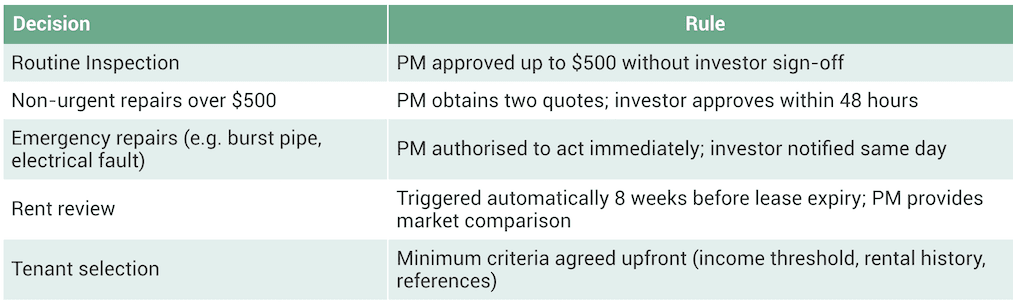
Clear Decision Rules
Without pre-agreed rules, every issue becomes a one-off conversation. A simple approval framework might look like this:
Clear Ownership
The property manager handles on-the-ground execution: inspections, tenant communication, arrears follow-up, and maintenance coordination. The investor retains control over strategic decisions: major repairs, rent pricing, and lease renewals.
Consistent Process
The same workflow is followed each time. This can include:
Routine inspections happening on schedule.
Reporting arrives at a set frequency, not just when something goes wrong.
Immediate notification of arrears, vacancies, or urgent repairs.
This is what reduces the risk of “losing control” interstate. Proximity is replaced by accountability, and oversight comes from structure rather than physical presence.
Conclusion
Interstate investing doesn’t fail because of distance. It fails when market selection is based on noise, due diligence is rushed, and management lacks structure. The common thread is process. When the process is right, distance becomes irrelevant.
Everything we’ve walked through here is doable on your own. However, a buyer’s agent does this at scale, across more markets, and with far greater speed. They also bring access to proprietary data, off-market opportunities, and established local networks that aren’t available through public sources.
If you’re considering an interstate purchase and want support building that process from the start, book a free discovery call with InvestorKit.
Keep Reading



" transform="translate(5 5)" width="14px"/></svg>)