.svg)


“Capital cities are safe; regional markets are risky”.
This belief is understandable given how often capital cities dominate headlines.
What’s less discussed is that labels alone don’t determine risk and returns. Property markets move at the local level, shaped by the interaction of supply and demand.
A more practical way to approach the decision is to be pro-opportunity, rather than pro-capital or pro-regional. That means focusing on where market pressure is building and assessing whether that opportunity aligns with your portfolio goals.
We’ll start by looking at how capital and regional markets are commonly compared.
Why “Capital beats Regional” is the wrong comparison
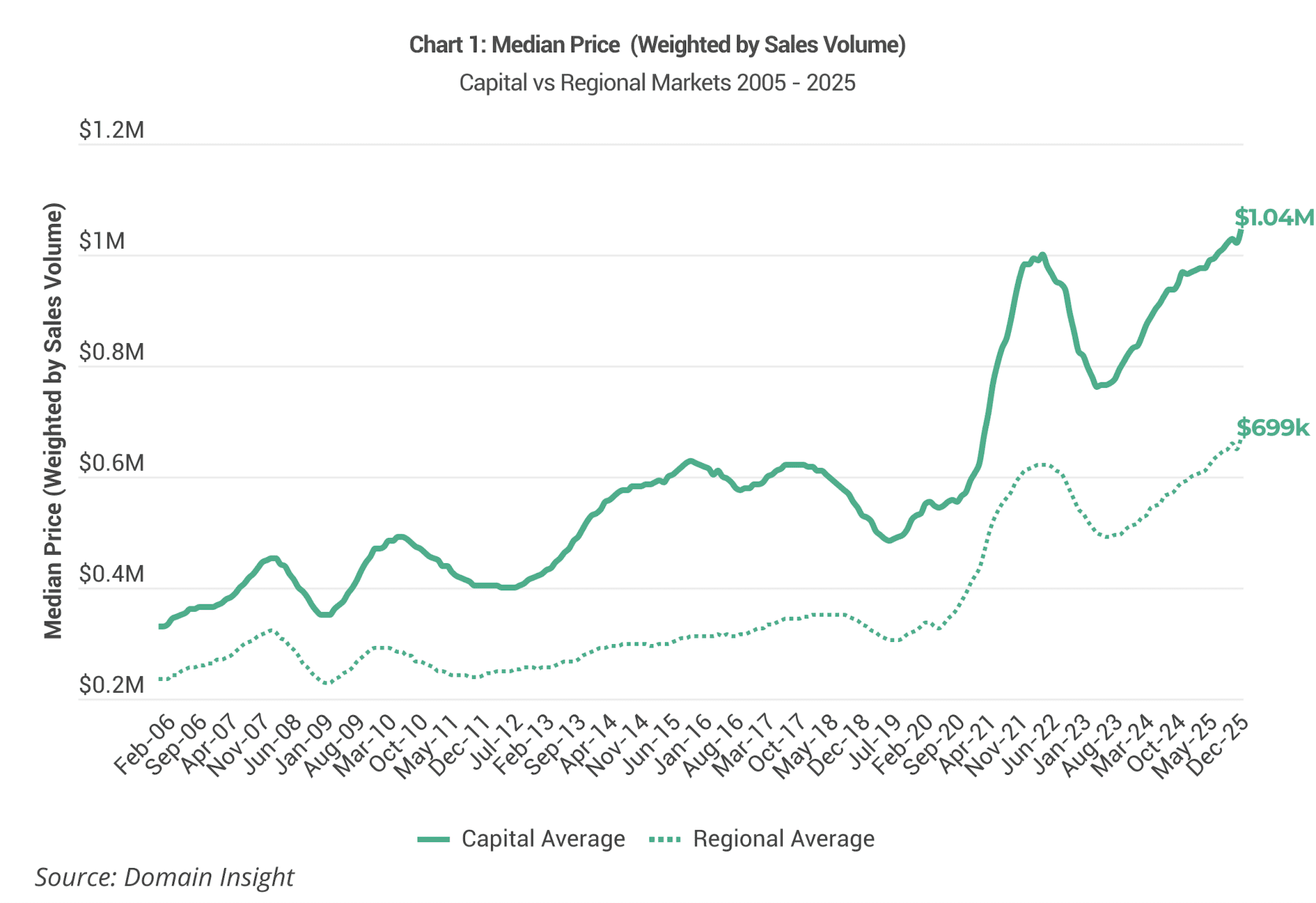
Chart 1 compares the 20-year sales-weighted average price levels for capitals versus regional markets (20-year annualised: capitals 5.95% p.a.; regionals 5.41% p.a.). The widening dollar gap can make outperformance look even more obvious, but part of that gap reflects capital cities starting from a higher base and compounding over time.
More importantly, it’s a data grouping issue. The chart pools all capital city markets into one line and all regional markets into another, even though each bucket contains many different cycles and local drivers.
The scatterplot below shows the long-term annualised performance of every SA3 nationally, colour-coded by capital and regional.
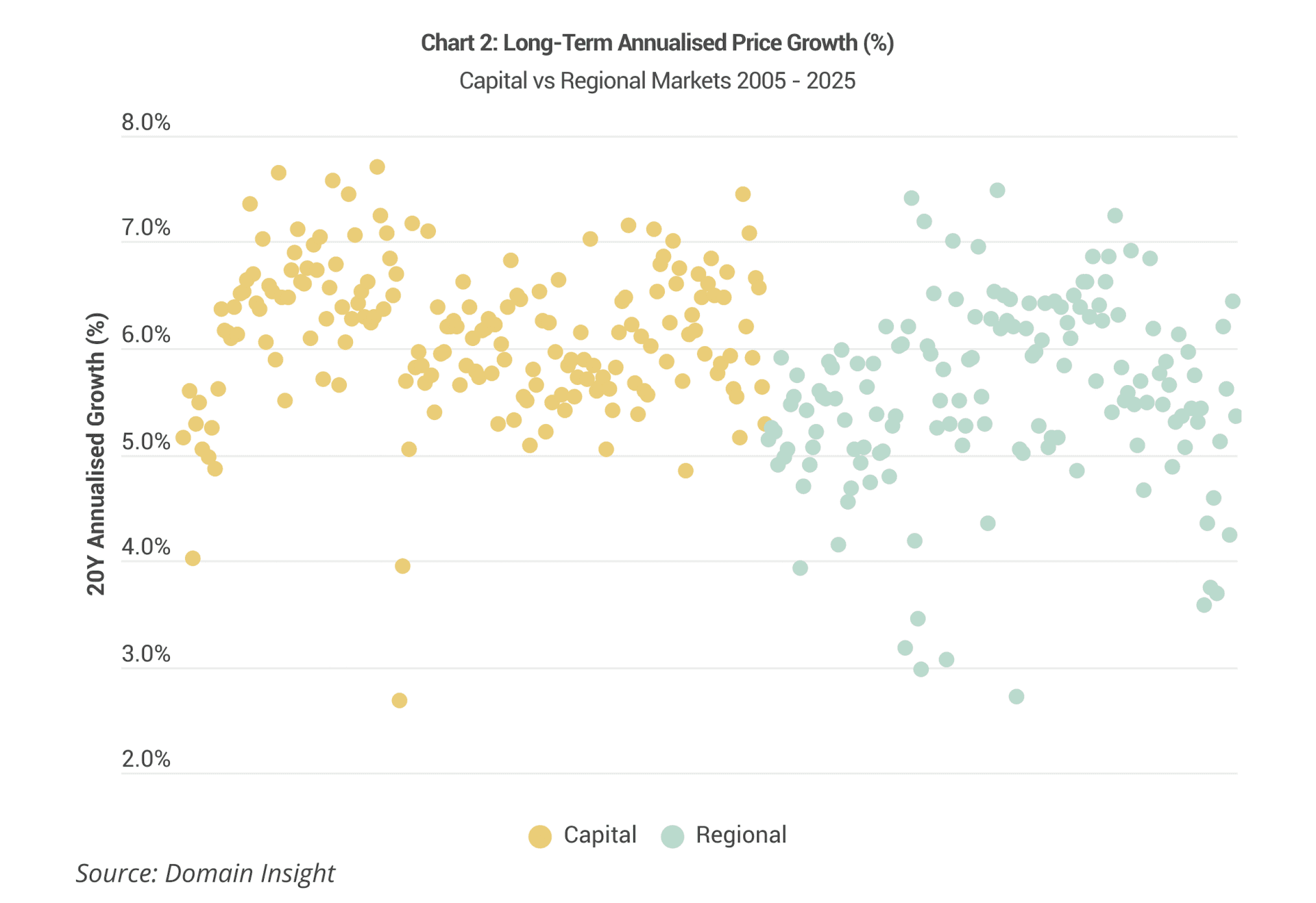
The above distribution shows substantial overlap in the growth rate ranges, and performance varies widely across individual micro-markets within both groups.
From Chart 2, capital SA3s appear more concentrated in the higher long-term annualised growth range than regional SA3s. However, investors don’t buy the “average” capital or regional market. Instead, they buy a specific local market. For example, over the past decade, Perth City (capital WA) delivered 4.9% p.a., while Bunbury (regional WA) delivered 6.6% p.a., showing why labels alone don’t determine outcomes.
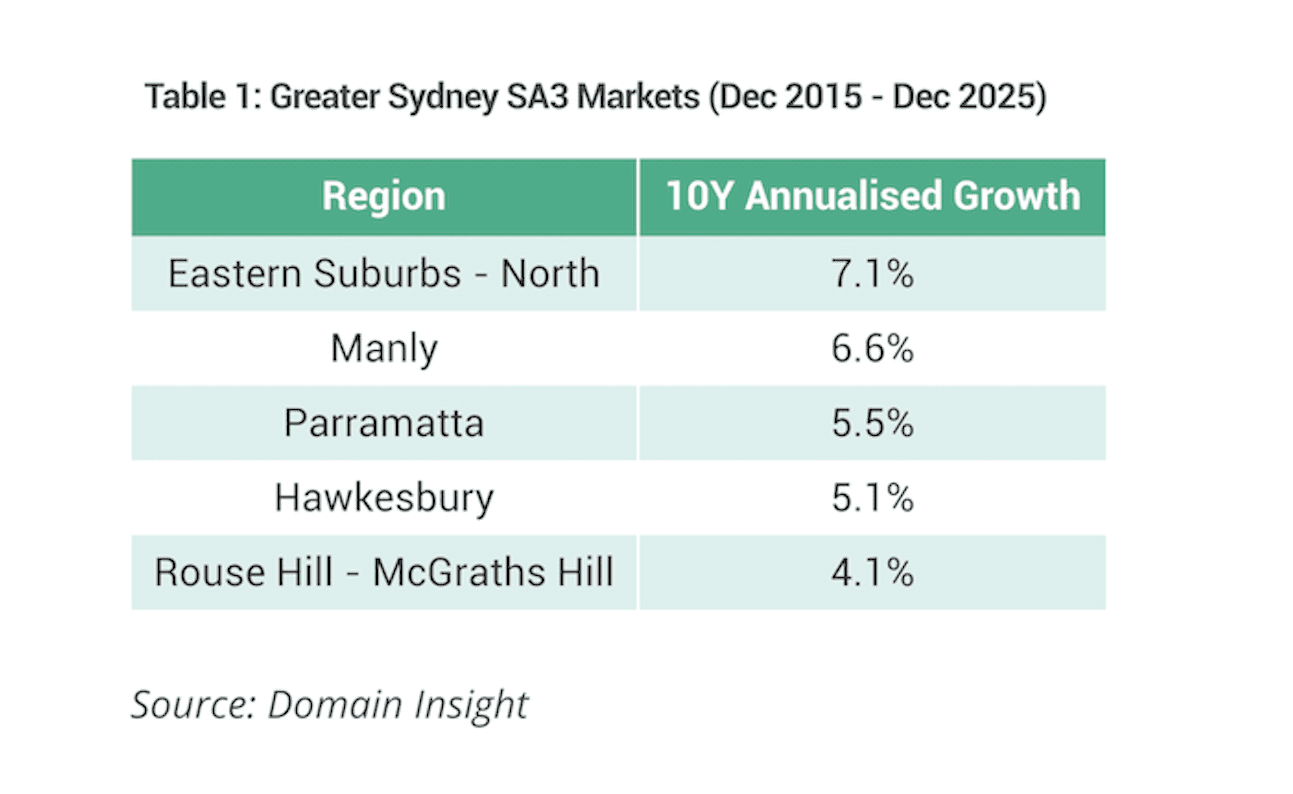
You can see the same dispersion within a single capital city. In Greater Sydney, over the past decade, SA3 outcomes varied meaningfully, ranging from around 4.1% p.a. in Rouse Hill-McGraths Hill, to around 7.1% p.a. in Eastern Suburbs – North.
Next, we examine what typically drives local price growth.
Regional Growth Isn’t “Hype”: It’s What Happens When Market Pressure Builds
In this section, we use two regional SA3 case studies (Bendigo in VIC and Maitland in NSW) to show how price upswings are often preceded by tightening market conditions.
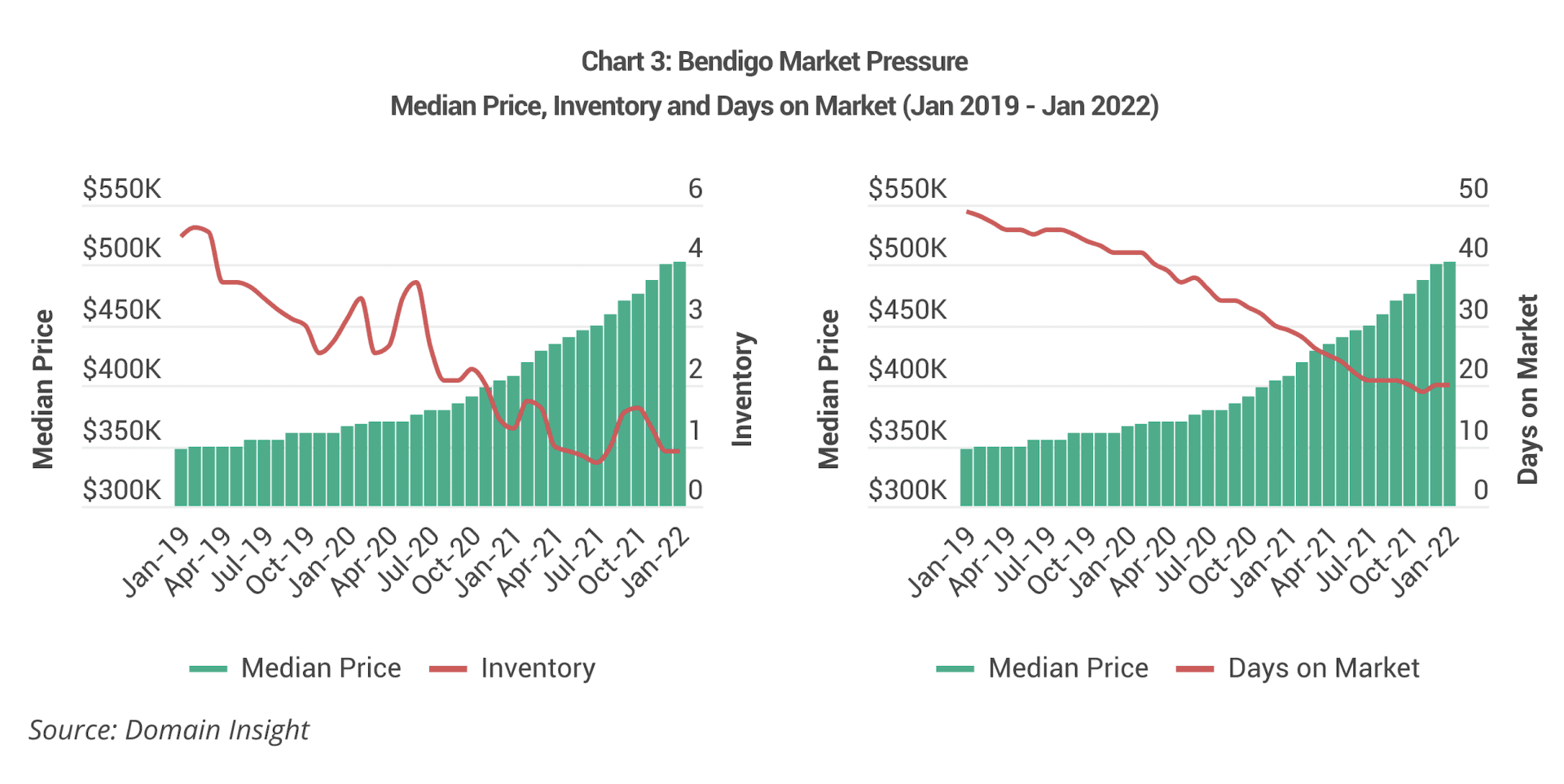
Bendigo’s price growth began to lift from around January 2020, but the upswing did not appear suddenly. Days on market and inventory had already been trending lower well before the price lift, signalling faster absorption and tighter conditions.
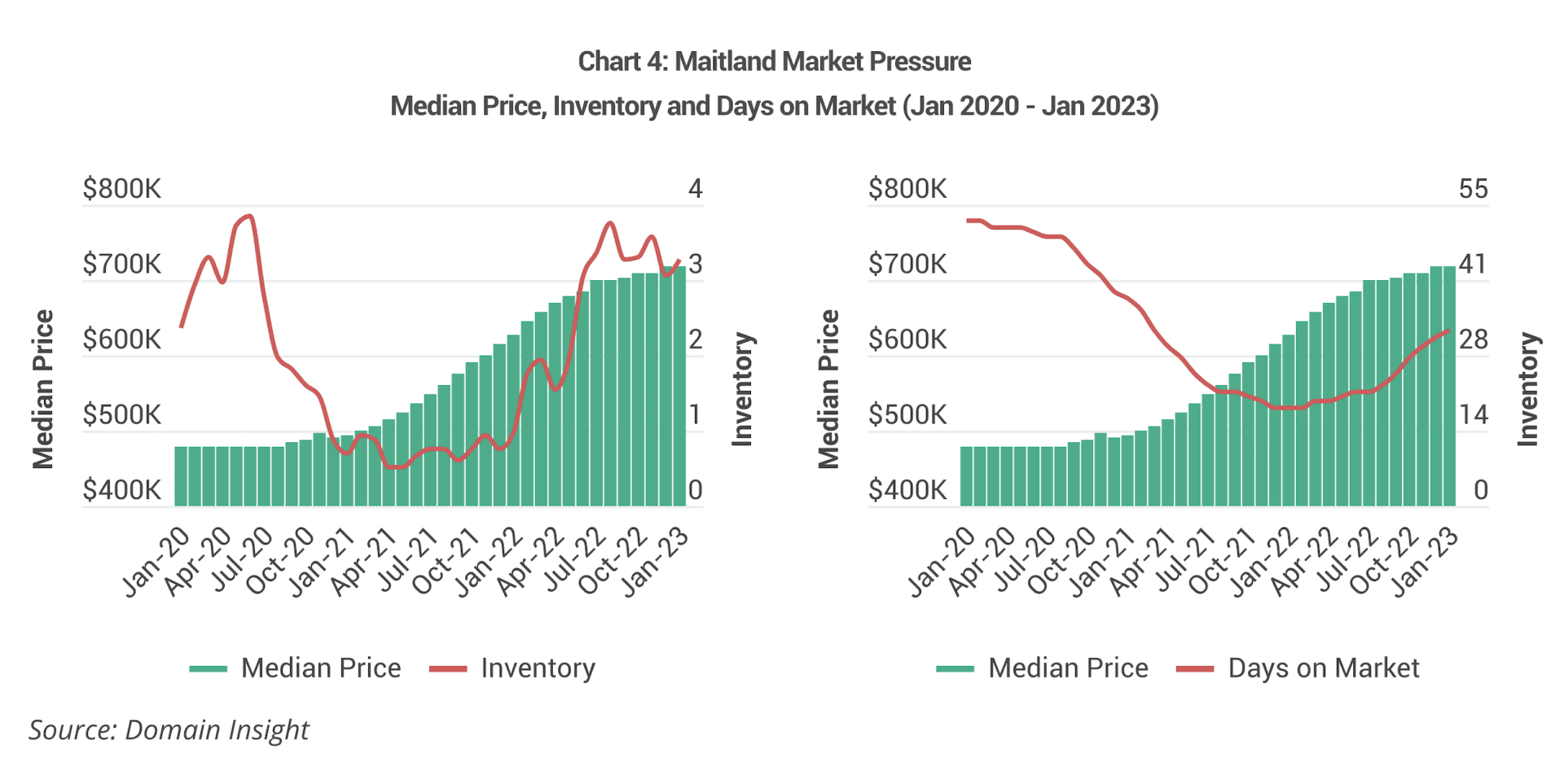
Maitland’s price growth began to lift around January 2021. In the lead-up, days on market was already trending down, and inventory began to tighten around June 2020, suggesting that market pressure was improving before prices accelerated.
Taken together, both Bendigo and Maitland show the same sequence: market pressure built first, and price growth followed in the period after. To learn more about the regional market growth, read The Boom Before The Boom.
In addition, a strengthening economy can support housing demand. Below are 2 example indicators when examining economic strength.
Driver 1: Population Growth
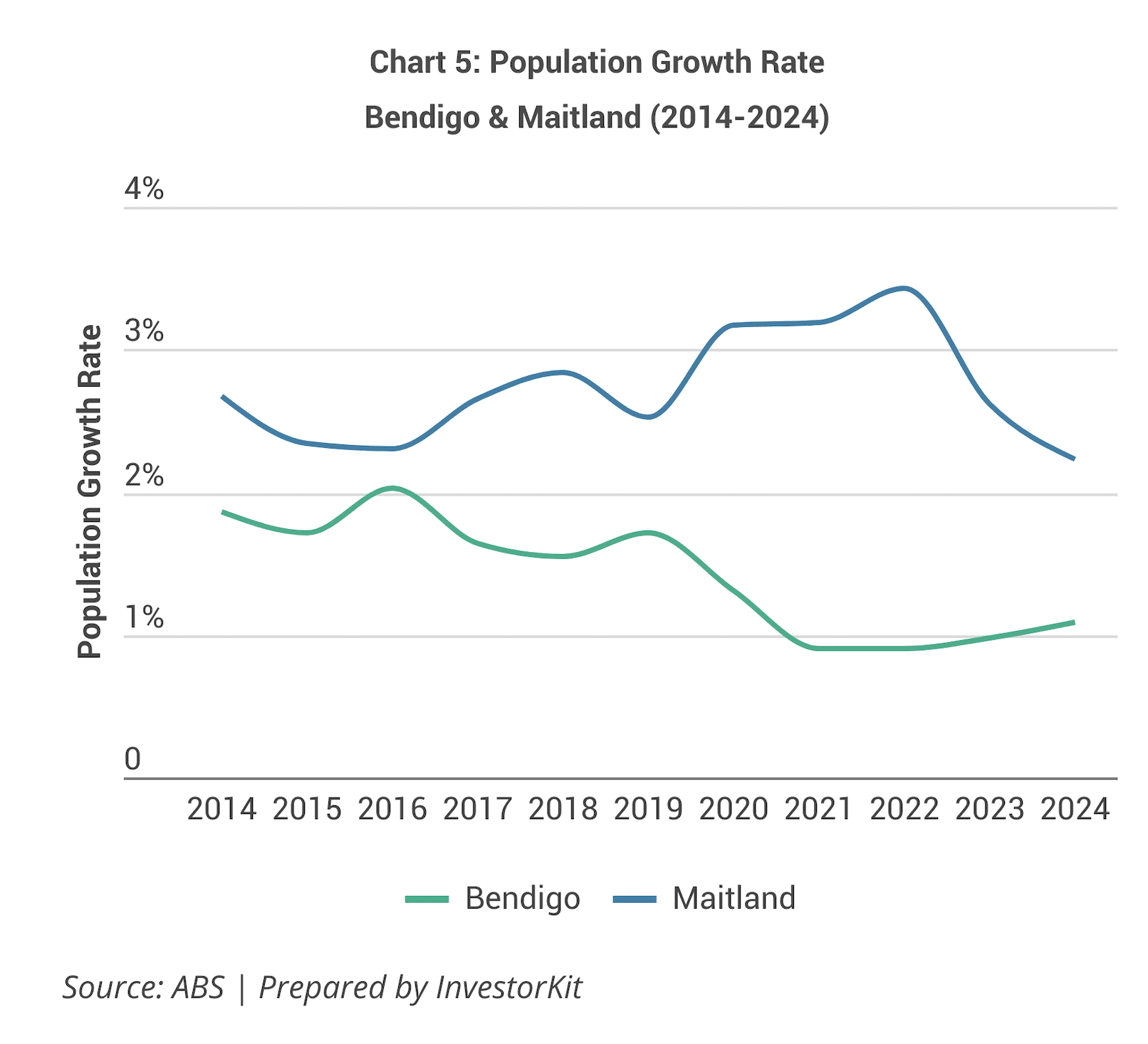
Healthy population growth provides the foundation for housing demand over time. In Maitland, population growth stayed elevated from 2014-2019, while Bendigo’s growth eased over the same period but remained healthy.
As market conditions tightened across 2019-2020 in both regions (Charts 3-4), the imbalance between demand and available supply widened, contributing to rising local market pressure.
Driver 2: Local Job Market
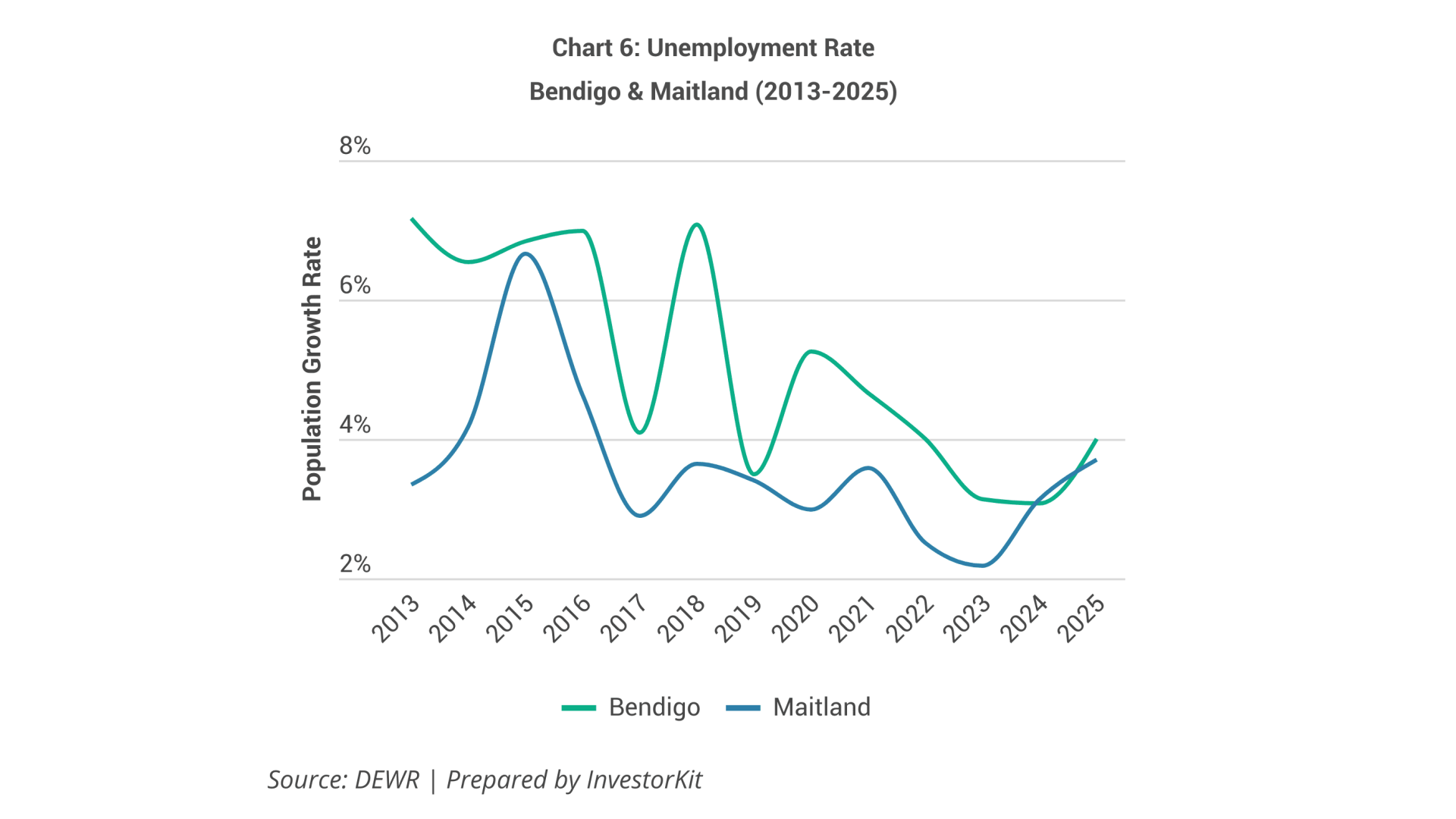
Unemployment rate is a practical indicator of local job market conditions. Across Bendigo and Maitland, unemployment rate generally trended lower from the mid-2010s into the early-2020s, reaching a healthy level by 2019 in both regions.
These labour-market signals shouldn’t be read as the direct cause of price growth. They’re better viewed as supporting context. A lower unemployment rate can support housing demand by improving income support and buyer confidence alongside other factors.
Key takeaway: Many regional markets experienced strong growth during the COVID period, and Bendigo and Maitland are 2 examples. COVID likely increased attention in regional markets, but charts 3-6 show that market pressure was already building beforehand and that the local economy was improving.
The Smart Investor Question: Does This Fit Your Portfolio?
Market pressure helps identify where conditions are improving and where to look, while portfolio fit determines whether acting makes sense for you.
A useful starting point is your preferred mix of outcomes: Some investors prioritise holding comfort and cash flow stability, others prioritise capital growth, and many aim for a balance between the two. That mix can guide which markets and property types are worth considering, without relying on a capital vs regional label.
A second principle is diversification. This involves examining how your portfolio is distributed across locations and market cycles, and whether outcomes are overly dependent on a single city or a single phase of the cycle.
Conclusion
The capital vs regional debate is often framed as a binary choice, but the evidence suggests that performance is driven at the micro-market level. A more useful approach is to stay pro-opportunity: identify where market pressure is building, then apply a second filter, portfolio fit.
If you’re weighing up capital-city versus regional markets and want to base the decision on market pressure and portfolio fit, we can help.
Book a free 15-minute discovery call with InvestorKit to apply this framework to your goals, borrowing capacity, and holding comfort and identify where market conditions are improving.